

Even countries that got coronavirus under control are now struggling. That’s deeply concerning for the rest of the world
Across the Asia-Pacific region, where countries were among the first hit by the virus and the first to contain it, there have been new and in some cases seemingly unexplained increases in the number of infections. Governments that had previously been lauded for their response to the pandemic now seem to be struggling.
On Tuesday, China reported the highest number of locally transmitted coronavirus cases since early March for the second consecutive day, with the majority of the 64 new domestic cases in Xinjiang. The far western region has seen a fresh outbreak in its capital Urumqi since July 15, after nearly five months of no new cases.
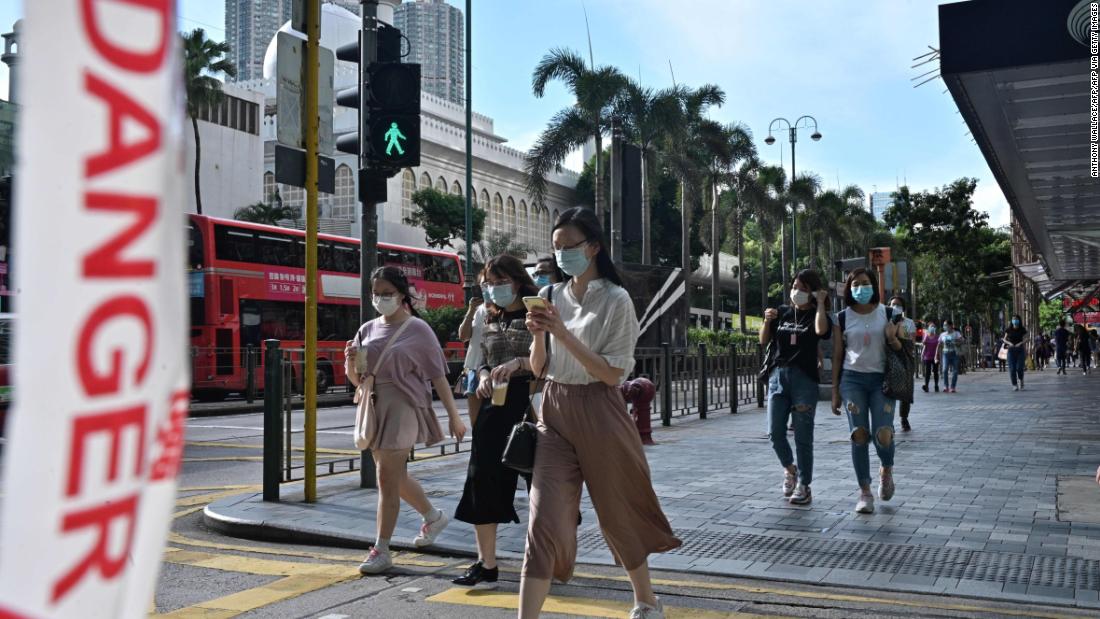
Down south in Hong Kong, the semi-autonomous Chinese city is also experiencing a major new outbreak, with more than a thousand new cases in the past two weeks, and six days straight of over 100 cases. The new surge came after the city appeared to be almost cornonavirus free, relaxing restrictions and beginning discussion of potential “travel bubbles” with other post-pandemic parts of the world.
Elsewhere in Asia-Pacific, Australia is also experiencing a major upsurge in the number of cases. The country had cases down to just a handful in June, but that surged towards the end of the month and has exploded in July, with the worst-hit area the southern state of Victoria, which on Monday announced a further 384 cases. There are 4,775 active cases in Victoria, 414 of which are health workers, putting further strain on the state’s ability to treat the sick.
What happened?
“When (this) epidemic is controlled, this really emphasizes the importance of keeping infections out through effective testing and quarantine of persons arriving in Hong Kong,” he said. “Once an epidemic begins, it will take a lot of effort to stop.”
Speaking Monday, Hong Kong deputy leader Matthew Cheung said the city had been following the approach of “lift and suppress,” gradually relaxing restrictions as cases diminished and ramping them back up should there be a surge.
“The epidemic situation is critical,” Cheung said, adding that the next few weeks are extremely crucial for the city. “We are facing a high risk of community outbreak.”
And for all Cheung’s insistence that Hong Kong has been following a policy of “lift and suppress,” the city has yet to introduce anything like a full lockdown, even as cases continue to rise.
Vietnam has been held up as a leading example in containing the virus, thanks to an aggressive strategy of early screening of passengers at airports and a strict quarantine and monitoring program. The country has not reported any deaths from Covid-19 and has confirmed just 431 cases, according to Johns Hopkins University.
Hard task ahead
The difficulty even countries in Asia-Pacific — the region of the world with perhaps the best coronavirus response — are having points to the potentially insurmountable task of getting the virus under control in other parts of the world, at least until a vaccine becomes available.
“If we get a widespread uptake of vaccine, we can put an end to this pandemic and we can create a veil of immunity in this country, preventing the infection from coming back,” he said.
CNN’s Julia Hollingsworth, Katie Hunt and Eric Cheung contributed reporting.