

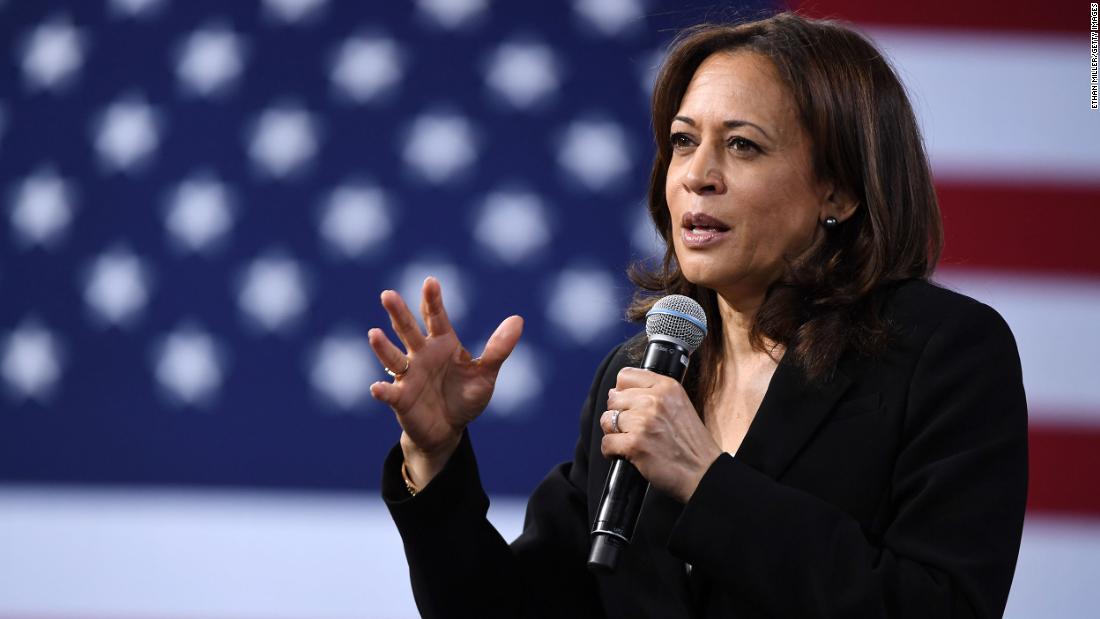
If she becomes vice president, Kamala Harris’ actions will surely test whether her party can leave certain prejudices in the past
Biden’s statement in March, then, evoked what had become something of an inescapable buzzword during the 2020 Democratic race: representation. And indeed, Biden’s right-hand woman would have important representational value.
In particular, the message that a Vice President Harris would send to Black women, long the most reliable and committed Democratic voters, is nothing to sneeze at.
Which means that Harris, too, would likely assume a lot of responsibility in the White House.
“There’s just no chance that the person who he picks is not a consequential vice president or consequential historical figure. They just will be,” Feldman added.
For all that potential, though, Harris, in all likelihood, would have to grapple with age-old, gendered thinking, including within her party. Already, there have been previews of the shape that this thinking could take.
In the other direction, Dodd advocated for California Rep. Karen Bass, who also was among the contenders for vice president, because he viewed her as “a loyal No. 2.”
Such warping of ambition and nitpicking are virtually nonexistent when men vie for political office.
Harris, then, will have to do two things under the microscope if she becomes vice president. She’ll have to serve as representation for those voters who seldom see themselves reflected in the upper echelons of power, and do work that will be much more than representational — and that will surely test whether her party can leave certain prejudices in the past.
None of this is to minimize the undeniable thrill of Biden’s historic announcement.
Rather, it’s to acknowledge that if Biden and Harris win in November, the latter will be in a far more treacherous position. But then, Black women always are.