

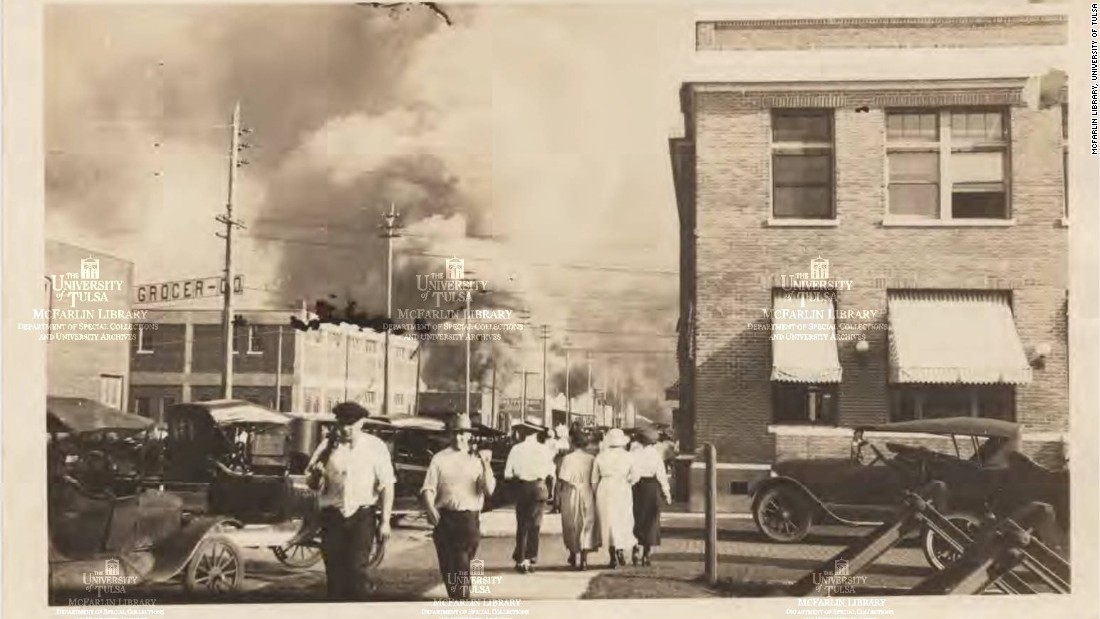
Analysis: The culture of silence surrounding the Tulsa massacre
One century on, as the US engages in a fresh reckoning with its long history of racist violence, it makes sense to ask: What’s the state of the country’s collective memory of the events of 1921? And how does economic justice fit into that conversation?
For Phoebe Stubblefield, a University of Florida forensic anthropologist whose parents were born and raised in Tulsa, the pogrom was personal.
“It wasn’t until I told my parents that I’d been invited (in the late 1990s) to assist in the investigation of a possible unmarked mass grave that my mother said, ‘Your Aunt Anna lost her house (in the assault),’ ” Stubblefield told CNN. “So, my parents knew about it, but it wasn’t something they talked about. And actually, that might’ve been what got me looking into my family history in general.”
A culture of silence
To understand the massacre fully, you have to understand its attendant trauma. Before the turn of the 21st century, there was a culture of silence in Tulsa.
“There are many different ways to respond to historical trauma. A culture of silence is one of them,” said Alicia Odewale, an assistant professor of anthropology at the University of Tulsa, and for some but not all Black people in the city, “that silence stemmed from the fact that there was never any justice or accountability. For a long time, there was a lingering fear that an attack could happen again at any moment because no one ever answered for the killing and looting and arson and bombing.”
Odewale added: “Black Tulsans were left with a feeling of, ‘We don’t know how to grapple with this. We don’t know how to talk about the massacre and not relive it and re-traumatize ourselves in the process.’ So the silence was also a kind of self-protection.”
Notably, many White Tulsans said nothing for a different reason.
“It’s not because we don’t talk about it. It’s not because we don’t have meetings to discuss it. What we don’t have is collective will. Giving voice to the issue and doing something about it are two different things,” Oklahoma state Rep. Regina Goodwin, whose great-grandfather was a well-known businessman in Greenwood at the time of the massacre, told CNN.
An uphill battle to restore economic prosperity
Today, Greenwood is just a sliver of the size it was before the assault, and the area’s once-celebrated economic prosperity is still a thing of the past.

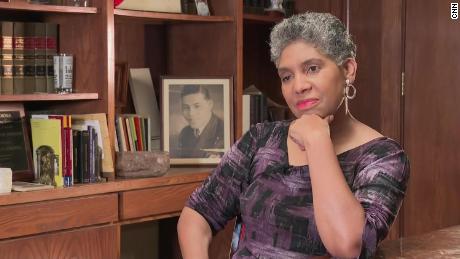
Oklahoma state Rep. Regina Goodwin
“Everybody’s talking about tourism and saying, ‘Let’s remember what was,’ but that’s not economic development,” Goodwin said. “You’ve got folks collecting millions of dollars. You’ve got movies being made. You’ve got books being published. You’ve got facilities being built. But you’ve also got survivors. They’re not getting any millions.”
Testifying before members of a House Judiciary subcommittee last week, survivors made clear that economic justice has been kept beyond their reach.
And until there’s a deeper desire, specifically among White Tulsans, to restore Greenwood and North Tulsa to their former splendor and deliver reparations to survivors and their descendants, commemorating the massacre will register as little more than lip service.
“Folks blow into town and then blow out of town. In the meantime, you still have a community that’s struggling,” Goodwin said. “I don’t think that’s anything to celebrate.”