

Opinion: US can fight inflation and still ‘build back better’
Such opposition to BBB completely mixes up the short-term and the long-term, and utterly confuses deficit spending to fight Covid-19 with fully paid-for spending to fund long-term reforms. BBB is not about the next month, or the next year; it is about the next generation.
We need to set a long-term direction for the country toward a fairer and more productive society by enabling the working poor in America to get health care, family leave, affordable drug prices, child care, and affordable community college.
Unlike the temporary Covid-19 spending, the long-term BBB outlays should be fully paid for by higher taxes on the rich and corporations, which have enjoyed a massive windfall in the past two years. If BBB is paid for with taxes, then it won’t add to the public debt or create long-term inflationary pressures.
Inflation results when the overall demand for goods and services exceeds the available supply at today’s prices. Therefore, inflation can result from a rise in demand, a fall in supply, or some combination of the two. Analyzing the current inflation requires that we parse the demand-side and supply-side factors at play.
This is not simple. The Covid-19 pandemic has whipsawed the economy, both in the US and globally, more than any other shock since World War II. The swings in demand and supply, because of lockdowns and government policies, are bigger than the 1970s oil shocks and the 2008 financial crisis.
We are in somewhat uncharted territory. Still, we can identify some of the key factors driving demand and supply.
The story starts, of course, with Covid-19. In March 2020, the US and world economy partially shut down to slow the spread of the virus. The shutdown mainly affected travel, tourism, hotels, entertainment, restaurants, and schools. Most of agriculture, mining, and manufacturing (the goods-producing sectors) continued operations, as did most office-bound activities that could be shifted online.
With tens of millions of service-sector jobs quickly ended, the government resorted to a massive transfer of income — payments to households and businesses funded by deficits — especially to keep household disposable income from plummeting. Money sent by the government to most Americans prevented the disastrous loss of income of tens of millions of households, which could have led to a massive collapse of consumer spending. In fact, households saved most of the government payments, as they were unable to spend the money on activities out of the home.
These were extraordinary measures, certainly the largest fiscal and monetary expansion in peacetime history. It was indeed very hard to calibrate the proper magnitude of the response given the uncertainties over the size and timing of the Covid-19 disruption.
In retrospect, the demand measures were a bit too large, but we should still credit these strong steps with preventing a much deeper and prolonged economic downturn. The economy might well have fallen into a deep contraction or even a depression but for these proactive policies.
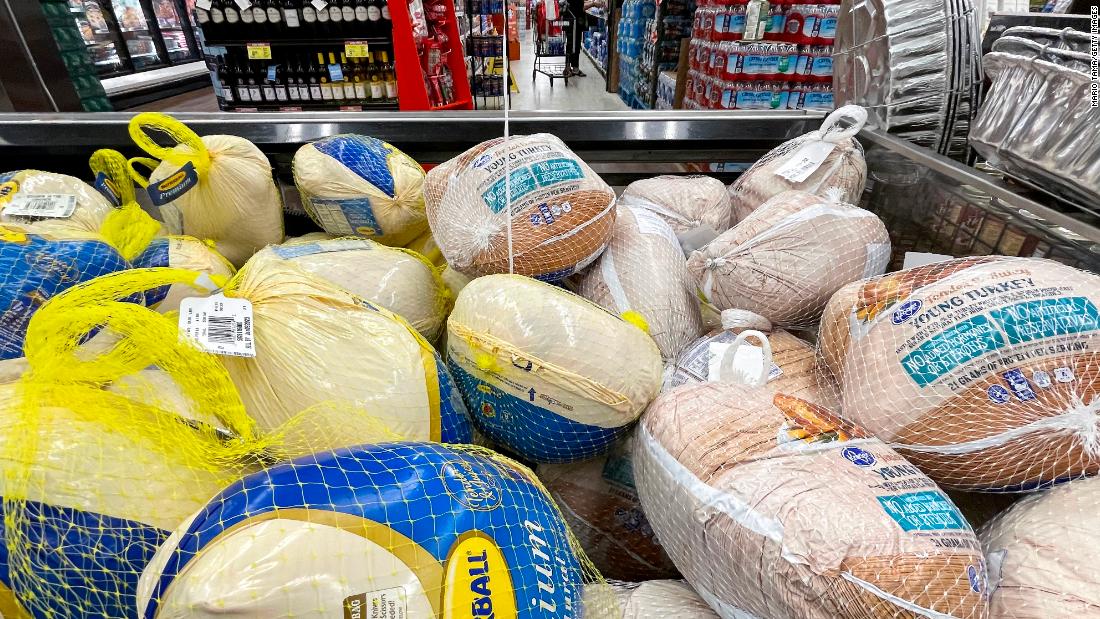
Third, after a sharp fall in consumer demand for and production of meat products early on in the pandemic, demand for meat is now soaring while production and shipments are still lagging behind, causing sticker shock on consumer meat prices.
In summary, both demand-side and supply-side factors are at play. Overall, demand is high, pumped up by enormous budget deficits and easy money, while supply shortages are hitting energy, food products and automobiles. While energy prices are up 30% in October (over October 2020), meat prices are up 14.5%, new car and truck prices are up 9.8%, and used car and truck prices are up 26.4%, services other than energy are up by only 3.2%.
OPEC should increase production to reduce sky-high oil prices in the short run, and also plan for a downward trajectory of production over the coming years as electric vehicles replace cars with internal combustion engines, thereby driving down the global demand for oil.
In summary, inflation in the coming months should be controlled by ending stimulus spending, tightening monetary policy, slashing the budget deficit and increasing OPEC monthly oil production to counter the recent surge in global oil and gas prices.
At the same time, we should persevere in making long-term federal investments in health, education, and child care for the working poor, paying for those policies with higher taxes on the superrich and corporations.