

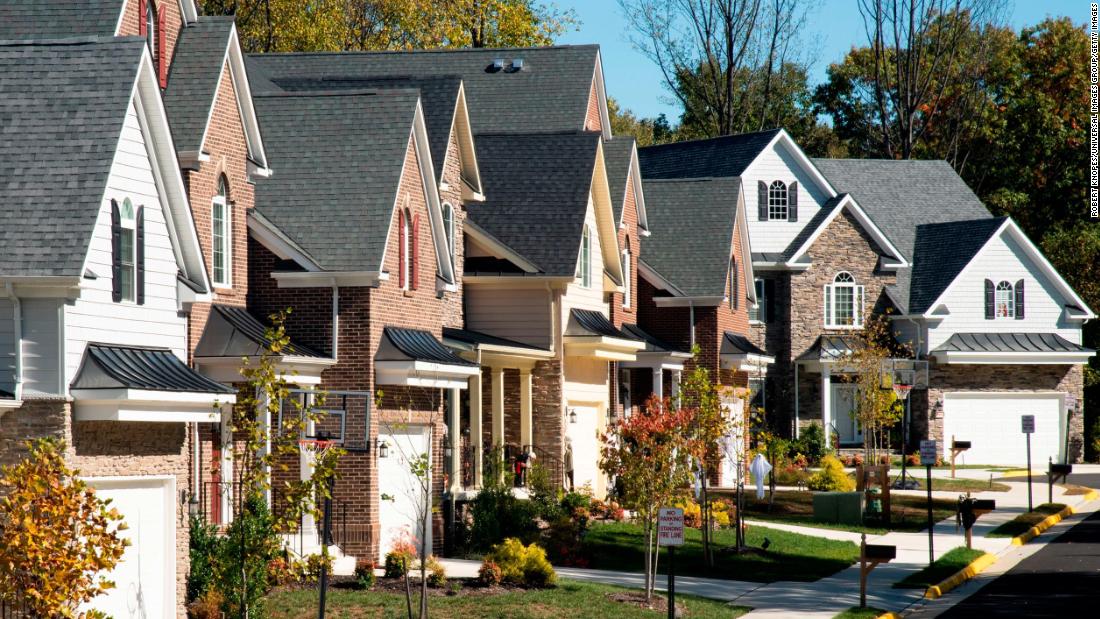
The President’s campaign makes racially charged warnings to suburban voters, but the suburbs are much more diverse than two decades ago
In contrast to the stereotype of homogenous communities of White families behind white picket fences, in many of the largest suburban counties around America Whites now compose only about half or less of the population.
That’s especially true in the Sun Belt suburbs around cities such as Atlanta, Orlando, Phoenix, Denver, Los Angeles, Houston, Dallas and Austin, Texas, and Charlotte, North Carolina, which are emerging as critical election battlegrounds in 2020 and beyond.
But the diversification of the suburbs extends even to the classic “bedroom” communities of the Northeast, like the suburbs of New York City and Washington, DC. Of the 488 US counties the Brookings Institution’s Metropolitan Policy Program classifies as suburban in larger metropolitan areas, the White share of the population fell in 468 of them from 2000 to 2019, according to calculations by demographer William Frey.
“The heart of it is people’s image of the suburbs don’t match what the suburbs are today, because the demographics have changed so significantly,” says John Feinblatt, president of the gun control advocacy group Everytown for Gun Safety, which is investing heavily in political races across the Sun Belt suburbs this year. “The suburbs are less like more rural counties and far more like urban centers, both in how they identify politically and what they look like.”
Likewise, his best chance of defending Arizona, a new battleground state, probably depends on combining big rural numbers with strong margins in the preponderantly White parts of the Phoenix suburbs, such as Scottsdale and the retirement communities of Sun City and Sun City West.
Two big differences
While such arguments may move some voters, many sociologists and political strategists say they reflect a Nixon-era vision of the suburbs that no longer encompasses the reality.
“I think the messaging by and large from the Trump campaign has been tone deaf as it relates to the suburbs,” worries Republican consultant John Thomas, who has worked extensively in the prototypical diversifying suburbs of Orange County, California.

“The suburbs are a different place today,” agrees Stephen L. Klineberg, an emeritus professor of sociology at Rice University. “They mean something different than they did in the first 25 or 30 years after World War II, when the whole baby boom was happening and we were isolating the poor in the cities and if you had the right complexion you moved out to the suburbs.”
Analysts see two big differences between the suburbs of Nixon’s day and today. One is a changing attitude toward the cities they orbit. In the first decades after World War II, suburbs emerged specifically as a destination for families — almost all White, mostly with kids — who wanted to escape cities, many of them in “White flight” from crime and/or desegregation of schools and neighborhoods.
“It was an escape of all the evils and ills of urban life into suburban bliss,” notes Klineberg.
But today both suburban residents and government leaders are much more likely to view themselves as part of a single connected region with cities, both economically and culturally. Rather than viewing neighboring cities as a threat, Klineberg notes, more families in the inner suburbs see them as an asset that improves both their quality of life and economic opportunities.
“This whole concept of city and suburb makes less and less sense,” he says.

From a slightly different vantage point, Frey’s data, focused on the suburbs of metropolitan areas with at least 500,000 residents, confirms the change. Not only has diversity increased since 2000 in virtually all of those suburban counties around big metros, but in 135 of them people of color raised their share of the population by at least 10 percentage points. As early as 2010, Frey has calculated, a majority of African Americans, Asian Americans and Hispanics lived in suburbs, rather than central cities.
“This is a country where the suburbs are not anymore monolithic in any way,” Frey says. “Trump wants to talk about the demise of the suburbs and he thinks about them as these White bastions. That is something from the 1950s. A lot of what he is saying is 30 or 40 years old.”
‘A microcosm of America’
Especially but not exclusively in the Sun Belt states, many big suburbs are now defined by enormous levels of racial diversity. In the populous northern Virginia suburbs, people of color represent nearly half of the population in Loudoun County, exactly half in Fairfax and three-fifths in Prince William. Outside Atlanta, they are two-thirds of the population in Gwinnett County and half in Cobb. Around Denver, they represent two-fifths of the population in Arapahoe and a majority in Adams. Whites have fallen well below half the population in the big Southern California suburbs of Orange, San Diego, Riverside and San Bernardino counties. Even in the classic Northeastern commuter counties of Westchester, New York, Bergen, New Jersey, and Fairfield, Connecticut, people of color range from about two-fifths to nearly half of the population. They fall in that same range in the big Texas suburban counties of Collin and Denton, outside Dallas, and Hays and Williamson, around Austin.
Despite the growing diversity, studies by Massey and others show that segregation remains widespread in the suburbs, with most Whites still living in predominantly White neighborhoods. But the sheer increase in diversity has made that separation more porous than in earlier generations.


“Suburbs are a microcosm of America,” says Frey. “People there are going to have Black neighbors and Hispanic neighbors. That’s not to say there is no segregation, but they are not miles and miles away from people of color. And your kids may be intermixing with them in all kinds of ways if you are White.”
Accompanying the growing suburban diversity has been rising education levels. In data provided to CNN, Frey calculated that the White share of eligible voters in the suburbs outside all central cities dropped from 82% in 2000 to 68% in 2020. And over that period the share of Whites holding at least four-year college degrees, a group trending Democratic, has slightly increased from just under one-fourth to nearly 3-in-10; the decline has occurred solely among Whites without degrees, a Republican-leaning cohort that has plummeted since 2000 from nearly 3-in-5 eligible voters across the suburbs to exactly 2-in-5.
That shifting perspective even in historically conservative Sun Belt suburbs, for instance, has encouraged the Everytown gun control group to invest heavily this year in suburban congressional and state legislative races across states such as North Carolina, Texas and Arizona. Those were all places where gun control was considered a political third rail not long ago, but the group believes the climate has changed.
“We are finding that these voters more closely align with folks in the cities than they do with rural areas,” says Charlie Kelly, Everytown’s senior political adviser.
Changing views in the suburbs
“If you look at my Facebook page,” he told me, “people have posted a lot of racial comments about me, simply because I am from India. I called them out of it, I screen-shotted some of the heinous comments, so that made them hate me more.”
Trump’s claim that Democrats threaten the suburbs is finding an audience among those voters, George says. But he believes they no longer represent anything close to a majority in the county.
“There are people out there who believe him,” George said. “I don’t think he is attracting anybody from outside [his base] with this message.”
The big conclusion: About half of not only non-White but also White suburban voters described Trump’s vision for the country as divisive and self-serving, with roughly another 1-in-8 calling his approach racist or discriminatory. That causes many suburbanites to see Trump as more part of the problem than the solution when it comes to ensuring order, says Ryan Pougiales, a senior political analyst at Third Way.
“They see Trump and his administration tear-gassing protesters and shoving and beating mothers in Portland, Oregon,” he says. “The imaginary chaos that he is trying to communicate to voters is what they see coming from the Trump administration right now.”
“Just saying that ‘the big cities are coming to get you’ is not the issue of top concern,” Thomas says. “That’s not a dinner table issue right now.”

Whether or not Trump’s alarmist messages win back some suburban voters in November, on this front, as on so many others, he is battling against an irreversible tide of change. Experts agree that the suburbs will only grow more racially diverse in the years ahead, as young people of color form a growing share of the nation’s new families.
“There is no way to have White suburbs anymore because there aren’t enough Whites in this country,” says Klineberg.
On the contested front line of this change, KP George in Fort Bend sees the same dynamic inexorably shifting the political and social balance around him.
When critics disparage him with racial slurs, he says, “my attitude is if you don’t like the way I look, you probably need to get used to it, because people look like me everywhere.”