

Opinion: Beware the Never Trumpers
At a time when Democrats plan to nominate a 77-year-old white moderate to be our party standard-bearer, the future of the party is clearly younger, more progressive and more colorful than ever before. We see this with Joe Biden’s selection of Kamala Harris to be his running mate, but we also see it in congressional races all across the country.
After decades of cautious incrementalism, established incumbents in safe Democratic congressional districts who failed to keep up with the new vision of the party have begun to tumble. The two biggest examples come from my home state of New York and my native state of Missouri.
The wind is at our back. As America becomes more diverse and open-minded, Democrats have won the popular vote in six of the last seven presidential elections, and Republicans have had to resort to voter suppression attempts and gerrymandering to stay in power.
Once radical ideas like marriage equality, Medicare for All, legalizing marijuana, universal basic incomes, reducing police budgets and the Green New Deal have slowly become more mainstream. And for loyal Democrats like myself — who have been patiently waiting for real change for decades — it’s finally time for the party to deliver.
Keith Boykin is a former White House aide to President Bill Clinton and a CNN political commentator.
Jess McIntosh: Start acting like the majority

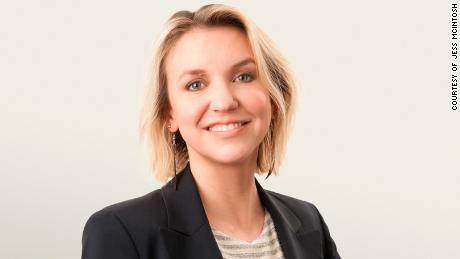
Jess McIntosh
The Democratic Party should look and govern like the majority it represents.
The new Democratic Party has no greater mandate than the restoration of small ‘d’ democracy. We must enact structural court reform, end the filibuster and treat election access like the national crisis that it is. Every American must be able to vote easily and safely, and the government must not be rigged to allow a small group of men in danger of losing power to overturn the people’s will and ignore their priorities.
America has never had a truly representative democracy, and we’re going to have to fight to have one now. But the will is there — and most importantly, so are the numbers.
Jess McIntosh is a Democratic strategist and former communications adviser for Hillary Clinton. She is also the editor-at-large of Shareblue Media and co-host of the SiriusXM radio show Signal Boost.
Andrew Yang: Democrats need to start connecting with middle America

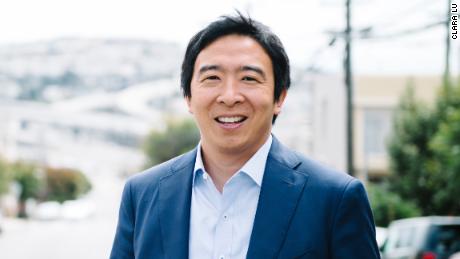
Andrew Yang
When I was running for President, I campaigned in small towns around the country, where I was frequently asked, “What party?”
“Democrat,” I would say.
Far too often, that person — a waitress, a trucker or a retail clerk — would respond in disgust. I had always believed that the Democratic Party existed to improve the lives of working-class people like them, and I was disheartened to discover they felt differently.
But their reaction reflects the sentiment of too many Americans who do not think that the Democratic Party speaks to or cares about them. They believe that we are the party of the urban enclaves and the educated elite. They think that we would rather lecture or patronize them than actually spend the time helping to solve their problems. They feel that we don’t care to understand their lives and that we believe big government should tell them what to do.
The Democratic Party needs new solutions.
The future of the Democratic Party depends on making the case to these voters that we care about them, too. We will fight to give parents the ability to say to their children, “Your country loves you, your country values you, and your country will invest in you and your future.”
Andrew Yang is an entrepreneur, author, philanthropist and former 2020 presidential candidate. He recently founded Humanity Forward, an organization built to realize the vision and ideas of his presidential campaign. Yang is also a CNN political commentator.
Jennifer Granholm: Democrats must start playing to their core strength

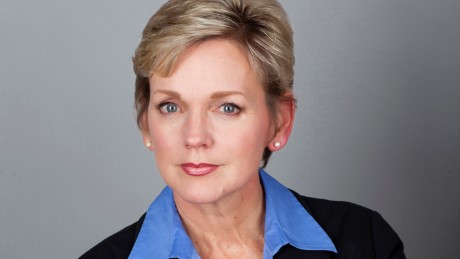
Jennifer Granholm
There is a persistent belief that Republicans are “better” for the economy than Democrats.
It’s malarkey.
The Democratic Party must start taking credit as the party that is, by nearly every conceivable metric of history and economics, better for the US economy.
Every time there is a change in leadership in the last 30 years, Republicans have trashed the economy, and Democrats have had to clean it up. George H. W. Bush’ sluggish slowdown turned into Bill Clinton’s booming 1990s. George W. Bush’s unparalleled downturn became Barack Obama’s decade of recovery. Obama’s recovery became Donald Trump’s Covid-19 crash.
In 2021, Joe Biden and the Democrats will have a hell of a mess to clean up. But if there’s anyone up to the task of building us back better, it’s Biden.
After yet another failed Republican administration, it’s no surprise that Democrats will have to build our country and economy back again. Roll up your sleeves, Democrats, we’ve got a Trump-sized mess to fix.
Jennifer Granholm is the former Democratic governor of Michigan and a CNN political contributor.
Abdul El-Sayed: Beware of the Never Trumpers

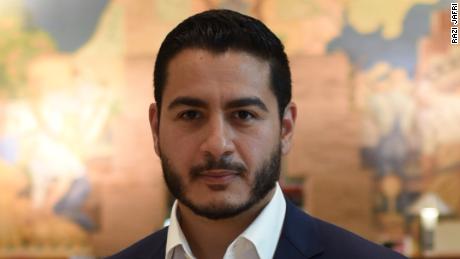
Abdul El-Sayed
Though his signature political skill is his ability to divide, President Donald Trump has ironically emerged as the single most unifying force in Democratic politics. The potential of his second term is the threat that binds everyone — from progressives like New York Rep. Alexandria Ocasio-Cortez to longtime conservative commentators Bill Kristol and George Will — together.
Pundits talk a lot about the Democratic Party’s ascendant progressive wing, which has pulled so many of the party’s policies in the direction of the needs of poor and working people. But they have all but ignored the party’s lurch rightward. As the Republican Party under Trump has rejected climate science and globalization, Never Trump Republicans like Kristol and Will have struggled to find a political home. They’ve camped right outside our party’s famously “big tent.”
More importantly, this approach will certainly lose us the future. The piercing glare from the need to defeat Trump and end the Covid-19 pandemic tends to blot out the systems that created them. Underlying them is a chronic epidemic rooted in the failures of so many of the systems we’ve counted on to deliver the basic means of a dignified life — health care, housing, competent infrastructure, a just and fair economy. And these failures are largely because they’ve been sold off to mega-corporations that have corrupted or compromised them for their own profits.
Indeed, what conservatives have orchestrated is an unprecedented federal disinvestment in the public goods that are so critical to our future. And Trump and his blunders are simply the return on that disinvestment. What our future needs is more public investment in our public schools, finally guaranteeing every American health care through Medicare for All, breaking our addiction to fossil fuels through the Green New Deal and rooting out systemic racism in every policy, law and institution that harbors it.
This moment of superlatives — the worst pandemic in over 100 years; the worst economic prospects since the Great Depression; the greatest uprisings against racism since the civil rights era — cannot trick us into believing that we can go “back” to the normal that helped create them. Rather we must move forward.
That means beating Trump, certainly. But if we are serious about winning the election and the future, we need to stick clearly to our ideals and ask those who would join our tent out of shame for what their ideology has wrought to check that ideology at the door. It has failed them — and failed us all.
Abdul El-Sayed is a physician, epidemiologist and former health director for the city of Detroit. He is also a CNN political commentator and author of “Healing Politics: A Doctor’s Journey into the Heart of our Political Epidemic.”
Alexandra Rojas: Be the party of fundamental, not incremental, change

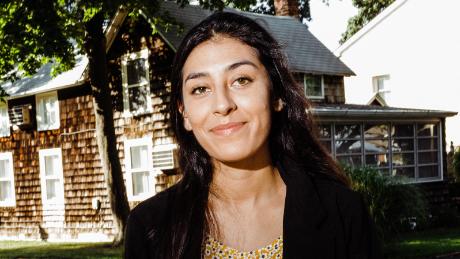
Alexandra Rojas
The coronavirus has upended our economy and society, leaving millions without work and without health insurance. This crisis has made it painfully clear that the status quo is unsustainable, and that just going back to the way things were before President Donald Trump assumed office isn’t good enough.
People want the Democratic Party to go bigger — and to offer a bold vision that matches this historic moment. To win not just this year, but in the decades to come, the Democratic Party must be the party of fundamental change, not incremental change.
That’s why I believe that the future of the Democratic Party is, in many ways, a return to its past: We need to embrace the ambition of the New Deal in the 1930s, which established Social Security and the minimum wage, and the Great Society in the 1960s, which gave us Medicare and Medicaid. We need to return the party to its roots in the labor and civil rights movements of the mid-20th century — and champion the bold ideas that have galvanized generations before us and are inspiring our generation today.
This year’s House victories by progressives like Jamaal Bowman in New York and Cori Bush in Missouri have shown that Reps. Ocasio-Cortez, Ayanna Pressley of Massachusetts, Ilhan Omar of Minnesota and Rashida Tlaib of Michigan weren’t flukes; they were just the beginning.
Biden knows that if he enters the White House in 2021, he won’t be governing with the Congress from 2009. The Squad is here to stay, and it’s growing.
Alexandra Rojas is the executive director of Justice Democrats, the left-leaning grassroots organization that recruited Alexandria Ocasio-Cortez to run for Congress, and a CNN political commentator.
Van Jones: Embrace a ‘humanity first’ kind of populism

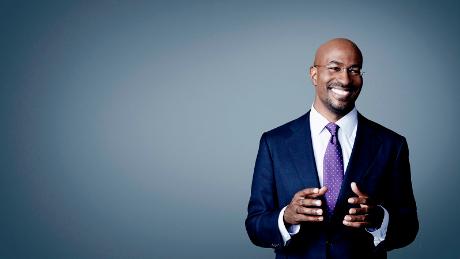
Van Jones
The Democratic Party would do well to shake off its image as a party for the coastal elites — and more fully embrace a friendlier version of populism. But not the kind of populism that we have seen recently — from either end of the political spectrum.
Instead, Democrats should adopt the fresh, positive, “Humanity First” populism that Andrew Yang brought forward during the primaries.
Let me note that the term “populism” has become a dirty word. But the concept does invoke an approach to politics that has enduring and growing appeal. At their best, populists champion the unaddressed problems of everyday people. They give voice to the “least of these,” those who are struggling. They challenge the obsessions and preoccupations of those who are already in power. And they encourage mass participation in politics and governance.
The reality is that those who make up the base of the Democratic Party need real answers. Demographically, the future of the Democratic Party lies with the diverse, rising generations. And those folks are threatened by the economic challenge of automation and the ecological onslaught of climate change. To meet the challenge, the future of our party lies with people who are putting forward creative, mixed-economy solutions to these big problems.
Neither Joe Biden nor Kamala Harris are associated with either of the camps of negative populism. Biden is a big-hearted leader who longs for respectful disagreement. Harris’ life story shows what is possible in America. Based on temperament and biography, these two leaders have the potential to unite America. But they have not yet articulated the ideas that could actually pull the country back together.
Fortunately they do not have to look too hard to find the ideas to make up a positive populism. They can just listen to Andrew Yang speak next week at the convention and take notes.
Paul Begala: We need to seek out converts

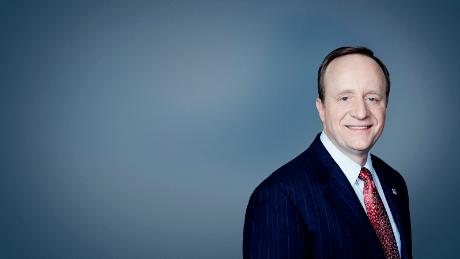
Paul Begala
At the same time that the Biden-Harris coalition is amazingly broad, it is also astonishingly unified. In my 37 years in and around Democratic politics, I have never seen anything quite like it. Of course, nothing unites the people of Earth like a threat from Mars, and many Americans regard Donald Trump as a dire galactic threat.
Holding that coalition together will require tremendous political skill. Holding together a big, broad, diverse, multi-racial, multi-ethnic, multi-cultural, multi-gender, multi-generational, multi-regional, multi-religious party is good training for leading a big, broad, diverse, multi-racial, multi-ethnic, multi-cultural, multi-gender, multi-generational, multi-regional, multi-religious country.
The challenge for Democrats is not simply to hold together this coalition, but to expand it further. There are two kinds of political parties, just as there are two kinds of churches: those who seek out converts and those who hunt down heretics. Biden is a Pope Francis-style Catholic: he is forever seeking out converts. His selection of Kamala Harris, and his convention, will showcase Biden’s ability to destroy his enemies — by making them his friends.
Jen Psaki: Let’s reject the moderate-progressive divide

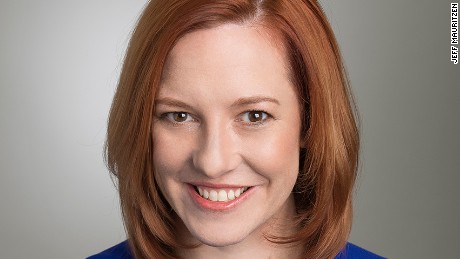
Jen Psaki
Let me throw out a wild idea. What if the way to solve the division within the Democratic Party — the perceived disagreements between the progressives and the moderates, that is — was actually to reject that oversimplified breakdown to begin with?
The longtime supporters of Democratic nominee Joe Biden don’t actually oppose all progressive ideas. And every person who supported Vermont Sen. Bernie Sanders does not think that moderate Democrats are immoral.
The narrative about party division may make for a good headline, but it repeats a mistake Democrats have made in the past — failing to understand how most people who are not in Washington, the media or professional punditry think.
The reality is far more nuanced. It is possible for someone to support the bold calls for a Green New Deal, a progressive initiative led by Sanders and New York Rep. Alexandria Ocasio Cortez, while also having concerns about what the impact of Medicare for All might be on their private health care options. It is also possible for someone to have deep concerns about the unchecked power of social media companies on society, while also supporting trade agreements, viewed as a more moderate initiative, because of the impact on their small business.
Most Americans don’t live their lives trying to neatly fit into one wing of a political party.
Instead, let’s take the best lessons we have learned this year to date.
Second, just because someone is new to politics and government does not mean he or she won’t know how things works. Knowing where the bathroom is in the Cannon House congressional building is not as important as knowing how to persuade legislators to support a particular bill.
And, at the same time, let’s stop associating political experience with weakness and corruption. If politicians have been in office a long time, it may be more effective to invite them to the party and offer a bridge for them to join the movement.
Mitch Landrieu: Now is the time to deal with systemic racism

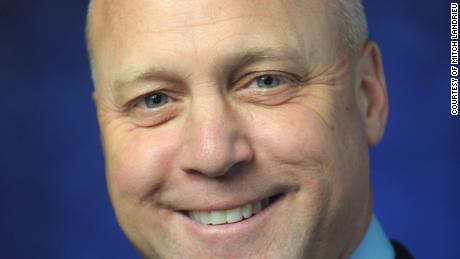
Mitch Landrieu
This is a time for choosing. We have an opportunity, with Joe Biden and Kamala Harris leading our party and the country, to reach for transformational policy.
Some in our party decry “identity politics.” But setting a vision for who we want to be as a country and then delivering on it is far from that. Winning policy that is “race neutral” will not change these outcomes. We must talk more directly about the role of systemic racism in every facet of our lives if we are to make the policy changes necessary to advance equity. Our party and our country will only be strong if we all are moving together.
The good news is that running toward the issue of racism may not present the political backlash it once would have. The last several months have proven to be a time of great reckoning for America. But even before the brutal death of George Floyd, the Democratic presidential primary produced the most robust debates on race and racial equity policies since the late 1960s. Voters today are more knowledgeable about the wounds of the past, which has never been more important given who currently occupies 1600 Pennsylvania Avenue.
Until more White Americans come to grips with the country’s past — and that includes White Democrats — we will remain stuck. We must redesign the systems that have kept us divided for generations.
It’s going to take backbone from leaders at all levels in the Democratic Party to push forward aggressively and boldly. Long after Donald Trump is gone, racism will still plague this country. Let’s hope the Democratic Party of tomorrow realizes that prioritizing issues of racial equity will not only deliver for our party’s most loyal voters but also heal the soul of our nation.
Mitch Landrieu, who served as mayor of New Orleans from 2010 to 2018, and recently founded the E Pluribus Unum Fund to help break down barriers across race and class in the South, is a CNN political commentator.