

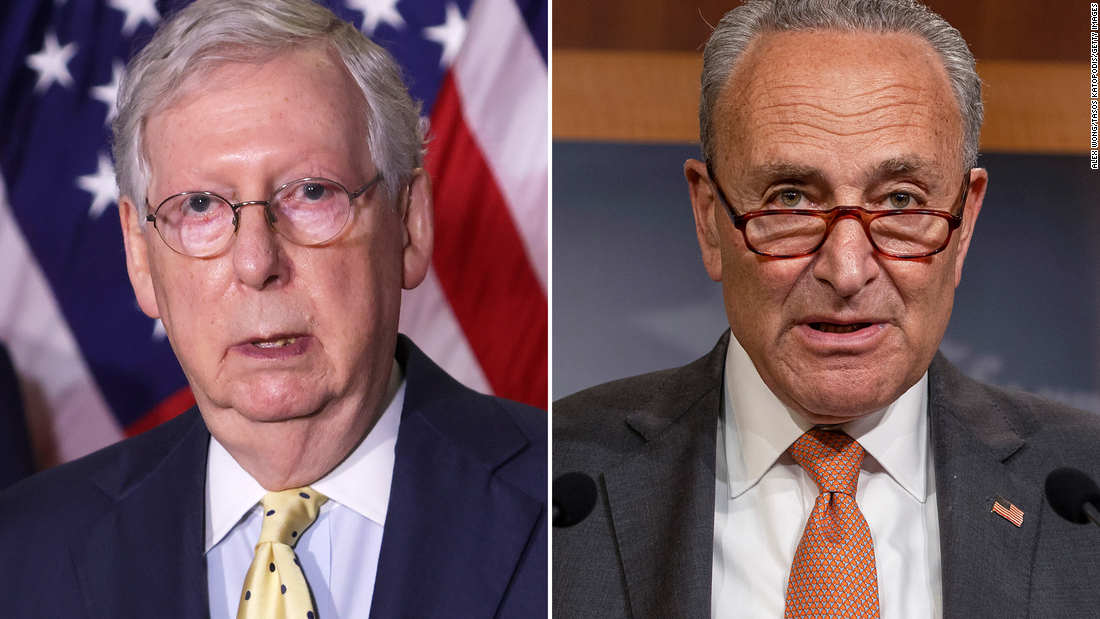
Election results give Democrats the tie-breaking vote, but McConnell is holding out for as much power as possible
The Senate is operating on the organizing resolution from the last Congress, when the GOP was in the majority. Because of that, for instance, confirmation hearings for President Joe Biden’s Cabinet picks this week are being chaired by Republicans.
Bottom line: The fight over the organizing resolution, which appeared to be a temporary disagreement on Wednesday, has reared its head as a full-out legislative crisis that could threaten to stall committee business, cast a shadow over talks about when to start the impeachment trial and constrain the first days of Chuck Schumer’s role as majority leader.
Put simply, Minority Leader Mitch McConnell is making a play to exert as much power over the Senate in his new role as possible and Schumer is going to have to make some impossible choices about how to go forward.
The challenges
But Democratic aides point out that putting that down in writing when you are at the very beginning of your new reign in power in the Senate would be unprecedented. It threatens to weaken Schumer with an invigorated base that would see the move as a massive concession in moving ahead with anything resembling a progressive agenda. It would also take a potential and powerful tool off the table if Republicans put up obstacle after obstacle to pass Biden’s agenda over the next two years. As one Democratic Senate aide put it to me: right now Manchin doesn’t support getting rid of the filibuster, but after eight months of obstruction, would that change his mind?

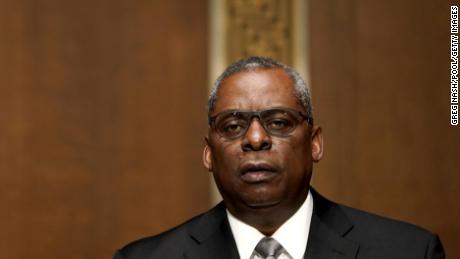
The next several hours are going to be a critical milestone in learning how Schumer and McConnell operate now that their roles have been reversed. In the past, the interactions between the two leaders have been minimal, largely reserved to talks between their staff and passionate, dueling speeches on the Senate floor. As Majority Leader, McConnell operated swiftly and decisively with consultation from his conference, but rarely from the minority.
What about the article of impeachment
Schumer said that the House’s article of impeachment will be delivered to the Senate on Monday, triggering the start of the Senate’s impeachment trial of former President Donald Trump and rejecting McConnell’s proposal to start in mid-February.
“I have spoken to Speaker Pelosi who informed me that the articles will be delivered to the Senate on Monday,” Schumer said on the Senate floor.
“We won’t be doing any confirmations, we won’t be doing any Covid-19 relief, we won’t be doing anything else other than impeaching a person who’s not even president,” said Sen. John Cornyn of Texas, a member of Senate GOP leadership.
Short of an agreement to push the trial back, Democratic sources say that the articles would be read and senators and the presiding officer — it’s still unclear whether Chief Justice John Roberts will preside — would be sworn in on Tuesday afternoon. Then arguments would start on Wednesday. The length of the trial is still an open question, which will depend both on whether the House impeachment managers seek to call witness and the length of senators’ questions for the legal teams. But sources say most believe the trial will be shorter than the three-week 2020 impeachment trial for Trump.
This story and headline have been updated with additional developments Friday.
CNN’s Jeremy Herb contributed to this report.