

One medical expert warns it is a very dangerous time to be unvaccinated in the country
And the country has averaged more than 49,400 new Covid-19 cases daily in the past week, according to Johns Hopkins. On January 8, the country averaged more than 251,000 cases every day — the highest seven-day average of the pandemic.
“We are starting to see the effects of all these vaccinations,” Dr. Ashish Jha, dean of the Brown University School of Public Health told CNN on Monday.
Especially, he added, among the country’s older population, which was prioritized early on for the shots.
“This pandemic now is really among young people and it is a very dangerous time to be unvaccinated in the country because it is spreading pretty efficiently among young people and unvaccinated people,” Jha said.
So it’s critical that younger Americans get a shot as well, experts say, for both their own protection and to help the country reach widespread protection.
Governor: Young Oregonians hospitalized with ‘severe’ Covid-19
In Oregon, Gov. Kate Brown recently tightened some restrictions amid a surge in new cases and hospitalizations.

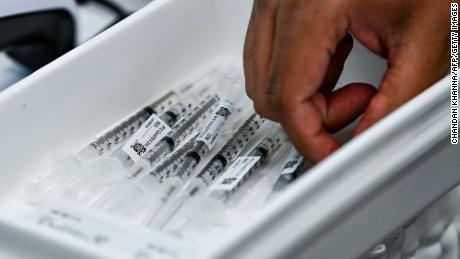

A man wearing a mask walks on Melrose Avenue on April 22, 2021 in Los Angeles, California
US could be dealing with this for ‘a long time’

More than 44% of the total US population has gotten at least one vaccine dose and nearly 32% is fully vaccinated, CDC data shows.
Among US adults, more than 56% have gotten at least one shot, the data shows, and more than 40.5% are fully vaccinated.
Once the US is able to vaccinate more than 70% of its adults, we may finally be able to see a semblance of normalcy, Jha said on Monday.
“Case numbers will plummet. We may not be at herd immunity, we’ll see little outbreaks here and there but life will begin to really get back to normal,” he said.
But what if we don’t get there?
“That’s a problem,” Jha said. “We’re going to be stuck with dealing with this for a long time.”

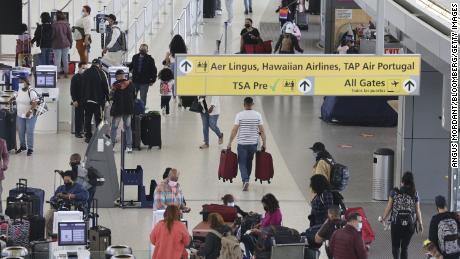
“If we just don’t vaccinate, then obviously one of the things we’ve known is we get big outbreaks, you can get more variants,” he said. “It’s going to be hard to do those large gatherings, indoor concerts, outdoor baseball games, this stuff will get much, much harder if we do not make more progress on vaccinations,” he added.
What could likely happen, one expert said, is communities that have a lower vaccination coverage will continue to see high transmission of the virus, while in other parts of the country with more vaccinations, case rates will be much lower.
“In this country, there’s a real divide around vaccination,” former acting CDC director Dr. Richard Besser told CNN. “People tend to live among people with similar beliefs.”
An important authorization could come next week
The one puzzle piece experts say is missing is getting children inoculated.
But there’s good news on that front.

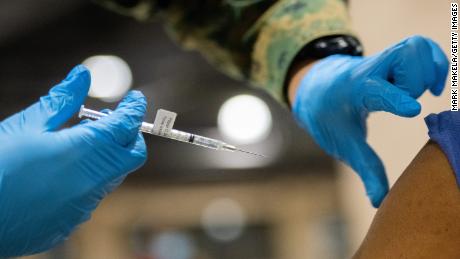
Pfizer has applied for emergency use authorization. The FDA, which is currently reviewing data submitted by Pfizer, will have to amend the emergency use authorization for the vaccine, but the process should be straightforward, the official said.
A group of advisers to the CDC will schedule a meeting for after any FDA decision to extend the EUA to new age groups and will advise the CDC on whether to recommend the use of the vaccine in 12 to 15 year-olds.
Walensky will then have to decide whether the agency will recommend the vaccine’s use in the new age group.
“That will immediately add millions of more people eligible for vaccination. I bet a lot of those kids will get vaccinated,” Jha told CNN. “That will make a big difference as well in terms of building up population immunity.”
Pfizer and Moderna are both testing their vaccines in children as young as 6 months old and expect to ask the FDA for EUAs covering infants and children later this year.
CNN’s Deidre McPhillips and Maggie Fox contributed to this report.