

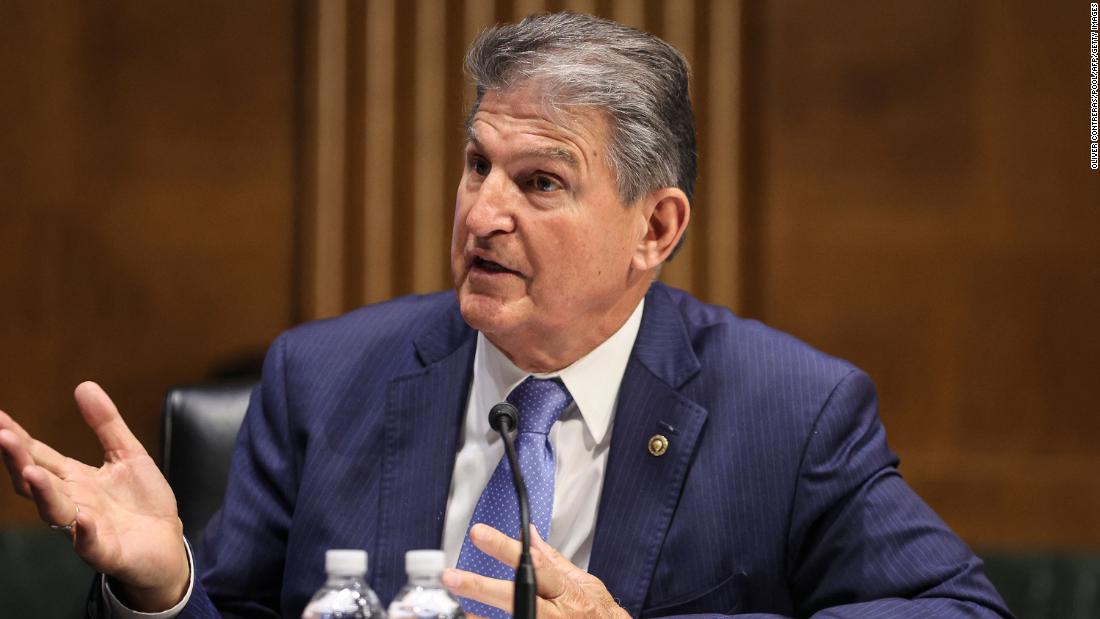
The senator from West Virginia has steadfast positions that infuriate more progressive Democrats and spark endless fascination with his motives
Manchin is the most prominent moderate Democrat who could block future efforts to ram infrastructure spending, voting rights reform, climate change legislation — and anything else — through a 50-50 Senate without Republican votes. His steadfast positions not only infuriate more progressive members of his party, from far more liberal parts of the nation than deep red West Virginia, but they also spark endless fascination with his motives — and questions over exactly what he is trying to achieve.
Perhaps most perplexing for Democrats is that Manchin is devoted to the idea of a tradition of civility and cooperation in the Senate. In this, he’s not that different from Biden himself, who has made healing divides and reaching across bipartisan lines a centerpiece of his presidency. Manchin holds an old-fashioned belief that the country’s poisoned divides could actually be healed if senators sit down in a spirit of give and take and thrash out a deal both sides can accept. “We can’t continue to split and go further apart. We just can’t do that, we’ve got to work together,” Manchin told Raju.
Of course, Manchin is a savvy power player. He’s a former legislator and governor of his state — one of the poorest in the nation, which is already being hammered by the world’s turn away from fossil fuels. If his goal is to extract extra federal funding — for green energy projects to replace coal mining jobs. for instance — he’d be a fool to reveal his price until the most opportune moment. It would be hard to find a senator who is more proud of, or combative on behalf of, his home patch. Yet Manchin, as he faces a storm of criticism from liberal Democrats, is giving no overt sign that he’s looking for special spending to buy his vote.
Still, he might have delivered a rather broad hint. Manchin appeared at a news conference on Thursday before his interview — with Energy Secretary Jennifer Granholm, who was invited to a forum on the issue for which she has Cabinet responsibility. “We’re here to show Secretary Granholm what we have to offer, what we’ve been able to do for the last 100 years … and what we’re prepared to do,” Manchin said.
And if he is engaged in an intricate electoral balancing act, then it’s one that produced a 50-50 Senate for Democrats in which Vice President Kamala Harris has a tie-breaking vote. Had Manchin lost three years ago, Biden would have Sen. Mitch McConnell, a Kentucky Republican, as Senate majority leader, in his grill every morning.
More time
On Thursday it emerged that the President had made another significant concession — apparently dropping his call for corporate tax rates to be raised from 21% to 28% to pay for the plan — a proposal that would have been dead on arrival with the GOP. The President is now suggesting that the package could be financed by imposing a minimum tax on corporate profits of 15% and closing loopholes used by corporate giants to avoid paying taxes.
His moves are sure to fuel concerns by liberal Democrats that the President is going too far to honor his own rare predilection in his party for seeking bipartisan ground with Republicans. The fact that Manchin says the talks must go on if the GOP tries to drive an even harder bargain will only exacerbate fears by progressive Democrats that the GOP is taking them for a ride.

Given the measures’ political implications, there is no chance that 10 Senate Republicans will join Democrats in a 60-vote supermajority to pass it. Therefore, Manchin is under pressure from Democrats to agree to abolish or to amend the 60-vote filibuster rule — assuming that he, Arizona’s Sen. Kyrsten Sinema and some other Democrats with reservations about the bill can be coaxed on board.
But he’s showing no sign of budging on that either.
“We’re going to make the place work, and you can’t make it work unless the minority has input,” Manchin said, defending the filibuster. “You can’t disregard a person that’s not in the majority; the Senate was never designed that way.”
His position is again one that fuels claims that he is naive, is seeking bipartisanship for its own stake and is allowing himself to be used by hardline Republicans dedicated to blockading Biden’s presidency.
Filibuster fury
Many Democrats argue that the GOP is abusing the filibuster and is helping to protect one of the most flagrant attempts ever to crush American democratic freedoms across the country.
“The constitutional framers did not anticipate that so many votes on important matters would require a minority to be in charge,” Democratic Rep. Madeleine Dean of Pennsylvania said on CNN “Newsroom” last Sunday.
“They thought a simple majority vote should be in charge.”
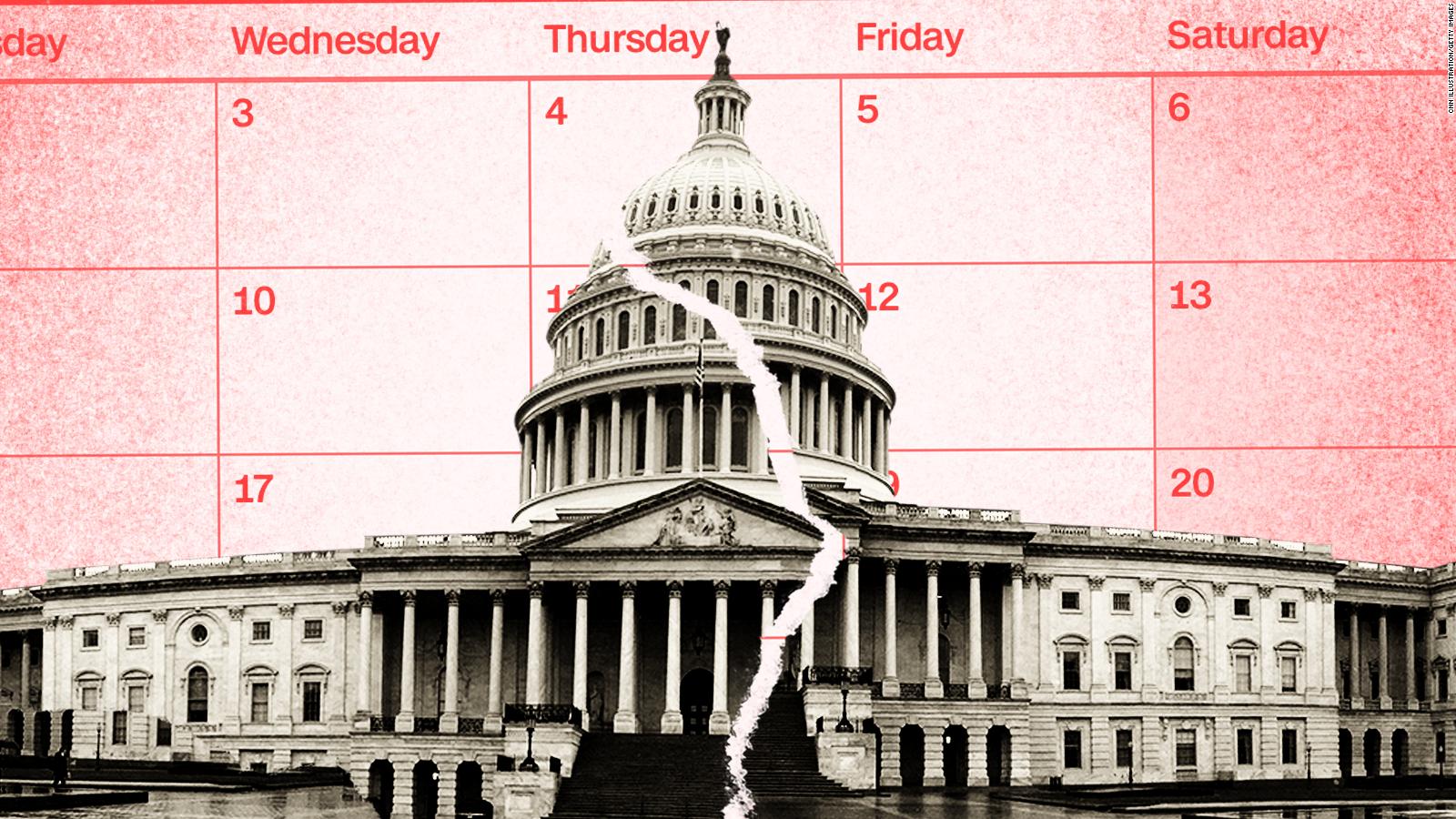
Related interactive: Congress is at the mercy of one Senate rule, the filibuster
Four years later, Republicans went one step further, allowing them to install what is likely a generational conservative majority on the top bench. Still, many Democrats reject this argument, reasoning that McConnell’s hard-driving style and willingness to write his own rules for Senate procedure make it likely that he would abolish the filibuster himself if the GOP wins back control of the chamber, in order to pass a conservative wish list on issues like gun control and abortion.
Manchin did leave one tantalizing unknown unanswered during his interview. While forcibly stating his positions on the filibuster and bipartisan infrastructure negotiations, he did not nail down an absolute refusal to ever change his mind. His ambiguity at least left open the possibility that he might view Republican bad faith in infrastructure talks or flagrant electoral manipulation as a spur to shift position.
But that’s a riddle for another day.