

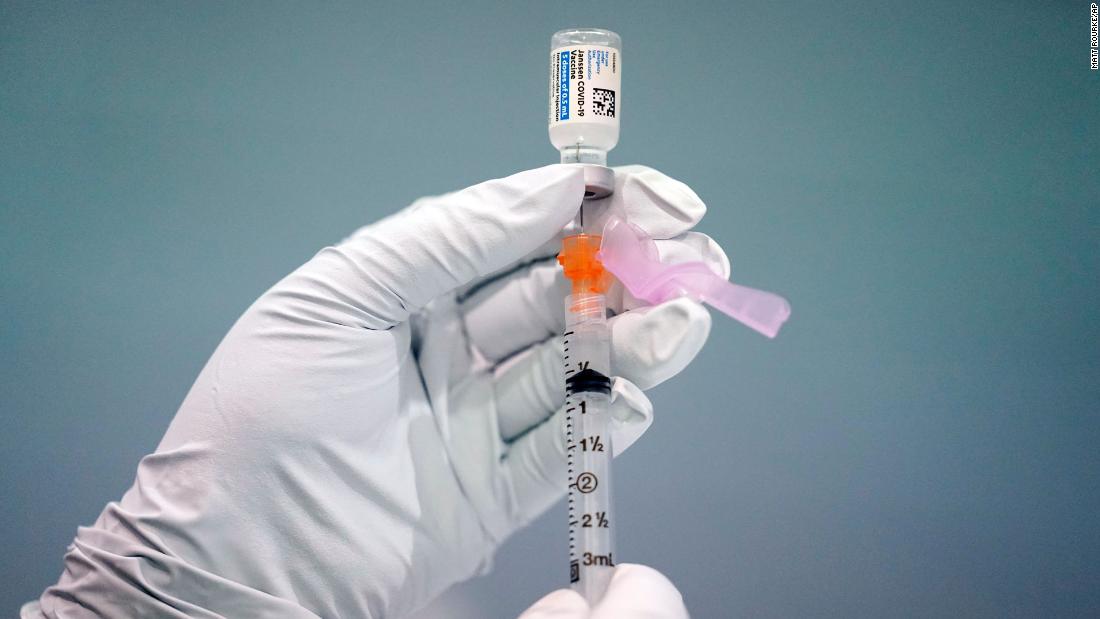
CDC, FDA looking into risk of rare nerve complication after Johnson & Johnson Covid-19 vaccine
A spokesperson for the US Centers for Disease Control and Prevention told CNN on Monday the agency had seen preliminary reports about 100 cases of Guillain-Barré syndrome out of about 12.8 million vaccinations given.
Johnson & Johnson confirmed it was talking to the CDC and FDA about the issue.
“The chance of having this occur is very low, and the rate of reported cases exceeds the background rate by a small degree,” it added.

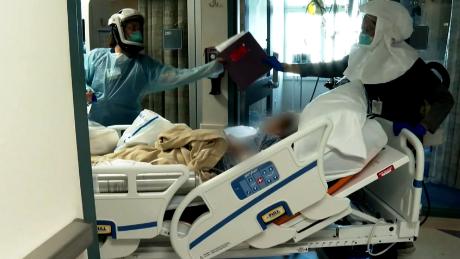
Even if the vaccine does raise the risk of the syndrome, it’s still better to get vaccinated against the coronavirus, the CDC stressed.
“GBS is a neurological disorder in which the body’s immune system damages nerve cells, causing muscle weakness or in the most severe cases paralysis. Each year in the United States, an estimated 3,000 to 6,000 people develop GBS; it is typically triggered by a respiratory or gastrointestinal infection. Most people fully recover from GBS,” the CDC spokesperson said.
“Reports of GBS after receipt of the J&J/Janssen COVID-19 Vaccine in the Vaccine Adverse Event Reporting System (VAERS) are rare, but do likely indicate a small possible risk of this side effect following this vaccine,” the spokesperson added.

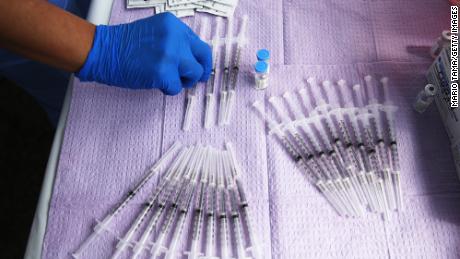
“Around 100 preliminary reports of GBS have been detected in VAERS after 12.8 million doses of J&J/Janssen COVID-19 Vaccine administered. These cases have largely been reported about two weeks after vaccination and mostly in males, many aged 50 years and older.”
The same pattern is not seen with the other two vaccines authorized in the United States, made by Moderna and Pfizer. The spokesperson said the CDC’s Advisory Committee on Immunization Practices would discuss the matter in an upcoming meeting.
“In the United States, nearly all COVID-19 hospitalizations and deaths are now occurring in unvaccinated people. The risk of severe adverse events after COVID-19 vaccination remains rare. Everyone age 12 years and older is recommended to receive a COVID-19 vaccine,” the statement said.
The headline of this story has been updated to reflect that this is a rare complication.