

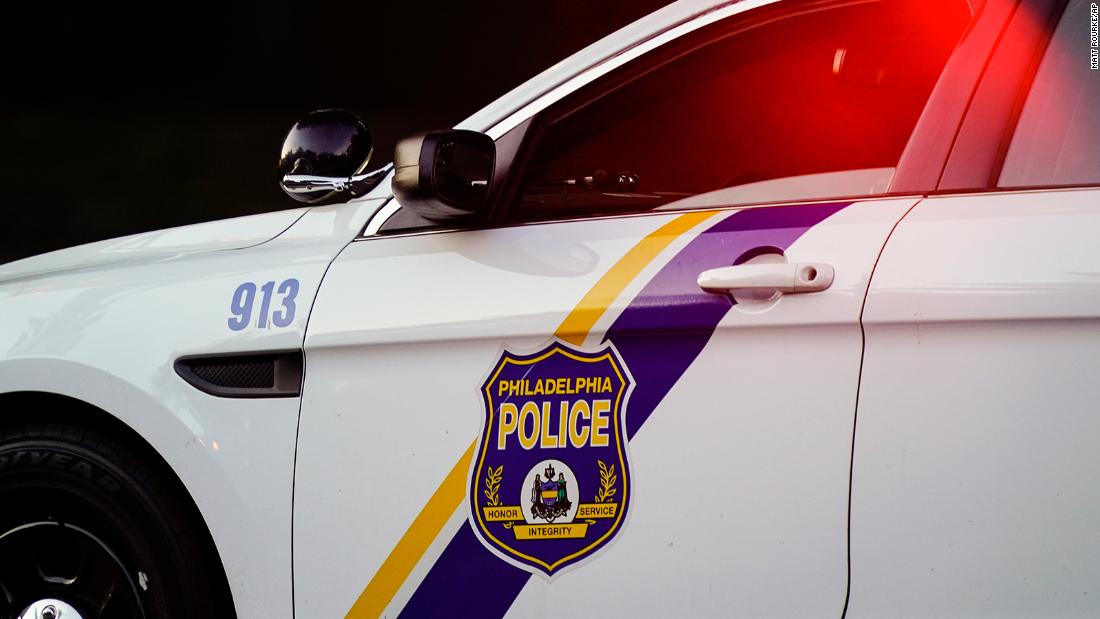
Philadelphia to become first major US city to ban police from stopping drivers for low-level traffic violations
While Philadelphia is the largest city to ban such traffic stops, some local and state governments have also enacted similar policies.
In March, Virginia became the first state to prohibit these stops within three months of the bill’s introduction. Law enforcement officers cannot lawfully stop motorists for driving without a light illuminating a license plate, without brake lights or a high mount stop light, and with certain sun-shading materials and tinting films, according to the legislation.
“The bill also provides that no law-enforcement officer may lawfully stop, search, or seize any person, place, or thing solely on the basis of the odor of marijuana,” the Virginia bill states.
The police department is on board
“The danger of not eliminating them is that it drives a wedge between the public and the police,” Kenney said. “If you’re tired of driving while Black, you’re less likely to cooperate during these stops.”
“The risk in the other direction, in the case of traffic safety, is that we prohibit some behavior and require you to have taillights because it’s safer, people can more readily stop behind you. So, by saying these violations no longer matter, then to the extent that they impact public safety, then public safety will be negatively impacted,” Kenney added.
Kenney said Philadelphia has decided that pretextual stops are disruptive and the risk to the relationship between the police and the community “is greater than the likely pay off of getting a bad guy every now and then.”
Once the Driving Equality Bill is signed into law, the Philadelphia police will work on directive amendments and necessary training. Max Weisman, a spokesperson for Councilmember Thomas, said the police department has exhibited support for the bill and has negotiated in “good faith.”
Low-level offenses such as registration plate and bumper issues will now be categorized as secondary offenses, which bar officers from conducting traffic stops, unless there is an additional high-level safety violation, according to the Philadelphia police department.
“We believe this is a fair and balanced approach to addressing racial disparity without compromising public safety,” the department said in a statement. “This modified enforcement model for car stops furthers the Department’s priority of addressing the issue of racial disparity in the Department’s investigative stops and complements the Department’s efforts to address these same issues in pedestrian stops.”
‘A traffic stop is a rite of passage’
Councilmember Thomas introduced the bill with nine cosponsors in October 2020, aiming to address “the tension between police and community members by removing negative interactions,” according to his office.
“I am humbled by every person who told my office of the humiliation and trauma experienced in some of these traffic stops,” Thomas said. “To many people who look like me, a traffic stop is a rite of passage — we pick out cars, we determine routes, we plan our social interactions around the fact that it is likely that we will be pulled over by police.”
“These bills end the traffic stops that promote discrimination while keeping the traffic stops that promote public safety,” his office said in a press release. “This approach seeks to redirect police time and resources towards keeping Philadelphians safe while removing negative interactions that widen the divide and perpetuate mistrust.”
The new legislation does not change the motor vehicle code that drivers are legally required to follow, but those who commit minor infractions now only receive a warning or citation by mail.
The bill only removes the enforcement mechanism of a traffic stop, according to Weisman. It designates seven secondary violations that prohibit traffic stops, including bumper issues, minor obstructions, broken lights, and a license plate that is not visible or clearly displayed.
Minor infractions such as broken taillights, the smell of marijuana, improperly displayed registration stickers or hanging items from a car’s rearview mirror have been criticized as a pretext for racially motivated traffic stops.
Black drivers, which comprise 48% of Philadelphia’s population, accounted for 72% of the nearly 310,000 traffic stops by police officers between October 2018 and September 2019, according to data from the Defender Association of Philadelphia. As of this year, Black drivers account for 67% of stops compared to just 12% of White drivers, the data shows.