

Boris hails ‘moment of pride’ as he unveils ‘Living With Covid’ plan TODAY
Boris hails ‘moment of pride’ as he unveils ‘Living With Covid’ plan TODAY axing legal self-isolation… but Tories join Labour and medics voicing alarm about ending free tests and minister says people with virus should still stay at home
Boris Johnson is laying out ‘Living With Covid’ plan including an end to the legal self-isolation requirementThe PM will also lay out plans to scrap free Covid tests despite anxiety from Tories about tracking outbreak Labour and medics raised concerns legal underpinning being abandoned too soon to distract from Partygate
<!–
<!–
<!–<!–
<!–
(function (src, d, tag){
var s = d.createElement(tag), prev = d.getElementsByTagName(tag)[0];
s.src = src;
prev.parentNode.insertBefore(s, prev);
}(“https://www.dailymail.co.uk/static/gunther/1.17.0/async_bundle–.js”, document, “script”));
<!–
DM.loadCSS(“https://www.dailymail.co.uk/static/gunther/gunther-2159/video_bundle–.css”);
<!–
Boris Johnson hailed a ‘moment of pride’ today as he prepares to end nearly two years of legal Covid curbs despite criticism from Labour and medics.
The PM is gathering his Cabinet this morning to sign off a new ‘Living With Covid’ strategy – with self-isolation set to be axed in England this week.
He is also expected to lay out a timetable for scrapping ‘free’ tests, which have been costing the taxpayer around £2billion a month.
But while Tories will welcome tearing up the laws that have underpinned the government’s response to the pandemic, some have voiced fears that charging for lateral flows and PCRs could cause chaos.
After wrangling between the Department of Health and the Treasury free testing is likely to be kept in place for over-80s and the most vulnerable.
There are also concerns that employers and workers face confusion when self-isolation rules lapse. In a round of interviews this morning, business minister Paul Scully said people should still stay at home if they have a ‘transmissible disease’ – although he stressed it had to be discussed between staff and bosses.
After Cabinet has its say, Mr Johnson is due to make a statement to the House of Commons this afternoon.
He will then hold a coronavirus press conference in Downing Street this evening.
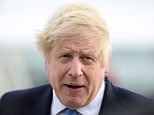
Boris Johnson (pictured) last night heralded an end to nearly two years of Covid curbs and restrictions
In a round of interviews this morning, business minister Paul Scully said people should still stay at home if they have a ‘transmissible disease’ – although he stressed it had to be discussed between staff and bosses
Professor Sir Andrew Pollard, director of the Oxford Vaccine Group at the University of Oxford, admitted this morning that the decisions are finely balanced.
He told BBC Radio 4’s Today programme the UK has a ‘wall of immunity now’ thanks to the vaccines ‘but the decision about when and how to reduce restrictions is enormously difficult’.
Prof Pollard said the benefits of restrictions are obvious in ‘reducing chains of transmission, the risks of people getting infected, the burden on the health system’, but the harms of restrictions are harder to assess.
‘They include things, just from a health perspective, like the the impact on hospitals of having staff self-isolating, the inability to perform operations, there will be surgery cancelled today that may be critical for people because of staff who are off work during that period; the impact on education, on the workplace and the economy.
‘The impacts on the economy and mental health will have longer-term consequences. So if we could find a measure that brings all of that together, we could work out the exact right moment (for lifting restrictions).’
Sir Andrew said ‘there isn’t a right or wrong answer to this because we don’t have a measure that helps us get there’.
The director of the Oxford Vaccine Group at the University of Oxford said: ‘One of the key things is, whenever we do reduce restrictions, we need to have a number of measures in place for that period, and one of the most critical is surveillance for the virus, an early warning system if you like, which tells us about new variants emerging and gives an ability to monitor whether those new variants are indeed causing more severe disease than Omicron did.
‘And that is something which can be put in place, and I hope that if there are announcements today that we’ll hear exactly how that will work.’
Ahead of the crunch day, the PM said: ‘Today will mark a moment of pride after one of the most difficult periods in our country’s history as we begin to learn to live with Covid.
‘It would not be possible without the efforts of so many – the NHS who delivered the life-saving vaccine rollout at phenomenal speed, our world-leading scientists and experts, and the general public for their commitment to protecting themselves and their loved ones.
‘The pandemic is not over but thanks to the incredible vaccine rollout we are now one step closer towards a return to normality and finally giving people back their freedoms while continuing to protect ourselves and others.’
Mr Johnson warned in interviews over the weekend that the £2billion-a-month cost of testing is simply too much for the country to bear.
And Mr Scully suggested this morning that the money will be pumped into the struggling NHS.
‘If you think what that £2billion might go towards, there’s a lot of other backlogs in the NHS, other illnesses in the NHS, that that money could otherwise go for,’ he said.
‘So for every person that is worried about a test, there may be another person that’s worried about a cancer diagnosis, for instance.’
The legal requirement to isolate if you test positive for coronavirus could end as early as Thursday, which has been dubbed ‘Covid Freedom Day’.
But Labour, unions and medical experts have complained it is simply too early to consider scrapping Covid curbs.
Mr Scully stressed that the government wants to put decisions back into the hands of businesses and workers, but when asked what people should do if they get Covid he told Sky News that ‘like any transmissible illness you’d say stay at home’.
‘I would say that it’s like any illness, frankly, any transmissible illness that you would say stay at home,’ he said.
He said if an employee had flu, they would be expected to stay at home, ‘but it’ll be down to themselves or down to their employer’.
Asked what action employees should take if their employers tried to force them in if they were ill with Covid, Mr Scully said: ‘This is why we need to make sure that we’ve got really good guidance for employers.
‘But as I say, there will come a time when the pandemic moves to more of an endemic approach to Covid, in the same way that flu and other viruses are treated, and that’s what we’ve got to get back to.
‘But it’s a fine balance, clearly, and that’s why Cabinet’s meeting this morning, to go through the science, to go through that balance and debate it and then, obviously, the Prime Minister (will) come before Parliament to make his announcement.’
Speaking to the BBC yesterday, the PM said lifting the rules did not mean the public should start acting irresponsibly.
People will still be encouraged to stay away from work if they have Covid, but it will no longer be a legal requirement.
He said: ‘It’s very important we should remain careful, and we’re certainly not asking people to throw caution to the winds.
‘We’ve reached a stage where we think you can shift the balance away from state mandation, away from banning certain courses of action, compelling certain courses of action, in favour of encouraging personal responsibility.
‘I think we need resilience, but we don’t need to keep spending at a rate of £2billion a month [on testing], which is what we were doing in January.’
Mr Johnson hoped to never have to order another lockdown, saying: ‘I don’t want to go back to that kind of non-pharmaceutical intervention, I want to be able to address the problems of the pandemic with a vaccine-led approach.’
But he cautioned: ‘Covid remains dangerous if you’re vulnerable and you’re not vaccinated. But we need people to be much more confident and get back to work.’
However, the British Medical Association said the Government should only end self-isolation when case rates are falling.
Dr Chaand Nagpaul, chairman of the BMA council, said: ‘You have at the moment more people dying, more people in the hospital, than you had before Plan B was introduced. It seems a rather odd decision to make.’
Meanwhile, education unions Unison, Unite and the GMB urged the Prime Minister to keep free testing and the requirement to self-isolate.
They warned that failure to provide detailed guidance risks a ‘super-spreader free-for-all’ in schools and workplaces.
Referring to ‘Partygate’ probes, Labour’s health spokesman Wes Streeting said: ‘Boris Johnson is declaring victory before the war is over, in an attempt to distract from the police knocking at his door.
‘The Government should publish the evidence behind this decision, so the public can have faith it is being made in the national interest.’
A government source said vaccines would be available for the ‘foreseeable future’, saying avoiding the return of curbs would depend on the ‘sustained population immunity’ provided by the jabs.
It came as the Government yesterday logged another 25,696 daily Covid cases and 74 deaths.