

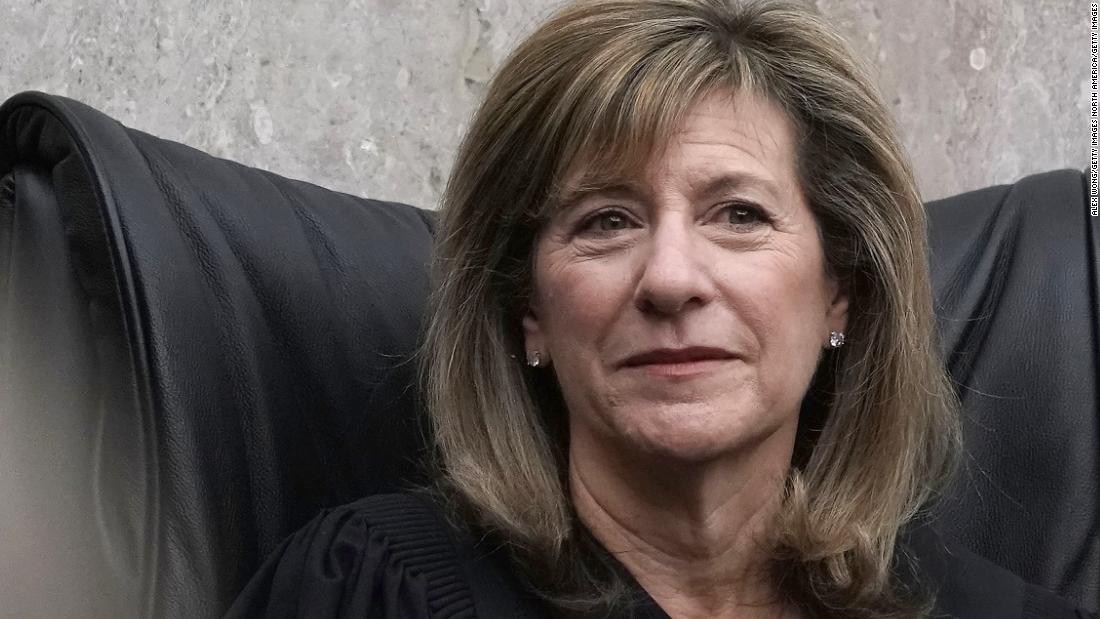
She has handled some of the most politically significant court cases of the Trump era and become an incisive voice on the corruption and political spin
Trump “continues to propagate the lie that inspired the attack on a near daily basis,” she wrote in an opinion Thursday keeping riot defendant Karl Dresch in jail. “And the anger surrounding the false accusation continues to be stoked by multiple media outlets as well as the state and federal party leaders who are intent on censuring those who dare to challenge the former President’s version of events.”
Dresch, like other Trump followers, “stands ready to do it again,” because of a belief that a civil war may be necessary and his allegiance to Trump, who continues to challenge the election, Jackson noted.
Her commentary about Barr, the Capitol rioters and the former President himself isn’t atypical coming from the DC District Court, where several judges have made headlines in recent years for harshly calling out obfuscation in the Trump administration and the criminal actors connected to Trump.
But Jackson has handled more of the most high-profile cases than perhaps any other district judge in Washington, and she still oversees historically important cases.
Jackson has noted the culture of lies repeatedly.
The same year, she told the former Trump campaign chairman Manafort, “What you were doing was lying to members of Congress and the American public.”
Taking on lying
In the Manafort, Gates and Stone cases, and now in Capitol riot cases, she sometimes has spent more than an hour speaking without interruption, outlining her legal considerations and facts of the case.
At times, those speeches have given her room to comment on what may be the defining aspect of the Trump years: disinformation.
During Stone’s sentencing, for instance, she spoke at length about the boldness of him lying to Congress to protect the President.
In the Stone case — her last major defendant to sentence from the Mueller era — Jackson gave even broader commentary than before about the historical implications of what had happened.
“If it goes unpunished, it will not be a victory for one party or another,” she told him, before sentencing him to 40 months in prison. (Trump granted Stone clemency before his surrender date.)
“Everyone loses because everyone depends on the representatives they elect to make the right decisions on a myriad of issues — many of which are politically charged but many of which aren’t — based on the facts.”
Jackson declined to speak to CNN about her experience on the bench.
Robert Trout, a defense lawyer who is a former colleague and mentor to Jackson, said that like many judges, she holds the government and political officials to a high standard.
“Do I think she believes her role in these high-profile cases is history-making?” Trout said, responding to a question from CNN about how Jackson may assess her work. “No, I think she believes she’s just doing her job. What’s history-making about that?”
Threats and intimidation
In the Stone case, Jackson also had to respond to political sniping and ad hominem attacks from Trump’s online sphere.
The hearing was high drama — unusual for the federal judiciary, especially compared to the halls of Congress and the White House, where cameras capture Washington’s most performative moments.
Setting a tone
As of March, Jackson has been on the bench for a decade.
Before her appointment from President Barack Obama, she worked as a line prosecutor and then a defense attorney, gaining experience in high-profile trials, in courtrooms like the one she now presides over. Defense attorneys who acknowledge her experience working in their shoes now say she isn’t particularly sympathetic to any side of a case.
Her responses to Stone’s Instagram and the Justice Department’s more recent handling of the obstruction memo to Barr aren’t out of line, they say, given that judges don’t like to be threatened or railroaded in their cases.
“All of the things she’s taken umbrage at, they’re well within the mainstream reaction,” said one defense attorney, who declined to use his name because he appears before Jackson in court.
Shan Wu, who represented Gates in the Mueller probe before he pleaded guilty, echoed that Jackson has a fair approach. “Her demeanor, whether it is in a sparsely populated courtroom or one packed with national media, is always the same, and I think that says a lot about her integrity as a judge.”
When deciding the first sentence for a Mueller investigation defendant, Dutch lawyer Alex Van Der Zwaan, Jackson gave him 30 days in prison for lying, a more significant sentence than other defendants with a similar crime.
Trump-era cases continue
The cases in recent years — especially Stone’s and Manafort’s — gave Jackson one of the closest views of any person outside the Justice Department on foreign lobbying and Russian connections to American politics.