

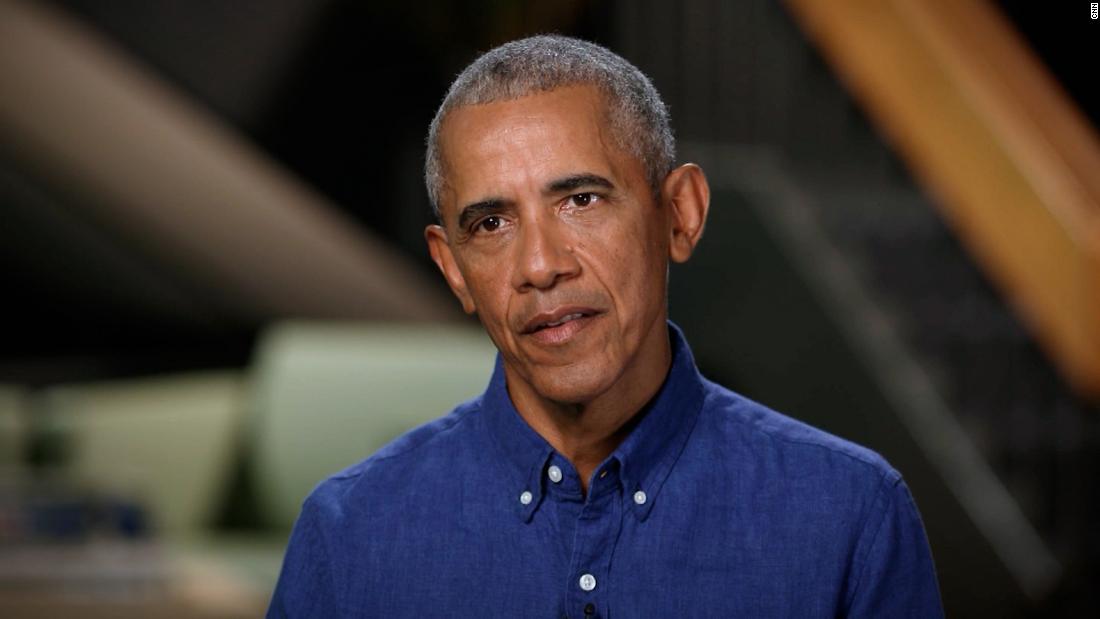
Analysis: Obama’s question for the media: How do we start telling a ‘common story?’
“All of us as citizens have to recognize that the path towards an undemocratic America is not gonna happen in just one bang,” Barack Obama said in an arresting interview with Anderson Cooper on Monday night. It happens “in a series of steps,” Obama said, citing the devolution of places like Hungary and Poland.
Obama wasn’t talking about the state taking control of private industry. He was talking about what happens when Sinclair, for instance, lards its “local” newscasts with national political stories instead of the community news that binds viewers together.
“Part of it is the nationalization of media, the nationalization of politics,” Obama said… “You know, you used to have a bunch of local newspapers, local TV stations. People weren’t having these highly ideological debates, but they were kinda more focused on what’s happening day to day.”
Obama said “part of it is also the structure of our economy and our communities,” with increased stratification and segregation. Combine that with “the siloing of the media,” he said, “so you don’t have just Walter Cronkite delivering the news, but you have 1,000 different venues — all that has contributed to that sense that we don’t have anything in common. And so, so much of our work is gonna have to involve not just policy. But it’s also, how do we create institutions and occasions in which we can come together and have a conversation?”
“Shared stories”
This exchange between Cooper and Obama also stood out to me:
Cooper: “One of the things you write, ‘We need to explain to each other who we are and where we are going.’ I mean, as somebody who has dedicated myself to storytelling, that really resonates with me. But I wonder, we — are we as a country still willing to listen to each other’s stories?”
Obama: “Well, I think that this is the biggest challenge we have… We don’t have the kinds of shared stories that we used to.”
This exchange made think about a man who recognized me from TV and yelled epithets when I stopped at a suburban garden shop to pick up flowers for my daughter’s birthday. Would he have listened to my story? If he’d known why I was there, would he have suspended his stream of bile? I don’t know — I had to leave the shop.
“The infrastructure for democracy”
The media’s small-d democratic role
“America needs a huge coalition of small-d democrats — Democratic, Republican and independent — to come together to stop this anti-democratic drift,” Perry Bacon Jr. writes in his latest for WaPo. He argues that “democracy erosion” is the most important story right now, so “we” — meaning citizens — “need the media to permanently adopt the avowed pro-democracy posture it took as President Donald Trump sought to overturn the 2020 election.”
“That doesn’t just mean covering the GOP’s anti-democratic drift negatively, but also covering it constantly,” Bacon Jr. writes. Plus, he says, news outlets need to center “more of their political coverage in the states,” since that’s where anti-democratic laws are being proposed and passed…
Something to ponder…
Obama then corrected himself and said a small number of GOP leaders did speak the truth, and were vilified for it.