

Analysis: How coronavirus will decide the 2020 race
5. Health:
When he was elected in 2016, Donald Trump, at 70, was the oldest person ever elected to a first term as president. If Joe Biden gets elected this fall, he will break that record; Biden will be 78 on Inauguration Day 2021.
Trump has worked to make Biden’s acuity and health an issue in the campaign, suggesting, without evidence, that the former vice president is not mentally up to the job.
Meanwhile, Trump’s own health has become a topic of conversation in the race — specifically an unscheduled trip he made to Walter Reed hospital in November 2019.
4. The debates:
In a country still dealing with a steadily spreading pandemic, there will be far less in-person campaigning by the two presidential candidates than in years past. And likely fewer interviews with state and national reporters.
All of which means that the trio of general election debates are that much more important this time around. Because they will function almost certainly as the best — and only — non-scripted events featuring both candidates between now and November 3. And as such, represent Trump’s biggest chance to change the arc of the race — and Biden’s biggest potential pitfall to lose it.
So, what do we know about the two men as debaters?
Biden is, well, so-so. He struggles with bringing key facts out on the spot and thinking quickly on his feet. He is also a debate rule-follower, often cutting off his answers mid-sentence when he reaches the approved time limit.
As a result of Trump’s debating style, the moderators — Chris Wallace of Fox News for the first, C-SPAN’s Steve Scully for the second and NBC’s Kristen Welker for the third — will play an HUGE role in how the proceedings play out.
Do they fact-check Trump in real time? Do they allow him to go far over time? Does he simply ignore their attempts to make him stop talking?
3. Election interference:
The issue is that Trump (and Barr) don’t agree. Instead, the President has spent many tweets insisting that the rise in mail-in balloting — as states seek to mitigate the spread of the coronavirus — is the real threat to election integrity.
Add it all up and what you are left with is a recipe for chaos — with foreign actors seeking to muck around in the election, a President dead-set on creating the idea of a rigged election and the very likely possibility that the vote count takes longer with so-many mailed-in ballots.
2. “Law and order” vs. racial injustice:
Anyone who watched the Republican National Convention late last month knows that the Trump campaign is heavily invested in using the protests — some violent, most not — breaking out around the country over racial injustice and policing to scare suburban voters back into the Republican ranks.
The question is whether people — especially white suburban women — buy what Trump is selling. Or put more accurately: Will these blatant appeals to fear overcome their personal distaste for Trump?
Much depends on what comes next — and neither Trump nor Biden have much control over that. In the wake of George Floyd’s death in May, the protests were largely regarded by the public as peaceful, and Trump’s tone-deaf response to them was a major factor in his tumbling polling numbers. (His handling of the coronavirus — much more on that below — was the largest factor in his slide.)
The more recent protests in Portland and Kenosha, Wisconsin have produced far more violent images — buildings burning, a Trump supporter dead — that have left people more undecided about their feelings about the unrest.
Biden has to walk a fine line here too — condemning the violence coming out of the protests while also acknowledging the roots of why people are taking to the streets: A string of Black men killed or wounded in interactions with the police.
So will the next two months make people more open to Trump’s “law and order” message? Or will Biden’s attempt to condemn riots while supporting the right to protest be enough?
1. The coronavirus election:
The coronavirus ripples — economic, educational, environmental — are everywhere, and there isn’t a single person not affected by them. And practically everyone has a strong opinion about how Trump has handled the virus.
Asked which candidate would deal better with the ongoing pandemic, 53% chose Biden while just 41% chose Trump.
The President’s numbers — on coronavirus and in general election matchups — have been strikingly consistent over the summer. That is, again, bad news for him as it suggests that the public’s mind is largely made up on the matter.
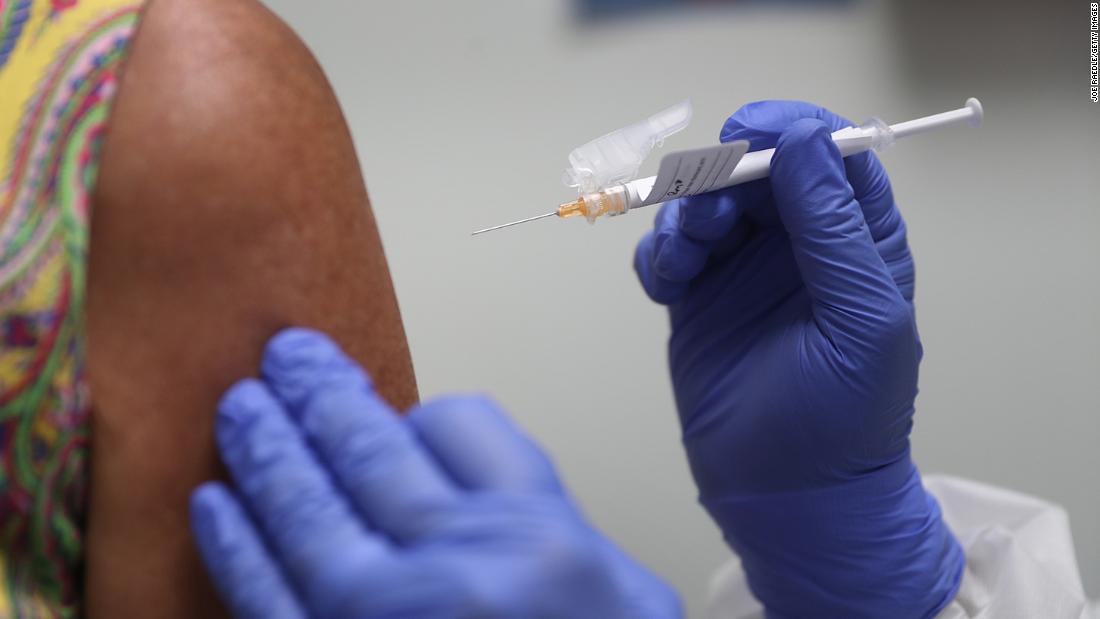
How could the incumbent change such a politically problematic dynamic? Trump, if his public pronouncements are to be believed, thinks that he has a silver bullet: The announcement of a vaccine before the election.
The first part of that tweet is false. The second part is aspirational. If a vaccine does emerge pre-election, it’s still no guarantee to change Trump’s fate.
How widely available will it be? How effective will it be? How soon before the election will an announcement be? And what if it doesn’t come pre-election?
Trump is in a worse place right now than he was in 2016. And that’s because a majority of Americans don’t trust him to handle the single largest issue — by a lot — they believe is facing the country.