

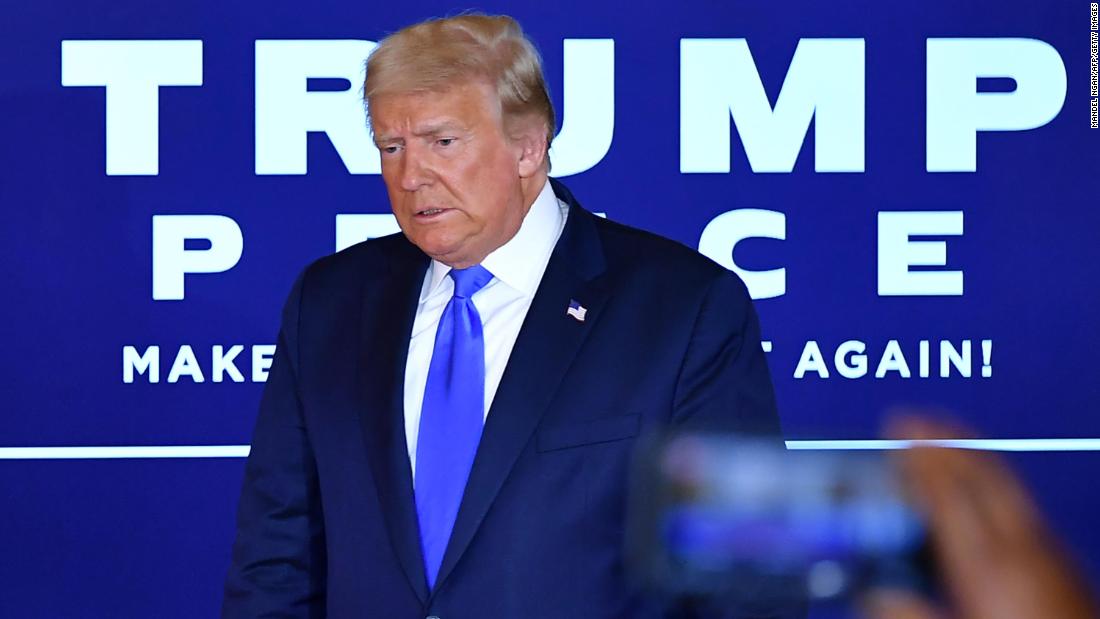
As Trump wrestles with defeat, pardons loom for allies and himself
From campaign associates to members of his family — and even possibly himself — Trump could use his expansive pardon power to try to settle legal questions on his way out the door.
Perhaps the biggest looming pardon question is whether Trump will consider granting himself a pardon, amid state investigations into his business and finances and the prospect of federal investigators scrutinizing him after he leaves office.
Trump has been asking aides since 2017 about whether he can self-pardon, former aides tell CNN. One former White House official said Trump asked about self-pardons as well as pardons for his family. Trump even asked if he could issue pardons pre-emptively for things people could be charged with in the future, the former official said.
“Once he learned about it, he was obsessed with the power of pardons,” the official said. “I always thought he also liked it because it was a way to do a favor.”
Former aides to Trump are split on whether Trump would actually consider giving himself a pardon. Some see it as a near-certainty — “Of course he will,” the former official said — while others believe it’s unlikely, because doing so would imply he’s guilty of something.
A highly personal process
To date, Trump’s record on presidential pardons is — like much of the rest of his presidency — marked by personal connections, showmanship and an aversion to going through official government channels.
The Office of the Pardon Attorney, a Justice Department bureaucracy that is usually active in vetting clemency applications has been left out of Trump’s highly personal process in deciding pardons, playing a role in only eight of the 27 pardons issued by Trump, according to a spokeswoman.
Instead, beneficiaries have won clemency by getting their requests to Trump through friends, Fox News personalities or Hollywood celebrities who talk to the president. That unusual pipeline has worked for people like Joe Arpaio, former Arizona Sheriff, Dinesh D’Souza, right wing commentator, and Michael Milken, a financier convicted of securities fraud.
Trump’s arrangement is likely to benefit people close to the President who are already on his radar because he claims they were unfairly targeted for prosecution.
Among those likeliest to benefit are former Trump campaign associates who have convictions following Special Counsel Robert Mueller’s investigation: Michael Flynn, George Papadopoulos, Paul Manafort and others. Trump has long claimed he and his campaign were illegally targeted and that campaign associates only got into trouble because of their association with him.
Several officials said Flynn — whose guilty plea to Mueller is being litigated after the Justice Department sought to dismiss it earlier this year — would be at the top of Trump’s list of pardons.
Trump has previously dangled pardons for witnesses who testified before the special counsel, including Manafort and Flynn, and Mueller’s report detailed Trump’s public discussion of pardons in the volume on possible obstruction of justice.
The White House declined to comment on the matter.
An ‘absolute right’
Trump’s legal team and administration officials have downplayed the prospect. There’s no precedent for doing so and the constitutionality of such a pardon is untested constitutionally, with legal experts split on whether it would be legitimate.
The Justice Department looked at the question in the Nixon era and concluded it wasn’t within the president’s power to pardon himself. “Under the fundamental rule that no one may be a judge in his own case, the President cannot pardon himself,” the Office of Legal Counsel wrote in August 1974.
The OLC memo laid out alternate possibilities of which Trump could avail himself: he could temporarily declare himself unable to perform his presidential duties, allowing the vice president to act as president, including by issuing him a pardon, and then the president could resume his duties as president, or resign. The OLC memo also said Congress could pass a legislative pardon.
Several people familiar with the matter said that despite the President’s interest, the White House counsel’s office under Don McGahn, Ty Cobb and Emmet Flood didn’t research the matter and didn’t consider it as a serious possibility.
“He asked stuff all the time — asking this stuff of everybody,” one person said.
One former official said Trump was so fascinated by his pardon powers that senior level officials would sometimes bring up their research on the matter just to get Trump off another subject they wanted to steer away from.
There is precedent for a pre-emptive pardon — former President Gerald Ford pardoned former President Richard Nixon after he resigned from office. But another senior former White House official cautioned against the notion that Trump would give himself a pardon, because it would suggest that he’d done something criminal that required it.
Another reason it was less likely, the official said, was that a pardon would only apply to alleged federal criminal behavior — meaning it wouldn’t stop the New York state attorney general’s or the Manhattan district attorney from investigating him.