

Biden wants to remove this controversial word from US laws
But the symbolic significance is huge.
Biden’s proposed bill, if passed, would remove the word “alien” from US immigration laws, replacing it with the term “noncitizen.”
“How we describe people really sticks. It affects how we treat them,” he says. “How we talk about immigrants shapes the policies. It frames what are the issues really at stake here. It acknowledges that we’re talking about human beings and families.”
What the laws say now
Officials in the past have pointed to the term’s prevalence in US laws to defend their word choices.

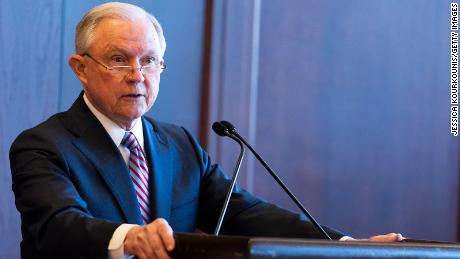
The term “alien” was often invoked by President Trump in speeches as he warned of what he saw as the dangers of unchecked illegal immigration.
“We were in the Trump administration the perennial boogeyman,” Vargas said. “Whenever Trump was in trouble, he started talking about the ‘illegals’ and talking about the border.”
But not everyone in the Trump administration was a fan of the language.
“I think the words matter a lot,” McAleenan said, according to the Post. “If you alienate half of your audience by your use of terminology, it’s going to hamper your ability to ever win an argument.”
This isn’t the first effort to change such wording
California struck “alien” from the state’s labor code in 2015.

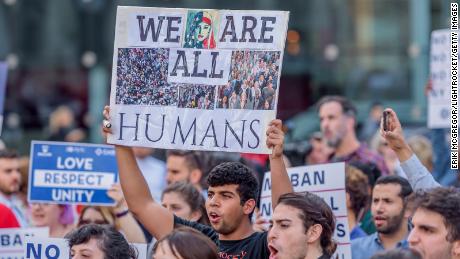
Protesters rally against a Supreme Court decision upholding the travel ban in 2018. Throughout President Trump’s time in office, immigrant advocates criticized dehumanizing rhetoric.
Prank callers targeted the term early in the Trump administration
One of the first times the use of the term “alien” drew widespread attention during the Trump administration was in 2017 after officials publicized a hotline for victims of “crimes committed by removable aliens.”
Prank callers swiftly flooded the line with reports about space aliens, sharing examples on social media of their comments about Martians and UFOs.


But Vargas says the term and others used to demonize immigrants are no laughing matter.
“Language has power. And I think we saw that in the Trump administration, how it used dehumanizing terms and how it debased language and in turn debased people,” Vargas says. “If you call them ‘alien,’ of course you’re going to put them in jail, of course you’re going to lock them up, of course you’re not going to care that you’re separating little kids from their parents.”
Vargas says the new administration’s effort to use more respectful language gives him hope that some Americans’ views on undocumented immigrants could also shift. Changing just one word, he says, could have a far-reaching impact for millions of people.