

Opinion: A military expert predicts Putin’s next move
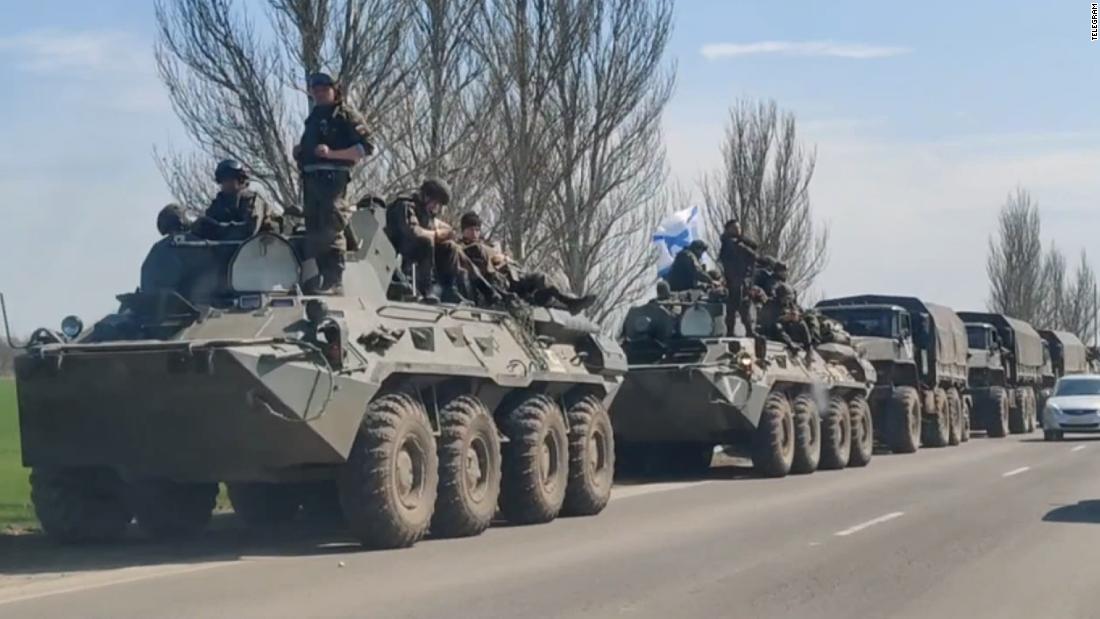
Putin’s primary target, however, appears less to be the capture of geographic territory in the Donbas than it does the destruction of Ukrainian Armed Forces (UAF) defending in the east. Militarily, that looks like a far more attainable objective than the initial target of Kyiv. Outside of the urban capital, Ukrainian defenders won’t have the protection of buildings to shield them from Russian observation, and Putin’s troops will be able to use their mobility to their advantage.
Prior to the outbreak of war on February 24, Ukraine had already positioned the majority of its army in the eastern Donbas region — focusing on the line of contact between Kyiv’s troops and Russian-backed separatists defending the Luhansk and Donetsk areas.
If Zelensky can hold the line in the Donbas, it will be virtually impossible for Putin to carry the war any further, and will buy Ukraine time to build an offensive force that could later drive Russia out of the country. If Putin’s forces succeed, they will capture or destroy a major percentage of all trained Ukrainian forces — and there will be little to stop Russian armor from capturing Kharkiv, Odessa or even return to Kyiv.
Putin will try a similar strategy in the Donbas. And if Russia can outflank Ukrainian forces in the Donbas and cut them off from resupply, it can, over time, squeeze the circle. Eventually, deprived of fuel, ammunition, food and water, the defenders, like those of Mariupol, will fall.
Up to this point, the Russian and separatist troops have made incremental progress against the Ukrainian forces defending the Donbas. That balance is now at risk of being decisively tilted towards Russia.
One of the things I learned from my tenure as the second-in-command of the divisional armored cavalry squadron for the 1st Armored Division in Germany during the mid-2000s is that often the biggest key to a battle’s outcome is something far less eye-catching than rockets, missiles and battle tanks. It is logistics. Russia’s inability to adequately resupply itself was a central failure of its ill-fated drive on Kyiv in February, and it is shaping up as a major factor in the looming Donbas fight.
Russian fighter and bomber jets, attack helicopters, precision guided missiles, hunter drones and long range artillery have been inflicting severe damage to Kyiv’s resupply lines, stopping or delaying the three most crucial needs for a defending force: food, fuel and ammunition.
Without fuel, especially, Ukraine’s troops won’t be able to conduct the mobile counterattacks that are essential for defending forces in armored warfare. They must be able to cut off enemy penetrations. Without sufficient fuel, however, the Ukrainians will be seriously constrained in their ability to cut off and repel Russian attacks.
Ukraine’s best course of action is to continue improving its existing defensive positions, stockpile as much food, fuel and ammunition as possible before the battle kicks into high gear, and do everything in its power to prevent any major penetrations of its northern or southern shoulders.
If Ukraine can store up enough supplies for its mobile tactical reserves and maintains the ability to reverse any Russian penetrations, it will give it a chance to blunt Russia’s advance and prevent encirclement. That will also buy time for Ukraine’s leaders and give them negotiating leverage with Putin as the casualties pile up for Moscow.
If Russian armor succeeds in breaking through either shoulder, however, they may be able to surround the Ukrainian battle force in the Donbas and methodically starve them of critical resources. In that case, Ukraine’s forces will slowly lose the ability to continue resisting, as they will run out of ammunition, food and fuel.
The stakes for each side in this looming battle couldn’t be higher.