

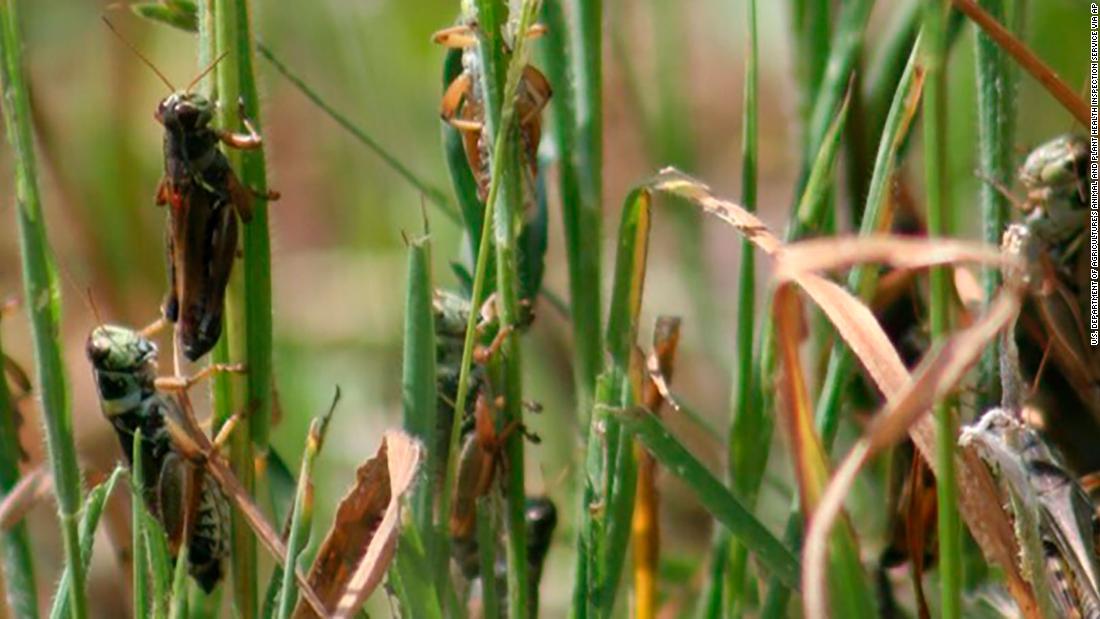
Cattle are competing against grasshoppers for food in the West’s historic drought. The bugs are winning.
“Climate change is a concern to all of us, and when we see extreme events such as a very bad drought, we see natural phenomenon increase such as grasshopper outbreaks,” Sharon Selvaggio, a former US Fish and Wildlife Service biologist, told CNN. “It’s very concerning.”
Federal agriculture officials say they saw the outbreak coming after a 2020 survey that found a heavy concentration of adult grasshoppers in the West.
To mitigate further drought-fueled economic impacts, the agency has launched a grasshopper-killing campaign — the largest since the last outbreak in Montana in the 1980’s.
Agriculture officials plan to aerially spray more than 2.6 million acres of Montana grasslands with insecticides in an attempt to kill grasshopper populations. That’s an area larger than both the state of Delaware and Rhode Island combined.
It’s not the right approach said Selvaggio, now a pesticide program specialist for the Xerces Society, a nonprofit conservation group that protects insect habitats, adding that it will be ineffective in the long-term.
“The problem with insecticide treatments is that it could actually worsen grasshopper outbreaks in the future by harming the natural enemies or grasshopper competitors which, under natural conditions, serve to limit pest grasshoppers,” Selvaggio said.
The USDA says it will only spray in low concentrations to kill grasshopper nymphs, since adult grasshoppers require larger amounts of insecticides.

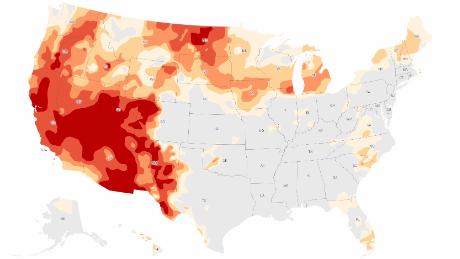
And while grasshoppers do tend to emerge during particularly hot and dry years, environmentalists say their mass appearance depends on many compounding factors, including a changing climate.
“We need to think about it as a system, not just the symptom of the problem,” she said. “Grasshoppers are the symptom of an ecosystem that’s out of balance. We need to examine the role of vegetation cover and diversity.”
Selvaggio likens grasshopper disturbance to fire, emphasizing that aggressive fire suppression practices in the West never worked to eliminate the long-term risk. Spraying insecticides to rid rangelands of grasshoppers, she says, will have the same result.
“We need to embrace a management approach that emulates the natural disturbance regime that’s considered a better way to make forest and fire resilient,” Selvaggio said. “We need a similar approach for grasshopper management on rangelands.”

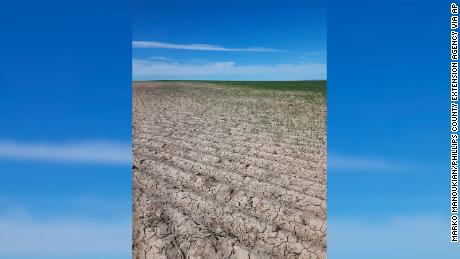
U.S. agriculture officials are launching their largest campaign in decades to kill grasshoppers in western states amid an outbreak of the voracious insects.
This year’s drought and heat waves have been record-breaking — a clear signal that climate change is already impacting all aspects of life. And because of these extreme weather changes, Selvaggio says the way land and ecosystems are managed matters.
“Climate change may bring us more grasshoppers in the future in increased frequency, duration or severity,” she said. “We need those long-term solutions to address grasshopper for the long-term because we do know that we may be facing more of this in the future if we don’t really take this seriously.