

It’s ‘inescapable’: Pacific Islanders have tried to flee the climate crisis, only to face new threats
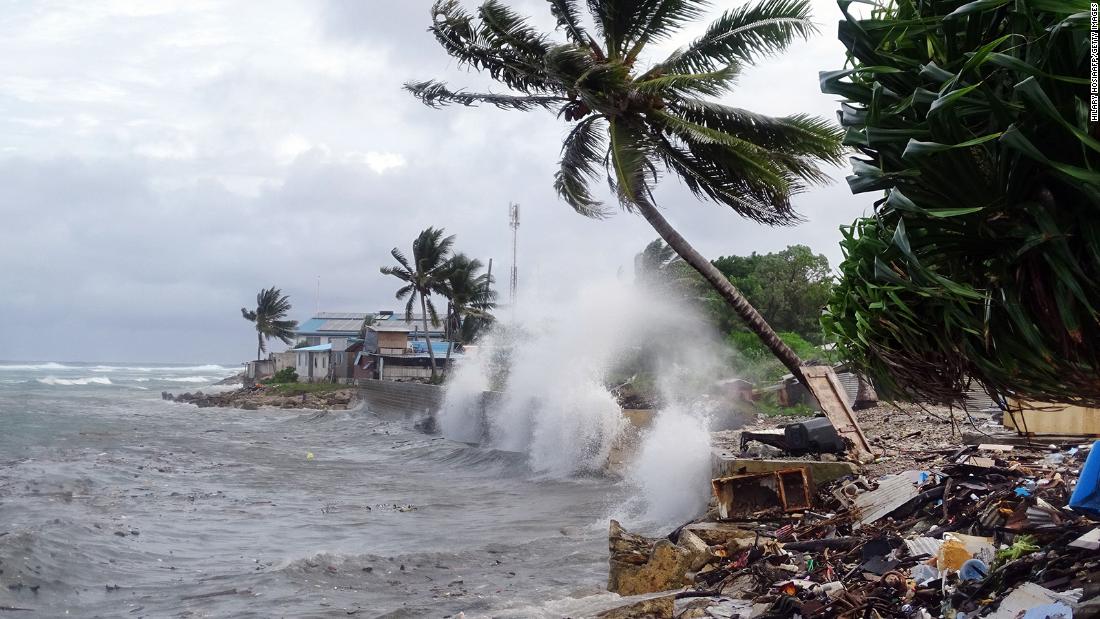
It was during those storms that Leem’s grandfather would force her family to retreat to higher ground, even as he insisted on staying behind to protect their home from the rising seas.
“I would always be so mad and terrified, because in my mind as a kid, I imagine all these horrible things happening,” Leem told CNN of those moments, “that I might not even see him tomorrow.”
With climate disasters increasing in frequency and intensity, many Pacific Islanders have chosen to leave their home islands to escape climate-related economic issues and health hazards. But where they’ve settled, climate change is appearing in different — though just as devastating — ways.
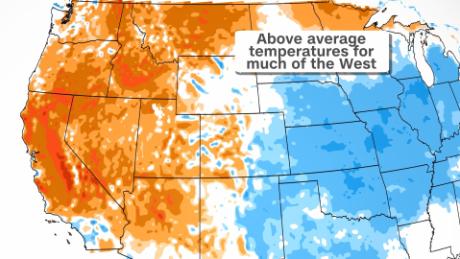
Steven Mana’oakamai Johnson grew up in Saipan but now lives in Corvallis, Oregon, where the temperature spiked to 109 degrees in late June. Johnson described himself as a climate refugee of-sorts during the heat wave, fleeing to the coast where it was more than 30 degrees cooler.
“Climate change is not new for us Pacific Islanders,” he told CNN. “We’ve unfortunately been dealing with this longer than many of our mainland counterparts.”
“The most vulnerable to climate change will always be the most vulnerable, no matter if they can migrate or not,” Johnson said. “When a storm flattens your island and you have to take a job farming in Oregon, you are not any less vulnerable, since climate change is inescapable.”
Leem, who now lives with family in Spokane, was among the growing Pacific Islander community who endured the record-high temperatures. And since many in the Marshallese community also face language and cultural barriers, she has volunteered to help during extreme events.
She described one Marshallese mother who gave birth in her home as temperatures soared to Washington’s all-time state record: “I don’t know how they did it,” Leem said. “The baby was just newly born, and they had to stay indoors that entire week under that heat wave. They had to move to the ground floor, since it was cooler than where they were in the second floor.”

“There were many families looking around for cooling spots, so we were able to locate and point them to a few whether it’s fire stations or libraries,” Anitok, who is Marshallese, told CNN. “Transportation was another big barrier for many of them, especially if it’s a multi-generational home and they only have one car to rely on, and that car is being used by someone for work.”
Anitok, along with his two kids, found relief from the heat at a nearby fire station serving as a cooling center, where he met with other Marshallese families. His organization also distributed water for Marshallese farm laborers who were working under searing conditions in the area.
“There’s still a sense of community, sticking together as best as possible,” he said. “But even then, there are still many families from the Marshall Islands that didn’t get to these resources or know about them. It was definitely hard time. People were stressed and frustrated.”
Pacific Islander communities such as Samoans, Chamorro, Tongans, and Native Hawaiians who have settled in Washington and Oregon are becoming increasingly vocal about environmental issues.

Those that remain in the country of scattered, low-lying atolls and islands are seeing worsening high tides, extreme heat and drought-stricken plantations.
At the 2015 Paris Climate Conference (COP21), Leem spoke alongside former Marshall Islands foreign minister Tony deBrum, who, as a 9-year-old, witnessed the largest bomb detonated there by the US. As one of the youngest delegates at the summit, Leem delivered a passionate, urgent plea calling on world leaders to take stronger action on climate change and to act swiftly.
Nearly six years of inaction later, she has witnessed unprecedented events from destructive wildfires to early heat waves.
“There’s definitely that fear, but we have to deal with overcoming that fear because you don’t want to remain immobilized or numbed by it,” Leem said. “It’s important to overcome it and work with solutions that we already have and how we can move forward to address this crisis.”
CNN’s Brisa Colon contributed to this report.