

NOAA’s latest projections show a 70% to 80% chance of La Niña emerging during the Northern Hemisphere winter season
Though summer rainfall brought some relief to the Southwest, the unrelenting drought there is about to get worse with La Niña on the horizon, according to David DeWitt, director at the National Oceanic and Atmospheric Administration’s Climate Prediction Center.
“As we move into fall, from October on, the Southwest US, based on all the best information that we have, they’re going to see persistent intensification and development of drought,” DeWitt told CNN. “There’s, at this point, not any indication that they’ll see drought relief.”
“The net water balance going forward, from this point as the summer monsoon ends, is that we’re going to see conditions continue to dry out,” DeWitt said. “Places that have droughts will kind of persist or intensify, and places that don’t have drought right now because it was recently ameliorated, we expect drought is going to redevelop.”
“More widely, my guess is that for much of the West, the current extent and magnitude of this drought is locked in until at least mid-2022,” Justin Mankin, assistant professor of geography at Dartmouth College and co-lead of NOAA’s Drought Task Force, told CNN.
The NOAA report concluded that climate change-fueled drought will continue to worsen and impose greater risks on the livelihoods and well-being of over 60 million people living in the Southwest, as well as the larger communities that rely on their goods and services.
“This has big implications for drought mitigation measures for different water districts, many of which are working hard not only to manage the impacts of this drought, but to invest in longer-term adaptive measures to be resilient to more droughts like this in the future,” Mankin said. “Given scant resources to do both, these water districts need our support.”
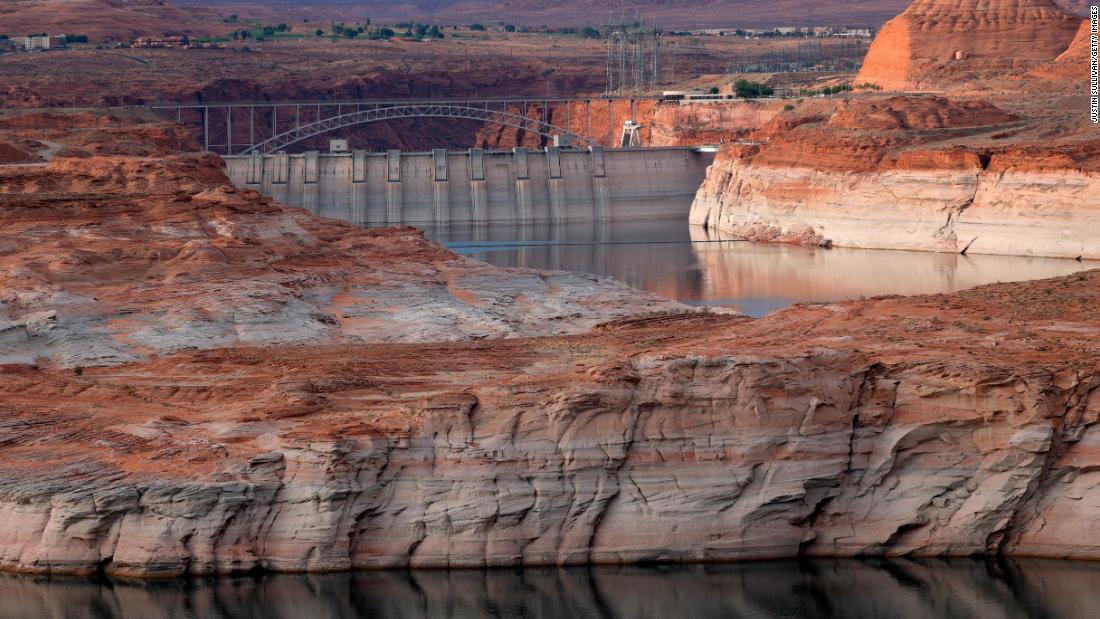
The agency also projected a 3% chance that Lake Powell next year could drop below the minimum level needed for the lake’s Glen Canyon Dam to generate hydroelectricity. In 2023, the chance of a shutdown grows to 34%.
Drought and blistering heat has fueled major wildfires in the West this summer. According to Philip Higuera, fire ecology professor at the University of Montana, warming temperatures caused the record-low level of rain and humidity that dried out trees and vegetation, which in turn ignited more wildfires.
According to Mankin, the longer-term fate of the Western drought remains bleak. What’s needed now, he said, is several years of rain and mountain snow to replenish the draining reservoirs and rivers.
That becomes more unlikely as the climate crisis worsens. Experts say the West will only continue to see more droughts like the present one in the years to come — and only rapid, immediate cuts to fossil fuels can halt this harsh trend.
“Global warming is making the atmosphere over the West warmer and thirstier, such that even the rain and snow that was once normal may be too little to quench it,” Mankin said. “The only way to stop the kind of atmospheric demand increases that have made this drought so impactful, is to stop combusting fossil fuels.”