

Congress approved the signature portion of President Biden’s economic agenda Friday night
Funding for roads and bridges
The deal also contains $16 billion for major projects that would be too large or complex for traditional funding programs, according to the White House.
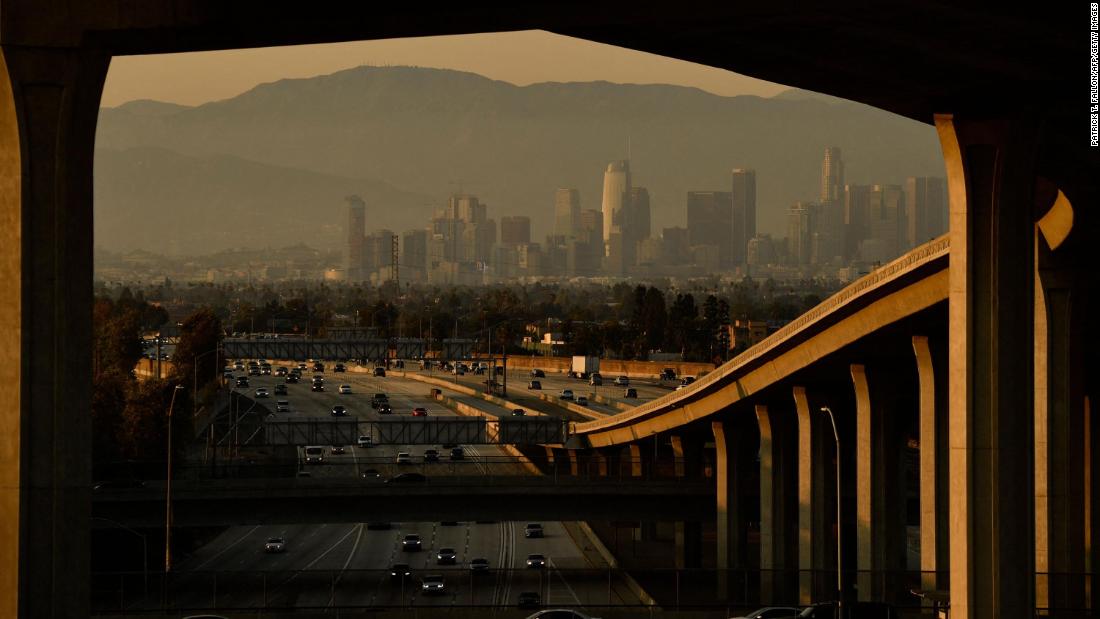
Some 20%, or 173,000 miles, of the nation’s highways and major roads are in poor condition, as are 45,000 bridges, according to the White House.
Also in the package is $11 billion for transportation safety, including a program to help states and localities reduce crashes and fatalities, especially of cyclists and pedestrians, according to the White House. It would direct funding for safety efforts involving highways, trucks, and pipeline and hazardous materials.
Money for transit and rail
The package would provide $39 billion to modernize public transit, according to the bill text. That’s less than the $85 billion that Biden initially wanted to invest in modernizing transit systems and help them expand to meet rider demand.
The funds would repair and upgrade existing infrastructure, make stations accessible to all users, bring transit service to new communities and modernize rail and bus fleets, including replacing thousands of vehicles with zero-emission models, according to the White House.
The deal would also invest $66 billion in passenger and freight rail, according to the bill text. The funds would eliminate Amtrak’s maintenance backlog, modernize the Northeast Corridor line and bring rail service to areas outside the Northeast and mid-Atlantic regions, according to the White House. Included in the package is $12 billion in partnership grants for intercity rail service, including high-speed rail.
Still, it would be the largest federal investment in public transit in history and in passenger rail since the creation of Amtrak 50 years ago, according to the White House.
Broadband upgrade
It also aims to help lower the price households pay for internet service by requiring federal funding recipients to offer a low-cost affordable plan, by creating price transparency and by boosting competition in areas where existing providers aren’t providing adequate service. It would also create a permanent federal program to help more low-income households access the internet, according to the White House fact sheet.
Upgrading airports, ports and waterways
The deal would invest $17 billion in port infrastructure and $25 billion in airports to address repair and maintenance backlogs, reduce congestion and emissions near ports and airports and promote electrification and other low-carbon technologies, according to the White House.
It is similar to the funding in Biden’s original proposal.
Electric vehicles
The bill would provide $7.5 billion for zero- and low-emission buses and ferries, aiming to deliver thousands of electric school buses to districts across the country, according to the White House.
Improving power and water systems
The bill would invest $65 billion to rebuild the electric grid, according to the White House. It calls for building thousands of miles of new power lines and expanding renewable energy, the White House said.
It would provide $55 billion to upgrade water infrastructure, according to the bill text. It would replace lead service lines and pipes so that communities have access to clean drinking water, the White House said.
Another $50 billion would go toward making the system more resilient — protecting it from drought, floods and cyberattacks, the White House said.
Environmental remediation
The bill would provide $21 billion to clean up Superfund and brownfield sites, reclaim abandoned mine land and cap orphaned gas wells, according to the White House.
How Congress will pay for it
The bill includes a multitude of measures to pay for the proposal.
But while lawmakers claim the bill pays for itself, the CBO score found it would instead add billions of dollars to the deficit over 10 years and that many of the pay-for provisions would not raise as much money as Democrats said they would.
The bottom line is that the legislation would directly add roughly $350 billion to the deficit, when taking into account $90 billion of spending in new contract authority, said Marc Goldwein, senior vice president at the Committee for a Responsible Federal Budget, a nonpartisan group that tracks federal spending.
According to the bill text and a 57-page summary of the bill, lawmakers leaned heavily on repurposing unused Covid-19 relief funds to pay for the legislation. The CBO found these measures would provide roughly $22 billion in savings, rather than the roughly $263 billion claimed by lawmakers, Goldwein said.
Also, the infrastructure proposal relies on generating $56 billion in economic growth resulting from a 33% return on investment on the long-term projects, according to the summary.
Biden has said that the bill won’t raise taxes on people making less than $400,000 a year and does not include a gas tax increase or fee on electric vehicles. He initially called for raising taxes on corporations to fund the infrastructure investments — but that proposal did not make it into the latest package after strong opposition from Republicans.
What’s missing
The bill leaves out Biden’s proposal to spend $400 billion to bolster caregiving for aging and disabled Americans — the second largest measure in the American Jobs Plan.
His proposal would have expanded access to long-term care services under Medicaid, eliminating the wait list for hundreds of thousands of people. It would have provided more opportunity for people to receive care at home through community-based services or from family members.
It would also have improved the wages of home health workers, who now make approximately $12 an hour, and would have put in place an infrastructure to give caregiving workers the opportunity to join a union.
Also left on the sideline: $100 billion for workforce development, which would have helped dislocated workers, assisted underserved groups and put students on career paths before they graduate high school.
The bill also leaves out the $18 billion Biden proposed to modernize Veterans Affairs hospitals, which are on average 47 years older than private-sector hospitals.
It also would have levied a 15% minimum tax on the income the largest corporations report to investors, known as book income, as opposed to the income reported to the Internal Revenue Service, and would have made it harder for US companies to acquire or merge with a foreign business to avoid paying US taxes by claiming to be a foreign company.
CNN’s Manu Raju contributed to this report.