
Facebook and Twitter are trying to crack down on the baseless conspiracy theory, but it may be too late
Now, the tech companies find themselves in an even more difficult position: Having to reconcile their commitments to limit the spread of harmful content without appearing to censor the politicians who are directly involved in driving those messages to an ever-wider audience.
“Once the conspiracy theorists become the elected officials, you either need to say ‘Forget it, we’re never touching anything, let the conspiracy theories reign,’ or they need to go in the other direction and say, ‘We need to no longer give elected officials an exemption anymore,'” said Dave Karpf, a political scientist at George Washington University who has studied digital political movements.
For years the companies had skirted the issue of Trump’s long history of false and incendiary statements, but this spring Twitter took the unprecedented step of notifying users that some of his claims may be misleading or violate the platform’s policies.
Trump has largely benefited from loopholes in social media policies meant for public figures. Under those policies, material that might have earned other users a suspension gets a pass because the content is deemed inherently newsworthy or in the public interest.
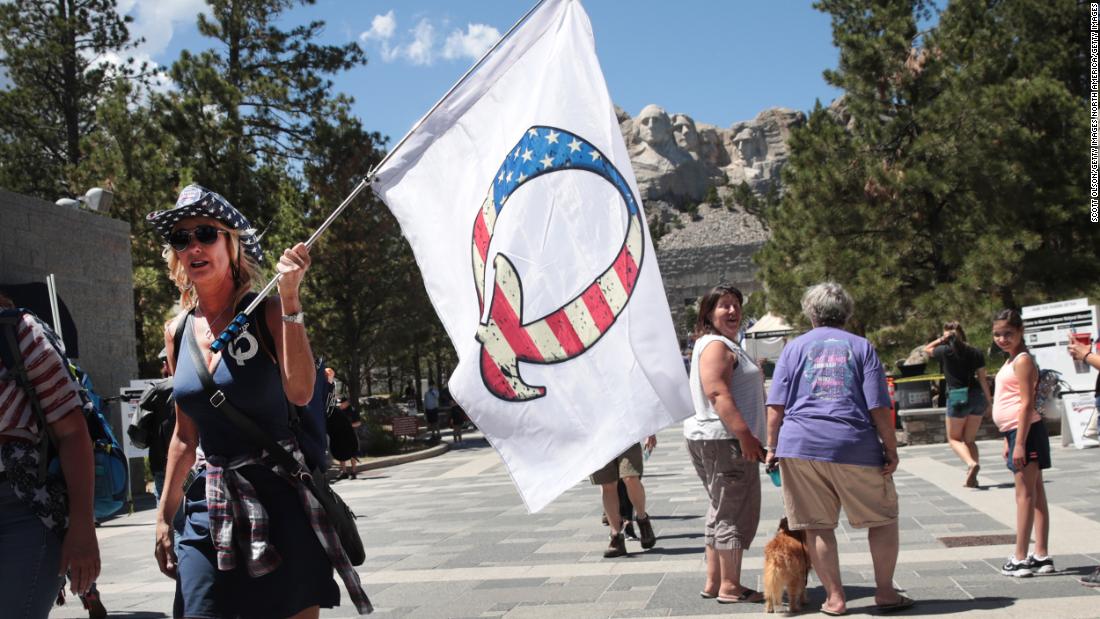
Social media platforms have recently tried to clamp down on the spread of QAnon, but even in their stepped-up efforts, they appear to be giving politicians wide latitude.

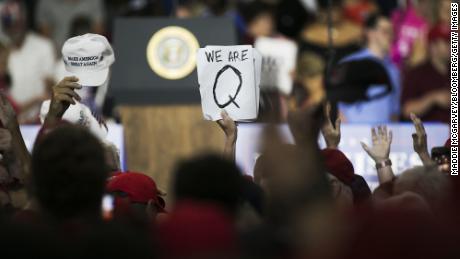
On Wednesday, Facebook said it, too, will toughen its approach to QAnon. While it stopped short of banning QAnon content entirely under its Dangerous Individuals and Organizations policy, the company said some content affiliated with QAnon will now be restricted, including QAnon posts that advocate for violence or contemplate potential violence.
Politicians like Greene will still be permitted to endorse QAnon under those policies, Facebook spokesman Andy Stone acknowledged.
“We will allow people to post content that supports QAnon, so long as they do not otherwise violate our content policies,” Stone told CNN Business. “We will restrict QAnon’s ability to organize on our platform through Facebook Groups, Pages and Instagram accounts.”
As for Loomer, both Facebook and Twitter told CNN Business she will continue to be prohibited from their platforms due to earlier hateful activity, suggesting that becoming a public official is not enough to overcome a prior ban.
But Loomer’s case is also more clear-cut than many of her fellow candidates, precisely because she had already been rejected from those services. What’s less clear is how the companies would handle a politician who behaved like Loomer prior to her ban.