

Publisher urges parents to ditch classics for modern books to help children learn ‘societal issues’
Publisher urges parents to ditch classics like Peter Rabbit and the Famous Five for modern stories that help children learn about ‘wider societal issues’
Oxford University Press is urging parents to ‘broaden’ books for their childrenTwo thirds of parents prefer to read their children books they loved themselvesBooks about two pirate mums and a boy out to save planet have been suggested
<!–
<!–
<!–<!–
<!–
(function (src, d, tag){
var s = d.createElement(tag), prev = d.getElementsByTagName(tag)[0];
s.src = src;
prev.parentNode.insertBefore(s, prev);
}(“https://www.dailymail.co.uk/static/gunther/1.17.0/async_bundle–.js”, document, “script”));
<!–
DM.loadCSS(“https://www.dailymail.co.uk/static/gunther/gunther-2159/video_bundle–.css”);
<!–
When reading their children a bedtime story, many parents enjoy turning to classic writers such as Beatrix Potter, Enid Blyton and Roald Dahl.
But now a major publisher is calling on them to ‘be more adventurous’ and pick up more modern books – which deal with topics such as diversity, homelessness and the environment.
Oxford University Press (OUP) is urging parents to ‘broaden the types of books’ they pick at story time ‘to prompt questions and build greater understanding of global issues’.
The call comes after new OUP research found that nearly two thirds (63 per cent) of UK parents prefer to read their children books they enjoyed in their own childhood, rather than choosing newer titles.
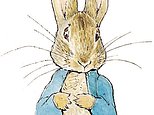
The original Peter Rabbit is an icon of children’s literature, but should parents be ‘broadening’ the books they read to their children to reflect today’s issues?
Enid Blyton’s Famous Five stories remain favourite bedtime books for parents to read to their children. ‘Five go off in a caravan’ was first published in 1946
Matilda, written by Roald Dahl in 1988, steamrollered its way into the cannon of children’s classics almost overnight
The Tale of Peter Rabbit by Beatrix Potter is a landmark of reading for generations of children, first published in 1901
When asked which book or author they most enjoyed reading to their children, parents overwhelmingly named Roald Dahl, who wrote Matilda and James And The Giant Peach.
Stories from Enid Blyton, such as Noddy and The Famous Five, and Beatrix Potter, who created Peter Rabbit and Mrs Tiggy-Winkle, also proved popular. And Astrid Lindgren’s Pippi Longstocking remained a firm favourite.
Other more recent picks included Julia Donaldson, Michael Morpurgo and Valerie Thomas’s Winnie the Witch.
Almost four in ten (37 per cent) parents said they did not know how to find out what the latest books are and almost half (47 per cent) prefer to re-read books to their child, rather than look for something new.
And it’s not just parents who would prefer to stick to something familiar.
Almost six in ten (56 per cent) said their children preferred them to revisit the same books at story time.
Stella and the Seagull by Georgina Stevens and Izzy Burton is part of a new generation of children’s books seeking to shine a light on today’s world
The Soup Movement by Ben Davis tells the story of a boy called Jordan who moves out of the city with his family after a life-threatening illness
Pirate Mums by Jodie Lancet-Grant is ‘a heartfelt reminder that what makes your family different is what makes them special’
Tim Allman’s Max Takes a Stand is about a young boy’s environmental journey to save the plant
Now the OUP has put together a list of books that it recommends to help children learn about ‘wider society’.
These include The Pirate Mums by Jodie Lancet-Grant, about a boy whose mothers are both pirates, and Max Takes A Stand by Tim Allman, about a child trying to save the planet.
Bear Shaped by Dawn Coulter-Cruttenden hopes to teach children about loss while Jon Burgerman’s Everybody Worries offers support during the coronavirus crisis.
Nigel Portwood, OUP chief executive, said it was ‘wonderful’ that classics continued to be popular with families but he added that reading is a ‘valuable tool’ to help children understand ‘societal issues’.