

Analysis: A former defense secretary’s stark warning on Russia
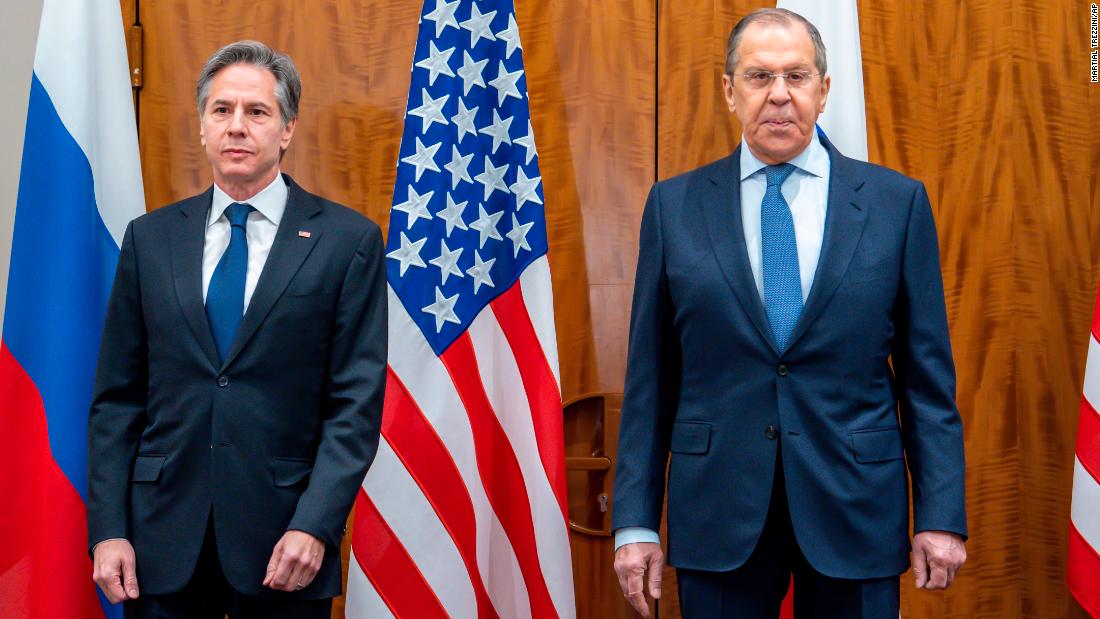
Asked in Geneva by a reporter if he thought, like Biden, that an invasion was likely, Russian Foreign Minister Sergey Lavrov used some interesting language.
“Unless the United States doesn’t go to bed with Ukraine, I don’t think so,” Lavrov said.
What does it mean for countries to ‘go to bed’? All of this high-stakes geopolitical chess, then, comes down to how intimate the US gets with Ukraine in the eyes of Russia.
After meeting with Lavrov in Geneva, US Secretary of State Antony Blinken reiterated there would be steep consequences for an invasion, but also that the two countries are still talking. The US will provide a written response to Russia’s concerns within the next week.
“He’s going to get something out of this that satisfies him, that he’s made his point that Ukraine can never become truly independent, cannot become a member of NATO and cannot have any kind of offensive arms,” Cohen said.
Those are demands, he said, the US cannot meet.
Russian-backed separatists took over the Donbas portion of the country that same year, and clashes and sniper attacks continue there.
Putin feels threatened by NATO and feels that NATO support for Ukraine is a “red line.”
Ukraine fears a preplanned coup to topple its government could be part of an invasion plan.
One way to mollify Putin may be for Biden and European leaders to promise not to bring Ukraine into the NATO fold.
Ukraine, which is not part of NATO, would like to keep its options open.
“Russia cannot stop Ukraine from getting closer with NATO and has no right to have any say in relevant discussions,” Ukraine’s Foreign Ministry said in a statement to CNN, in response to Russian calls for NATO to halt its eastward expansion.
‘Assume the worst.’ When CNN’s John King played Lavrov’s comment about the US going to bed with Ukraine for another former Secretary of Defense, Leon Panetta, he said the first thing is to be skeptical of the Russian leaders.
“I begin on the premise that you don’t trust what Lavrov or Putin say,” Panetta said.
“I don’t think we can assume that just because Lavrov says that Russia is not going to invade that that’s the case, so I just think we have to assume the worst at this point.”
Remember, they’re adversaries. Panetta went on to argue that Americans should view the Russian leaders as trying to undermine the US and NATO.
“These are adversaries,” Panetta said. “Their whole intent is to basically weaken the United States, weaken the alliance and undermine our democracy, and I think it’s very important for the US and our allies to be very strong about the kind of response that will take place if they invade.”
Emphasis on deterrence. There is no indication at all the US would send combat troops to Ukraine. It is, after all, not a party to NATO.
There are small numbers of National Guard and Special Operations troops in Ukraine as trainers. And the US gave Ukraine roughly $450 million worth of military aid in 2021 and is weighing how to help prop up the Ukrainian military.
While Russia is currently under economic sanctions, more biting efforts to cut Russia off from the Western economy could also be used as deterrents. These could include restricting Russia’s access to the US dollar and squashing its effort with Germany to build a national gas pipeline around Ukraine and directly into Europe.
The US and Europe are not on the same page when it comes to deterring Russia, something Biden made clear during his news conference this week.
Invasion will hurt the US and Europe. Everyday Americans would feel the effects of an invasion in their bank accounts.
The status of Western democracies. There is something more than the economy, however. Biden has built his presidency around the idea that democratic countries must stand up to autocratic regimes.
Collinson also explains why Americans more concerned about the economy and the coronavirus pandemic should care about this “most tense test of wills since the fall of the Soviet Union.”
Nothing less than “the biggest clash of regular conventional armies in Europe since World War II” is at stake.