

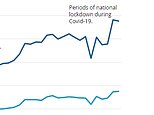
Rape and sexual offences are at their highest level ever, according to the ONS
Offenders brought to justice hits a record low: Police closed 40% of cases last year while sexual offences were the highest EVER but just 1.3% rapists were charged – as hacking soared by 161% with 13 MILLION victims
There were 63,136 rapes recorded in year to September, according to the Office for National Statistics (ONS)Just 1.3% of rapes and 2.9% of sexual offences resulted in a charge, while for crimes in general figure was 6%More cases closed due to ‘evidential difficulties’ – blamed partly on delays to legal process caused by Covid
<!–
<!–
<!–<!–
<!–
(function (src, d, tag){
var s = d.createElement(tag), prev = d.getElementsByTagName(tag)[0];
s.src = src;
prev.parentNode.insertBefore(s, prev);
}(“https://www.dailymail.co.uk/static/gunther/1.17.0/async_bundle–.js”, document, “script”));
<!–
DM.loadCSS(“https://www.dailymail.co.uk/static/gunther/gunther-2159/video_bundle–.css”);
<!–
Police have recorded the highest ever number of rapes and sexual offences in a 12-month period, new official figures showed today.
There were 63,136 rapes recorded in the year to September, according to the Office for National Statistics (ONS), an increase of 13%. Sexual offences were also at their highest ever level at 170,973, up 12%.
The ONS said the latest figures may reflect a ‘number of factors’, including the ‘impact of high-profile incidents, media coverage and campaigns on people’s willingness to report incidents to the police, as well as a potential increase in the number of victims’.
Just 6% of crimes in England and Wales resulted in a charge or summons in the 12 months to September – the lowest level since records began six years ago. For rapes and sexual offences, this reduced to 1.3% and 2.9% consecutively.
Meanwhile, the proportion of offences that were closed as a result of ‘evidential difficulties’ increased from 35% to 40%.
More than 40% of rape cases were closed because the victim did not support further police action, the figures suggest.
Lockdowns during the coronavirus pandemic saw the number of cases progressing through the justice system slow down while court buildings were closed, and with an average of 708 days now passing between the recording of a serious offence and the end of crown court proceedings it is likely some victims deciding to drop out of cases rather than spend years waiting.
Efforts were made to continue cases online, reserving only the most serious for in-person hearings. Prosecutors had to temporarily prioritise the most severe crimes and urgent cases.
The Home Office previously said it was the responsibility of chief constables and police and crime commissioners to make sure criminal cases were investigated properly.
The likelihood of a crime resulting in a charge could vary for a number of reasons, including the complexity or severity of an offence or the difficulty in identifying a suspect.
Changes in charge rates are likely to be the result of more crimes being recorded by police and forces taking on more complex cases which could take longer to resolve, the department added.
Labour’s Yvette Cooper tweeted: ‘This is the damning Conservative record of failure on law and order in today’s crime stats. More criminals are being let off. More victims are being let down. Communities deserve better than this
The ONS suggested delays to the criminal justice process caused by Covid and the increasing complexity of cases could be at fault.
There was also a boom in reported crimes that have thrived during lockdown, including fraud (+36%) and computer misuse (+89%), the latter of which was fuelled by a 161% rise in hacking. In total, 13million people were victims of fraudsters and hackers.
There were 666 murders, down one percent on the year before, while overall crime reduced by 10%, led by burglary (-21%) and robbery (-18%). Knife crime dropped by 10% to 46,239 offences – part of a long-term trend of violent crime reducing.
There was also a boom in reported crimes that have thrived during lockdown, including fraud (+36%) and computer misuse (+89%)
There were 666 murders, down one percent on the year before, while overall crime reduced by 10%, led by burglary (-21%) and robbery (-18%). Knife crime dropped by 10% to 46,239 offences.
The figures cover the months following the kidnap, rape and murder of Sarah Everard in March
The figures cover the months following the kidnap, rape and murder of Sarah Everard in March.
The 33-year-old was attacked and killed by Metropolitan Police officer Wayne Couzens, prompting a national debate about sexual violence, the safety of women and the response from government, police and prosecutors.
The ONS added: ‘The overall trend is also currently difficult to disentangle from the impact of lockdowns. Offences recorded by the police dropped noticeably during the spring 2020 lockdown before rebounding to previous levels in the July to September 2020 quarter.
‘The winter 2020 to 2021 lockdowns saw a smaller reduction in the number of sexual offences recorded by the police but a greater level of increase in these offences in the subsequent quarters.’
The figures also revealed the continuing impact of Covid-related delays and funding cuts on the court system, with the average time taken from the recording of a serious offence to the end of crown court proceedings is now 708 days.
There are now 60,000 outstanding crown court cases, including 49,000 trials.
This graph shows how a reduction in the number of murders is now a long-term trend
Other violent crimes have seen similar falls, as this graph – released by the ONS – demonstrates
Theft offences continued to fall during lockdown, following a trend that has lasted for several years
The Criminal Bar Association, the professional body for barristers, warned of a ‘perfect storm entirely of the government’s own making’.
‘It is the victims of crime and defendants alike who pay the price because of the severe shortages of judges and advocates, with it now being quite normal for complainants in serious criminal cases to be forced to wait four to five years before a trial is ever heard,’ said chair Jo Sidhu QC.
‘The government is still moving far too slowly in clearing a near record backlog of cases of its own creation, as a result of a court budget cut and closure campaign that pre-dated the pandemic.’
Meanwhile, Law Society president Stephanie Boyce, said the data showed the need for more investment.
‘The lengthy delays in trials coming to court mean a traumatised victim can be left waiting years to see their assailant locked up, while an innocent defendant can find their life in limbo while they wait to clear their name,’ he said.
‘Investment in the criminal justice system is needed now.’
Firearms offences also reduced last year during lockdown, although there was a slight increase in the use of imitation firearms
This graph shows a reduction in robbery and assaults that cause serious injury