

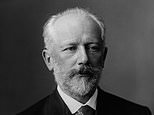
Orchestra drops Tchaikovsky from its repertoire ‘in light of Russian invasion of Ukraine’
TchaikOFFsky: Cardiff Philharmonic Orchestra drops Russian composer’s music from its repertoire ‘in light of invasion of Ukraine’
The Russian composer is widely regarded as one of the greatest of all time It said playing his music at upcoming concerts would be ‘inappropriate’ One MP criticised the decision, tweeting: ‘Putin is the enemy here. Not Russia’It is the latest in a series of cancellations of Russia in the musical world
<!–
<!–
<!–<!–
<!–
(function (src, d, tag){
var s = d.createElement(tag), prev = d.getElementsByTagName(tag)[0];
s.src = src;
prev.parentNode.insertBefore(s, prev);
}(“https://www.dailymail.co.uk/static/gunther/1.17.0/async_bundle- -.js”, document, “script”));
<!–
DM.loadCSS(“https://www.dailymail.co.uk/static/gunther/gunther-2159/video_bundle- -.css”);
<!–
The Cardiff Philharmonic Orchestra (CPO) has removed Russian composer Tchaikovsky from its programme of upcoming concerts, saying it would be ‘inappropriate at this time’.
The decision has been made ‘in light of the recent Russian invasion of Ukraine‘, according to a statement on the CPO’s website.
Fay Jones, the Conservative MP for Brecon and Radnorshire, responded with a tweet that said ‘Groan. Putin is the enemy here. Not Russia.’
The CPO’s decision means the 1812 Overture will no longer be played at St David’s Hall on March 18.
The new programme will include John Williams’ The Cowboys Overture, Dvorak’s Symphony No.8 and a performance of Elgar’s Variations On An Original Theme.
The move is the latest in a series of music resignations, cancellations and withdrawals that have been made since the Russian invasion of Ukraine.
Conductor Valery Gergiev, 68, was fired as chief conductor of the Munich Philharmonic because of his support for Russian President Vladimir Putin and for not rejecting the invasion of Ukraine.
Munich mayor Dieter Reiter said the decision had been made after Gergiev, who had been the chief conductor since the 2015-16 season, did not respond to his calls to rethink and revise his very positive assessment of the Russian leader.
Gergiev’s resignation as honorary president of the Edinburgh International Festival was ‘asked for and accepted’ by the event’s board of trustees last month.
A statement on the festival’s website said: ‘Edinburgh is twinned with the city of Kyiv and this action is being taken in sympathy with, and support of, its citizens.’
Gergiev has also been dropped from the Vienna Philharmonic’s five-concert US tour, and his management company said on Sunday it will no longer represent him.
The Rotterdam Philharmonic in the Netherlands also cut ties with Gergiev, saying ‘an unbridgeable divide’ between the orchestra and conductor on the issue of the Russian invasion became clear after speaking to him.
Soprano Anna Netrebko withdrew from her future engagements at the Metropolitan Opera rather than repudiate her support for Mr Putin, costing the company one of its top singers and best box-office draws.