

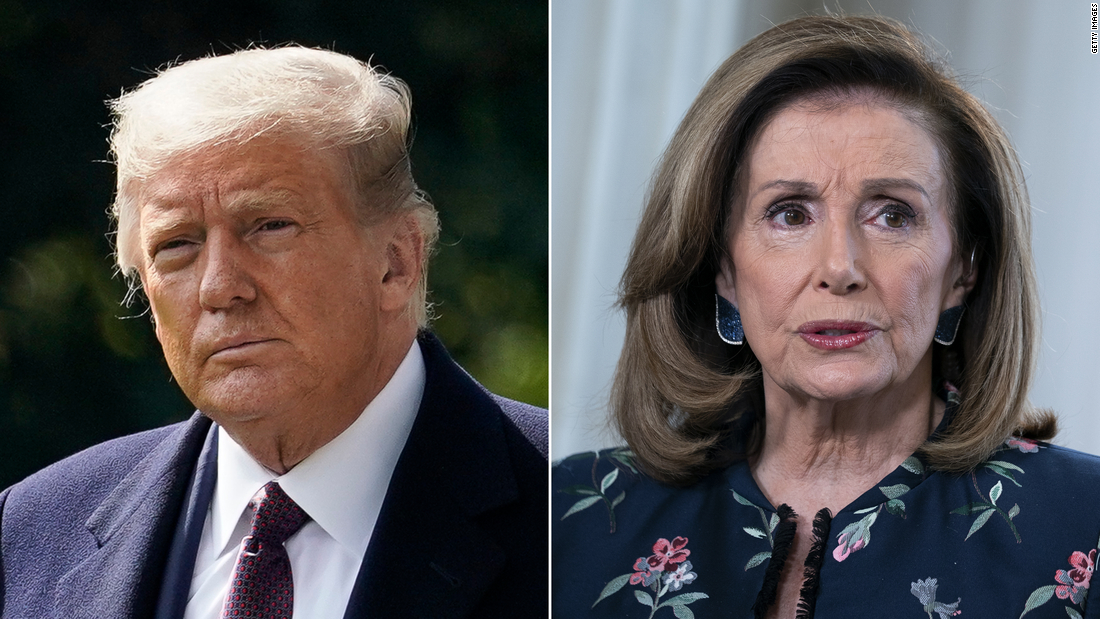
The President has signed off on a roughly $1.8 trillion offer headed to Pelosi, but she’s been unwilling to go below $2 trillion in negotiations so far
The direct involvement of Trump himself and his willingness to put down an offer far above the preferences of congressional Republicans adds a dynamic new element to long-stalled negotiations. Trump, to this point, mostly relied on Treasury Secretary Steven Mnuchin and White House chief of staff Mark Meadows to handle the details of the talks with Pelosi.
The details in the offer remain as important, if not more so, than the topline dollar figure. The specifics are not currently known, though they are expected to be presented to Pelosi later Friday.
A wide-ranging package would attempt to address the twin economic and public health crises that continue to play out — and top economic officials including Federal Reserve Chairman Jerome Powell have warned inaction could have dire consequences.


But whether the new White House offer will lead to a breakthrough in talks that for months have remained stuck in a ditch is unclear.
Pelosi has said repeatedly that the actually legislative language — and where that language directs the funds — has become the most critical aspect of any agreement, pushing particularly for funding for states and localities that have significant budget shortfalls, a key sticking point for the Trump administration.
Trump’s willingness to “go big,” as he framed it on Twitter on Friday runs risks inside his own party. Republicans in both chambers have voiced concern over any price tag above $1 trillion. Many are opposed to any new aid at all.
Senate Majority Leader Mitch McConnell cast doubt earlier Friday on the possibility that any deal could get passed ahead of Election Day.
“The situation is kinda murky, and I think the murkiness is a result of the proximity to the election,” McConnell told reporters at an event in Kentucky. “And everybody trying to elbow for political advantage. I’d like to see us rise above that like we did back in March and April but I think that’s unlikely in the next three weeks.”
CNN’s Austen Bundy contributed to this report.