

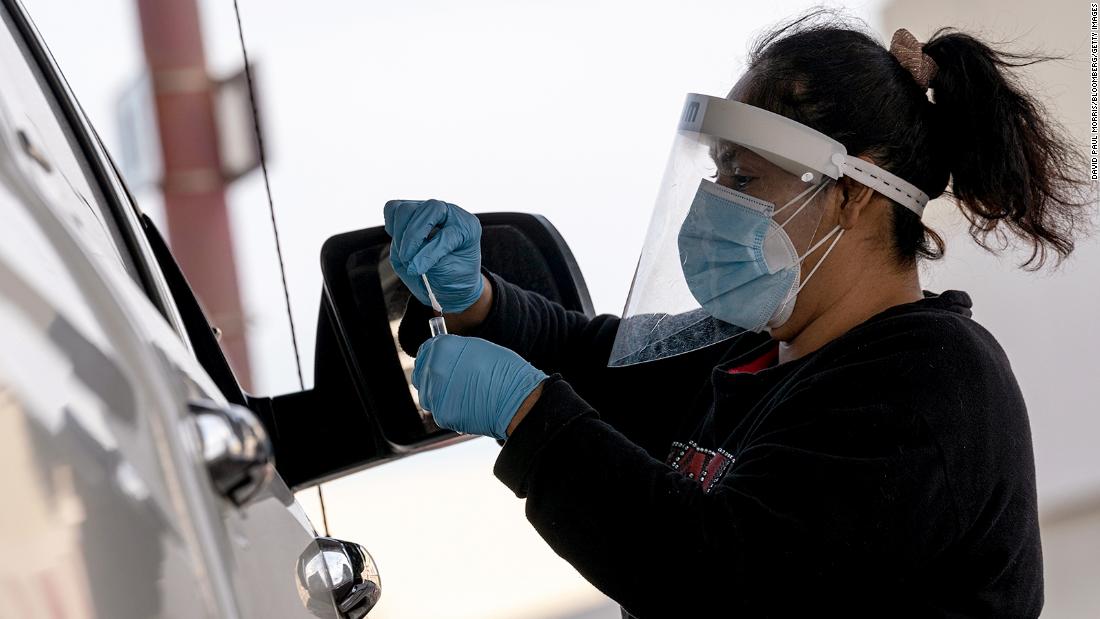
America is again quickly approaching another grim milestone
Particularly one variant, which was first identified in the UK. It’s now been detected in at least 22 states, according to data posted Friday by the Centers for Disease Control and Prevention.
“We’re now in that second half of fighting this pandemic,” Washington Secretary of Health Umair A. Shah said during a news conference. “It’s very important for us to really double down on our efforts to prevent this strain as well as any strain from taking over, because we want to make sure that transmission does not happen in our state and the best way to do that is prevention, prevention, prevention.”
‘More very bad news’
A UK report released Friday states there is “a realistic possibility” that the new variant has a higher death rate than other variants.

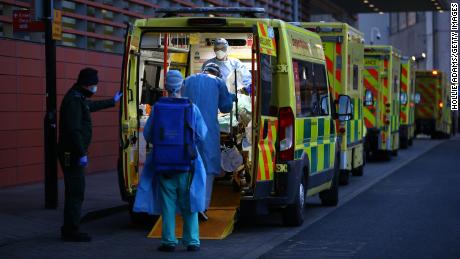
“The data is mounting — and some of it I can’t share — that clearly supports that B.1.1.7 is causing more severe illness and increased death,” infectious disease expert Michael Osterholm said. “Already we know this variant has increased transmission, and so this is more very bad news.”
But National Institutes of Health Director Dr. Francis Collins said Saturday it’s still too soon to tell if the variant is more deadly, telling MSNBC, “this is very preliminary data.”
“It looks as if, if you look at 1,000 people who got infected with Covid-19, generally about 1%, 10 of them, would die of it. Maybe with this virus, it would be 13 instead of 10,” Collins said. “That’s a small difference.”

He added that the numbers could possibly also be a “consequence of the fact that the UK health system is really overwhelmed.”
“That has an effect also on mortality,” Collins added.
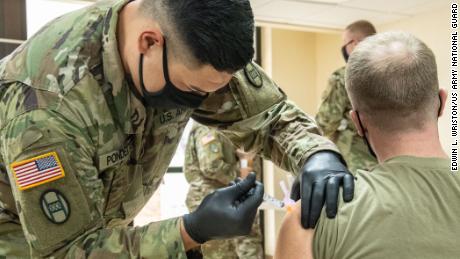
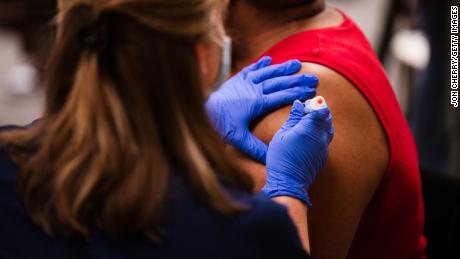
More than 20 million vaccine doses administered in US

“I would anticipate that within a period of likely no more than two weeks, that the data will be looked at by the Data and Safety Monitoring Board,” Fauci told MSNBC. And if the data is strong enough, the next step would be presenting it to the Food and Drug Administration for an emergency use authorization, he said.
“Let’s say they do … get an EUA in February, by the time they get a meaningful amount of doses, it likely will be a month or two following that,” he said. “Once they get going into May, June, July, August, then you’re going to see a sharp escalation of additional doses of this one-dose vaccine.”
Meanwhile, the FDA also told CNN Saturday that if absolutely necessary, “modest delays” between first and second doses of the current Covid-19 vaccines are not expected to decrease protection against the virus.
The agency said it “recognizes that getting as many people as possible across the country fully immunized will help to curtail the spread of the virus that causes COVID-19 and should be a priority.”
Previously, the FDA had warned changes to vaccine schedules without appropriate data could put public health at risk.
The CDC also updated its guidance to say second doses of vaccines may be scheduled up to six weeks after initial doses, if necessary, adding second doses should be administered as close as possible to the recommended interval — three weeks after the first dose for the Pfizer/BioNTech vaccine and four weeks for the Moderna vaccine.
Hospital leader: ‘We truly are in the darkest days’
That all comes as the US continues to fight a brutal battle against the virus.
And more than 6,800 people remain hospitalized with the virus — 24% of whom are in the ICU.
In Georgia, one healthcare official described a grim image of the grip of the virus.
“We truly are in the darkest days of this pandemic,” Dr. Deepak Aggarwal, at the Northeast Georgia Medical Center, told CNN Saturday night. “We are seeing more than 200 patients per day now, than we normally see at this time of the year. “
“And also, we’re dealing with the increasing number of deaths. Our system normally deals with less than 10 deaths per month and we have already had 169 deaths as of January 21.”
CNN’s Michael Nedelman, Lauren Mascarenhas, Elizabeth Cohen and Carma Hassan contributed to this report.