

Opinion: The Chauvin trial is holding a mirror up to America’s insufficient police training
But reasonable doubt must never be exclusively the product of the deliberate distortion of fact-based truth — by either side. In the trial of Derek Chauvin, judge, attorneys and jury members need expert guidance to determine the facts and interpret their meaning. Science, applied with the observational rigor and the objectivity required by the scientific method, is essential.
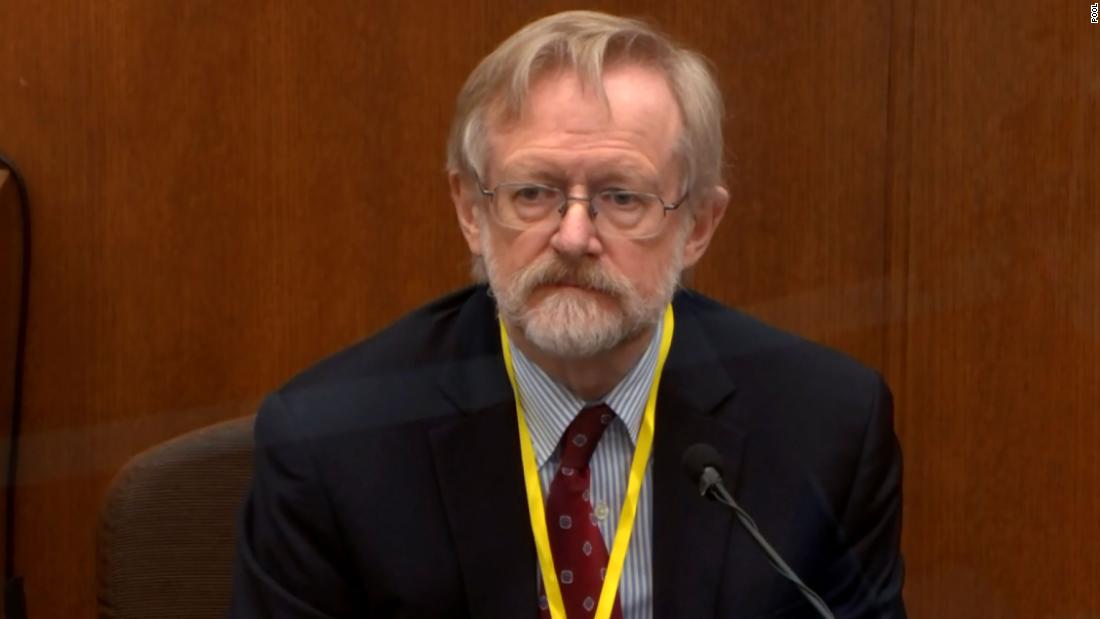
On Thursday, Dr. Martin J. Tobin, a pulmonologist and critical care physician, provided the requisite rigor and objectivity, and in doing so, raised critical questions for me, a former police chief with decades of experience, about how officers entrusted with public safety do our jobs. In his sober, soft-spoken testimony, he never uttered the word murder, which, as the manner of death, is a legal determination beyond his expertise. Instead, he described the cause of death, which is the proper province of the medical scientist.
A scientist, expert in acute respiratory failure and other aspects of breathing, described the cause-and-effect chain of events quietly, calmly, dispassionately, and with clinical clarity. There were no politics, policy or bias. The truth as he offered it was disputed by the defense counsel, as is the defendant’s right and his lawyer’s duty, but Tobin’s truth resisted assault in a way that George Floyd, handcuffed, prone beneath the combined weight of three Minneapolis police officers, could not resist.


For legal, economic, public safety, moral reasons, and for the sake of procedural justice and police legitimacy, reform must and will come. Tobin’s striking testimony has strengthened my conviction that police agencies nationwide must reexamine and revise standards for police officer selection, training, and certification, including the Peace Officer Standards and Training regime (P.O.S.T.), which varies in individual states.
Agencies will need to devise a much more detailed policy on the use of force as it relates to the danger of positional asphyxiation and other forms of breathing impairment. Officers need to be instructed — preferably by physicians, like Dr. Tobin, who have special expertise in pulmonology — in the signs, symptoms and hidden dangers of respiratory distress. Along with this specific instruction, we need to impart to all officers the full implications of the concept that custody requires care. When an officer arrests a suspect, he or she takes on the responsibility for that person’s welfare.
Now that we know the truth, American policing, justice, and government cannot allow such an event, so casual yet so terrible, to occur again.