

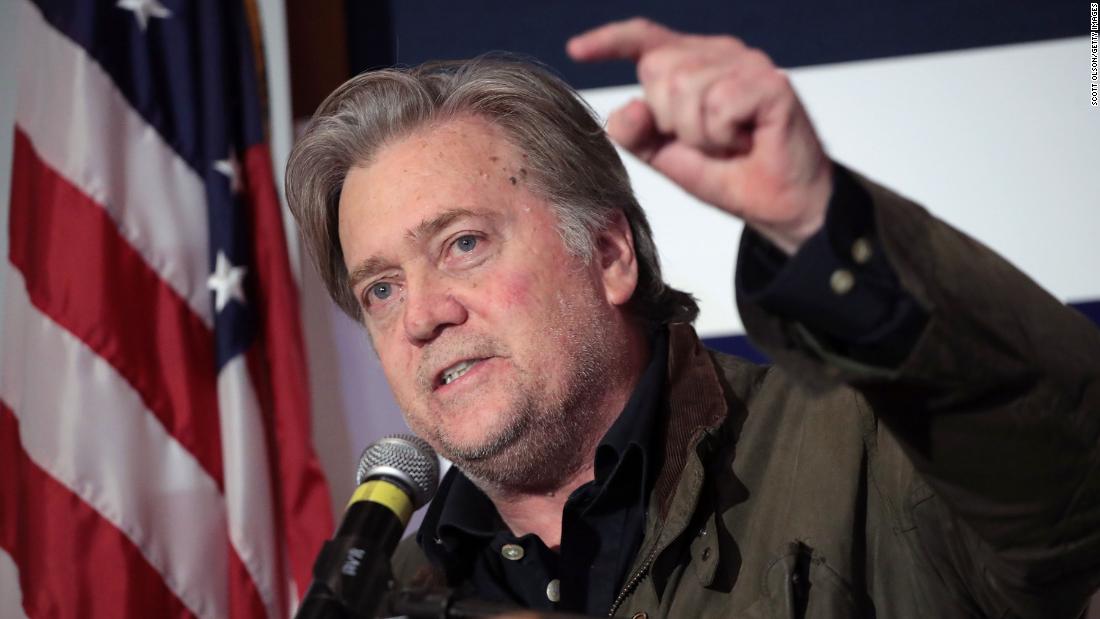
Analysis: Bannon’s arrest is a fitting symbol for the Trump era
1) Bannon, after years of toiling in the fever swamps of the far-conservative right, signs on as an adviser to Trump’s decidedly long-shot presidential campaign. It’s a marriage of convenience — and necessity. Bannon isn’t getting a whole lot of offers to serve as a senior adviser to a presidential campaign. Trump can’t attract any high-end staff or advisers — all of whom are too wary of his past provocations and scared off by his infinitesimal chances of actually winning.
2) Bannon guides Trump to not just the Republican nomination but the presidency — pushing Trump’s border wall proposal to the center of the campaign and running as much against the media as any Republican or Democratic opponent.
3) Trump rewards Bannon by installing him as chief political strategist in the White House.
7) Bannon, taking advantage of now being Trump-adjacent again, starts an organization called “We Build The Wall” that promises to fund the construction of a privately built wall along the US-Mexico border. And that operation, according to federal prosecutors, uses a chunk of the $25 million it raised from donors to pay his own personal expenses.
Whew. So, the Bannon story goes like this:
Conservative agitator → campaign insider → political mastermind → top White House aide → “Sloppy Steve” → somewhat-redeemed former aide → alleged grifter on the Trump brand.
What a story!

THE POINT — NOW ON YOUTUBE!
In each episode of his weekly YouTube show, Chris Cillizza will delve a little deeper into the surreal world of politics. Click to subscribe!
The simple truth is that the story of Bannon is, in many ways, the story of Trump’s presidency. The billionaire businessman has attracted all sorts of third-rate political consultants, grifters and assorted hangers-on, elevated them to positions of power, cast them out of those positions and then watched as they aimed to cash in on their moment in the sun — whether via a tell-all book or, in Bannon’s case, an alleged nest-feathering scheme.