
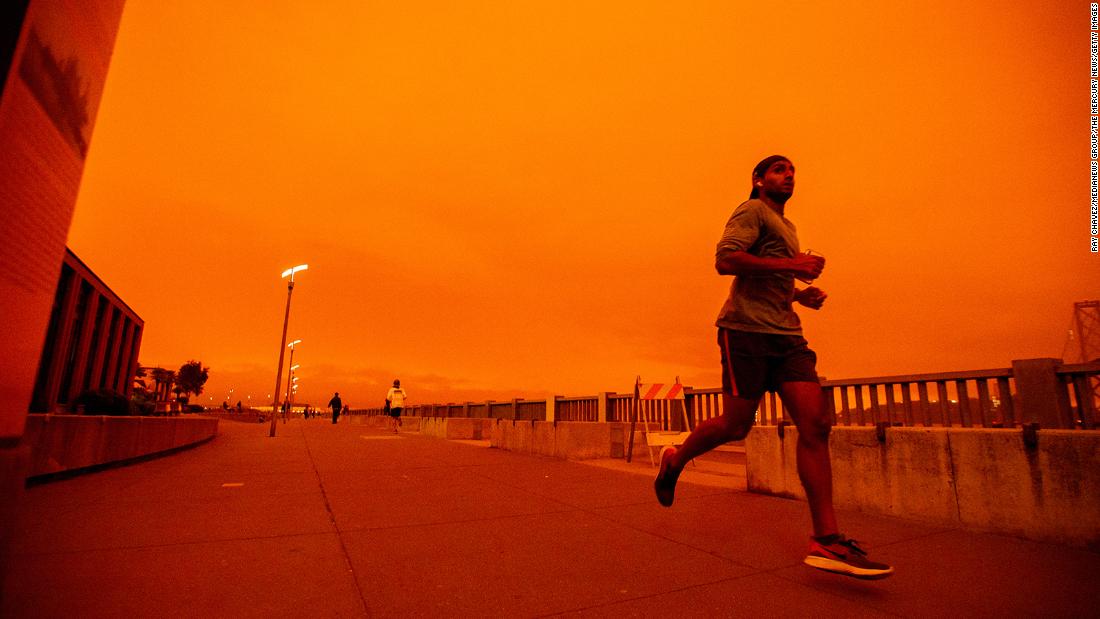
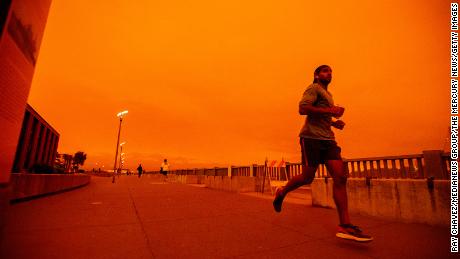
Scientists have warned for years that fire seasons like the one the US is experiencing now could come to pass
The scale of the fires burning in the Western US right now are unprecedented.

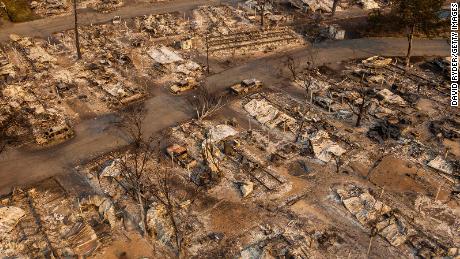
In this aerial view from a drone, a mobile home park destroyed by fire is shown on September 10, 2020 in Phoenix, Oregon. Hundreds of homes in the town have been lost due to wildfire.
And as devastating as they have been, far worse disasters could be on the horizon.
How bad it gets depends on what we as humans do to reduce heat-trapping gas emissions, said Michael Mann, the director of Penn State University’s Earth System Science Center.
“By some measure, it’s clear that ‘dangerous climate change’ has already arrived,” Mann said in response to emailed questions from CNN. “It’s a matter of how bad we’re willing to let it get.”
How climate change influences wildfires
Though the scale of destruction is hard to fathom, climate scientists say we should not be surprised.
“It’s shocking to see the impacts, but not scientifically surprising,” Daniel Swain, a climate scientist at UCLA and the National Center for Atmospheric Research told CNN on Tuesday. “This is in line with essentially every prediction for what could happen this year and the trends we’re seeing over years and decades.”

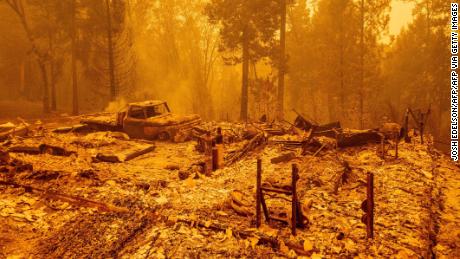
A burned residence smolders during the Bear fire, part of the North Lightning Complex fires, in unincorporated Butte County, California on September 9, 2020.
This warming is clear in long-term temperature graphs for the state of California, such as this one below from the nonprofit environmental monitoring organization Berkeley Earth, which shows that August temperatures in the state have climbed steadily over the last 150 years.

“That couple of degrees of [average] warming over decades … you don’t notice it as much, but it’s still there lurking in the background, sucking extra moisture out of the vegetation and the soil,” Swain said.
By the second half of the century, the uncertainty range for the amount of warming grows tremendously, as so much will depend on potential cut backs in carbon emissions in the near future.
The future depends on ‘what we choose to do’

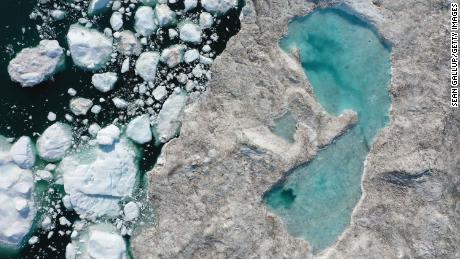
Scientists say the impacts of climate change are growing worse before our very eyes.
“If you’re in California, or on the Gulf Coast, or in Puerto Rico, Texas, the Carolinas, or Iowa, you’ve seen the devastating consequences of climate change already,” Mann said.
Still, he says there is time left to flatten the curve of global warming impacts, but the longer we wait, the steeper that curve gets.
“So much depends on what we choose to do,” Mann said. “If we keep planetary warming below 1.5 Celsius, which is still possible given concerted climate action, we can keep climate change impacts within our adaptive capacity. If we don’t, we will likely exceed it.”