

Opinion: Why evangelicals should care about Trump’s lies (and other sins)


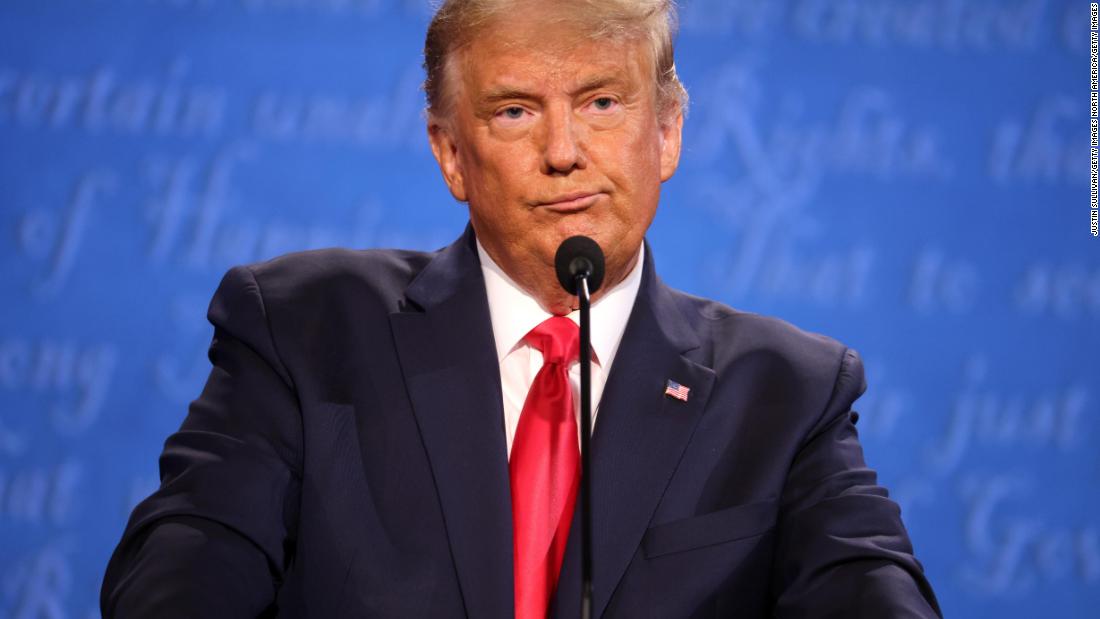
Historians generally agree that character is the most important quality for a president. There’s a reason that our greatest president’s nickname is Honest Abe. But in Donald Trump’s Washington, lying has become normalized. Perhaps the most recent and stark sign of it was in the abandonment of alleged principle to push forward the nomination of Judge Amy Coney Barrett to the Supreme Court.
The irony is that perhaps the most religious and socially conservative Supreme Court nominee in decades will have been put in place by an abandonment of the basic ethical standard known as the Golden Rule, articulated in the Bible as “Do to others as you would have them do to you.”
For many conservative Christians, the ends may justify the means in this case. Other partisans will reach for whataboutism and point to lies by previous Democratic presidents. But in terms of the sheer volume of lies, we’ve never seen anything like President Trump. For voters motivated by questions of faith and ethics, how should they view the President’s lying and the effect it seems to be having on our politics?
I asked two priests what role they thought it should play in election calculations.

“How should Christians account for a pattern of lying in casting their vote?” reflected the Reverend Don Waring of Grace Church in New York. “Quite simply, they should not vote for anyone who deliberately deceives. Lying is a mortal sin, and the kingdom of God is not advanced through unrighteous means. It never does anyone any good to have public officials in office who play fast and loose with the truth. One lie leads to another, and it always catches up to them. Then we are all embroiled in distracting public scandals that taint the whole political process.”
In his view, normalizing lies threatens to drag our whole democracy down.
But the Reverend Al Zadig, of St. Michael’s Church in Charleston, South Carolina, no doubt reflects the views of other conservative Christians by weighing lying against other sins.
“Certainly, there is a presidential character that requires truth telling,” Zadig says. “Lying is a sin. There is no hierarchy of sin in the eyes of God although the consequences may be different in society. This creates a real struggle for many clergy and people of faith with the sin of murder from the perspective of abortion. …Again, sin is non-hierarchical, but the consequences between lying and murder are so vastly different. As a priest, it provides an honest and powerful dilemma. But the common nature of what we call the seven deadly sins is that they kill the heart and the soul of a person.”
Instead, the President’s favorite weapon—projection — is deployed at political opponents, regardless of truth.
All of this is to say that if religion and virtue matter when casting your vote, then lying should matter as well. Because honesty matters. Character matters. On the flip side, campaigns that focus on fear or greed run counter to basic tenets of faith. If we overlook these bedrock virtues to focus instead on one or two policy positions — no matter how deeply held — we lose sight of the most fundamental teachings of faith and run the risk of reaping the whirlwind as a society.