

US is at a crossroads in the course of this pandemic
Dr. Rochelle Walensky, director of the US Centers for Disease Control and Prevention, earlier Monday touted encouraging numbers in declining new cases, deaths, and hospital admissions, but also offered a note of caution.
The seven-day average of deaths reported each day is at its the lowest since the beginning of December.
“This seven-day average is counterbalanced by the stark reality that this week, we will surpass one half million Covid-19 deaths in the United States, a truly tragic reminder of the enormity of this pandemic, and the loss it has afflicted on our personal lives and our communities,” Walensky said. “While the pandemic is heading in the right direction there is still much work to do.”

“If that takes over, the numbers are going to start to spiral up again. There’s no end to what the death toll will look like unless we can vaccinate ahead of it.”
Where we stand with vaccinations

But the US will likely be caught up by the middle of this week, said Dr. Anthony Fauci, director of the National Institute of Allergy and Infectious Diseases.
“Obviously it is a setback because you’d like to see the steady flow of vaccine getting out there to get into people’s arms, but we can play pretty good catch-up,” Fauci told NBC on Sunday.
Both vaccines on the US market — developed by Pfizer-BioNTech and Moderna — require two doses, the second of which are intended to be administered 21 days and 28 days after the first, respectively.
Fauci told CNN Sunday the US is currently sticking with the vaccine schedule that is backed up by data from clinical trials.
“The science points directly towards continuing with what we know … from the clinical trial,” he said.
Good news (for now) on cases and hospitalizations
Nationwide, the rates of new Covid-19 cases, hospitalizations and deaths are declining.
The number of patients hospitalized with Covid-19 has fallen for the 40th day in a row, according to the COVID Tracking Project.

Daily deaths have declined 24% this past week compared to the previous week, according to data from Johns Hopkins University.
And daily new cases have dropped 23% over the same time period, according to Johns Hopkins. (But testing is also down by 17%, according to the COVID Tracking Project.)
“I’m very hopeful about where we are,” said Dr. Ashish Jha, dean of the Brown University School of Public Health. “Now we have a couple road bumps ahead.”
About 1,700 cases of variant strains first spotted in the UK, South Africa and Brazil have been reported in the US, according to the Centers for Disease Control and Prevention.

The vast majority of variant cases so far involve the highly contagious B.1.1.7 variant first detected in the UK.
‘Now is not the time to let your guard down’


The American Medical Association, the American Hospital Association and the American Nurses Association also pleaded for Americans to help quash the pandemic.
“With new, more contagious variants of the virus circulating throughout the U.S., now is not the time to let your guard down and scale back on the measures that we know will work to prevent further illness and deaths — wearing masks, practicing physical distancing, and washing hands,” a joint statement said.
Why we could be wearing masks next winter, too
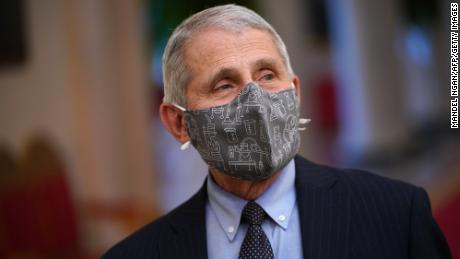
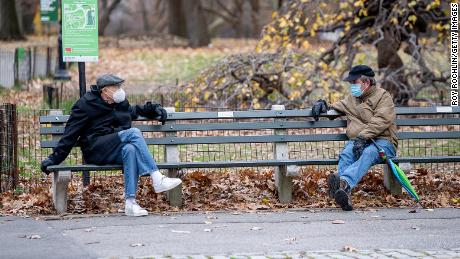
Some Americans have discovered an unexpected perk to wearing masks in the winter — they protect against brutally cold air, not just against coronavirus.
And Americans might be wearing them next winter, when some health experts say Covid-19 might flare up again.

There may be other ways everyday life will be different from the past, said infectious disease specialist and epidemiologist Dr. Celine Gounder.
“I do think we’re looking at some new normals. I think the handshake, for example, is probably going away,” she said.
“I do think masks in the cough/cold/flu season in the winter months would make a lot of sense. That clearly, really insulated the Southeast Asian countries from some of the worst of this, understanding the importance of wearing masks.”

“It’s estimated that about 70% of Americans must be vaccinated before we get to herd immunity through vaccination,” CNN medical analyst Dr. Leana Wen said. “That’s the point where enough people have the immune protection that the virus won’t spread anymore.”
And slowing the transmission of coronavirus also hinders the chances of the virus mutating further.
“The evidence was pretty compelling by last March or April that uniform wearing of masks would reduce transmission of this disease,” National Institutes of Health Director Dr. Francis Collins told Axios on HBO on Sunday.
The politicization of face masks probably led to many unnecessary deaths, he said.
“A mask is nothing more than a life-saving medical device, and yet it got categorized in all sorts of other ways that were not factual, not scientific and frankly, dangerous,” he added. “And I think you can make a case that tens of thousands of people died as a result.”
CNN’s DJ Judd, Amanda Watts, Jessica Firger, Naomi Thomas and Michael Nedelman contributed to this report.