

Analysis: Michigan’s Covid-19 surge becomes a reality check for a restless nation
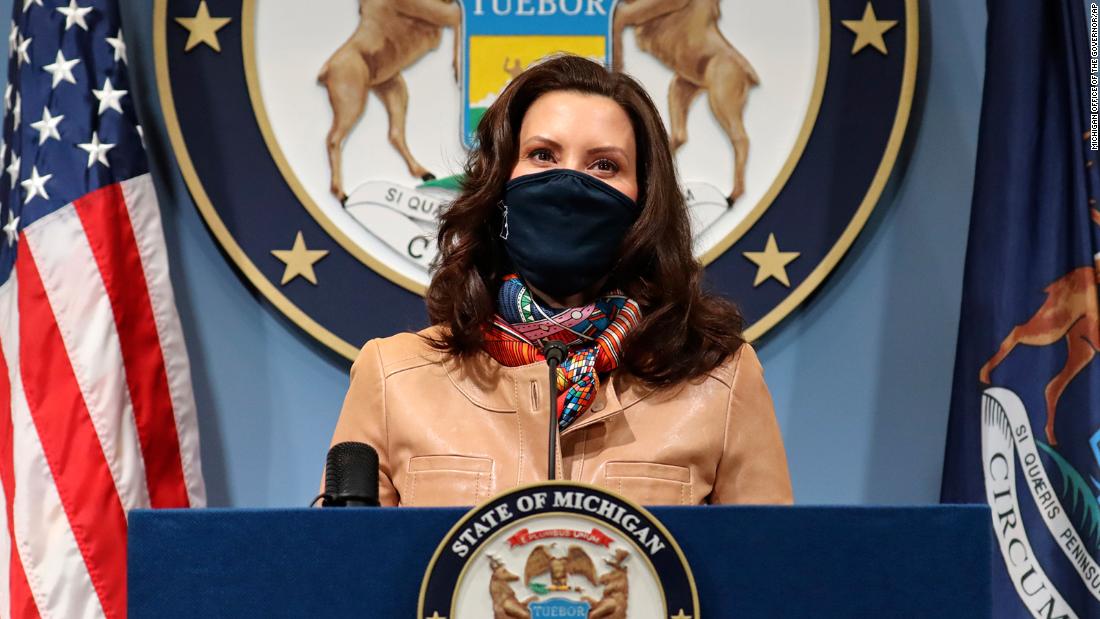
“There’s light at the end of this tunnel, but the recent rise in cases is a reminder that we are still in the tunnel,” the Democratic governor said, urging people to continue to take precautions and get the vaccine — which is now available to anyone 16 and older in her state. “That’s the nature of this virus, the second we let our guard down it comes roaring back.”
Nationally, case numbers and hospitalizations rose last week compared with the previous seven-day period, even as deaths continue to fall. Michigan hospitals are once again weighing whether to cancel elective surgeries while reviewing their surge plans — and the state’s predicament points to the difficult balancing act that the Biden administration faces as it tries to project optimism while fighting complacency about the virus.
The emphasis on progress has inevitably created a false sense of security in some corners at a time when the virus remains unpredictable and increasingly contagious because of new variants.
Covid fatigue and a contagious variant
With many Americans tired of pandemic restrictions and convinced that the worst is behind them, some governors have quickened the pace of reopenings in their states, clearly feeling the heat of their approaching reelection campaigns.
“To be very clear these are not orders, mandates or requirements,” Whitmer said of her call for halting indoor dining, in-person high school classes and youth sports. “A year in, we all know what works and this has to be a team effort.”

Michael Osterholm, director of the Center for Infectious Disease Research and Policy at the University of Minnesota, noted that Michigan’s surge is happening despite its vaccination progress. “The vaccine rollout has been a really important tool to try to reduce these cases. But as you’ve seen from Michigan and Minnesota — even though they have very high levels of vaccination relative to the rest of the country — you’re still seeing how severe the problem is,” Osterholm said on CNN’s “New Day” on Thursday. “We’re just aren’t going to be able to get enough people vaccinated quickly enough to keep the rest of the country from experiencing much of what we’re seeing in the upper Midwest and Northeast.”
While not everyone shares that perspective, the uncertainty has put the White House in a tenuous position, reflected in comments by Dr. Rochelle Walensky, the director of the CDC, during Friday’s White House Covid-19 Response Team briefing.
“On the one hand, we have so much reason for optimism and hope and more Americans are being vaccinated and protected from Covid-19,” Walensky said. “On the other hand, cases and emergency room visits are up, and as I’ve highlighted through the week, we are seeing these increases in younger adults, most of whom have not yet been vaccinated.”
She noted that particularly in Michigan and Minnesota, officials have been monitoring increasing reports of cases associated with youth sports: “I want to be clear, as cases increase in the community, we expect the cases identified in schools will also increase,” Walensky said.
With the administration eager to keep children in school, she emphasized that those cases may not necessarily be associated with school-based transmission, which she argued can be avoided if schools follow all the safety protocols outlined by the CDC. Still, the risks to students are one of the reasons why the CDC dedicated $10 billion from the American Rescue Plan to support testing in schools across the country.
“Being able to rapidly identify new cases among students will help us slow the spread of Covid-19 while we simultaneously work to expand equitable access to vaccines,” she said.
To try to control the spread in Michigan, Whitmer has urged the Biden administration to send more vaccine doses to her state, calling for the creation of a “vaccine surge program” to help hotspots.
So far the Biden administration has refused, a decision that White House Covid-19 coordinator Jeff Zients defended on Friday, even as he stressed that the administration is sending more resources — including offers of more personnel, greater testing capacity and more therapeutics and treatments to help patients — to states struggling with a rise in cases. A senior administration official told CNN’s Pamela Brown on Saturday that an additional 160 Federal Emergency Management Agency vaccinators are on their way to Michigan to assist the state in administering the doses it has on hand.
“There are tens of millions of people across the country in each and every state and county who have not yet been vaccinated,” Zients said Friday. “The fair and equitable way to distribute the vaccine is based on the adult population by state, tribe and territory. That’s how it’s been done, and we will continue to do so.”
“The virus is unpredictable. We don’t know where the next increase in cases could occur,” he added, noting that the US is not even halfway through its vaccination program. “So now is not the time to change course on vaccine allocation.”
But if the situation gets more dire in Michigan — and other states face similar surges — that may become a difficult position for the Biden administration to maintain. Whitmer may be the first Democratic governor to publicly pressure the administration for a vaccine surge program, but she is unlikely to be the last.