

Opinion: Ma’Khia Bryant’s death on the day Chauvin was found guilty is a reminder that we have a long way to go
But many are openly questioning why this young teenager could not have been subdued with nonlethal force.
Both cases keep at the forefront the conversation of how police officers routinely fail to deescalate a situation when it comes to interactions with Black and brown communities. The incident in Ohio serves as a reminder that the verdict in Minneapolis was only a small victory in a very large battle to transform the role, purpose and impact of law enforcement in Black America.
It seems that local and state governments care more about property, building and money than people of color.

If Minneapolis — but really the whole country — redirected its resources toward properly training officers (and holding them accountable when they are in the wrong) so that people who looked like Philando Castile, George Floyd and Daunte Wright wouldn’t have to worry, they would not have to spend millions of dollars in an effort to uphold peace without justice.

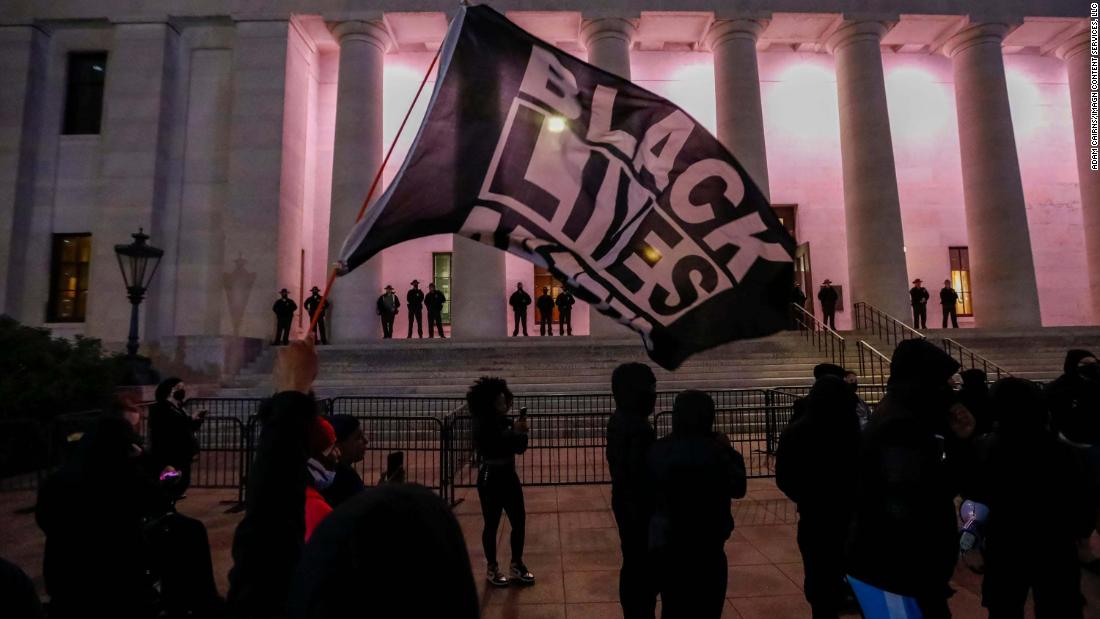
Following the guilty verdict of Derek Chauvin in the killing of George Floyd and the subsequent the death of Ma’Khia Bryant in a Columbus Police-involved shooting, protesters gather outside the Ohio Statehouse in downtown Columbus.
Black women are the most reliable Democratic voters in America and are, with the election of Harris and the power broking of Abrams, beginning to receive their just rewards on a national level.
Congresswoman Waters, who represents a district that includes South Central Los Angeles, is a long marcher in the struggle for Black freedom, one who, as my Black church folk are fond of saying, “came early and stayed late.”
Rep. Waters’ statement did not call for violence. It merely acknowledged one aspect of American history that many wish to ignore. Conventional politics, such as voting, lobbying and crafting legislation, while important and necessary, are incomplete without the application of political pressure. Black folks whose families are under siege by law enforcement, face structural violence, high rates of unemployment and illness and live in racially segregated neighborhoods do not have lobbyists. They express their displeasure in the streets.
Last year’s George Floyd protests, which proved to be the largest social justice movement in American history, amplifies this point.
Since then, we have had a robust debate on “defunding the police,” educated the nation on the pitfalls of “qualified immunity” for police officers and challenged the stranglehold that police unions have in preventing the systemic change required to fix these problems.
In the meantime, Black people continue to be shot, to be brutalized and to die at the hands of the police. Rep. Maxine Waters’ supposed words of fire are, in reality, an observation of the necessity to continue the fight for racial justice. She calls upon this nation to devote resources, energy and innovation to protecting Black lives in Minneapolis and across the country.