

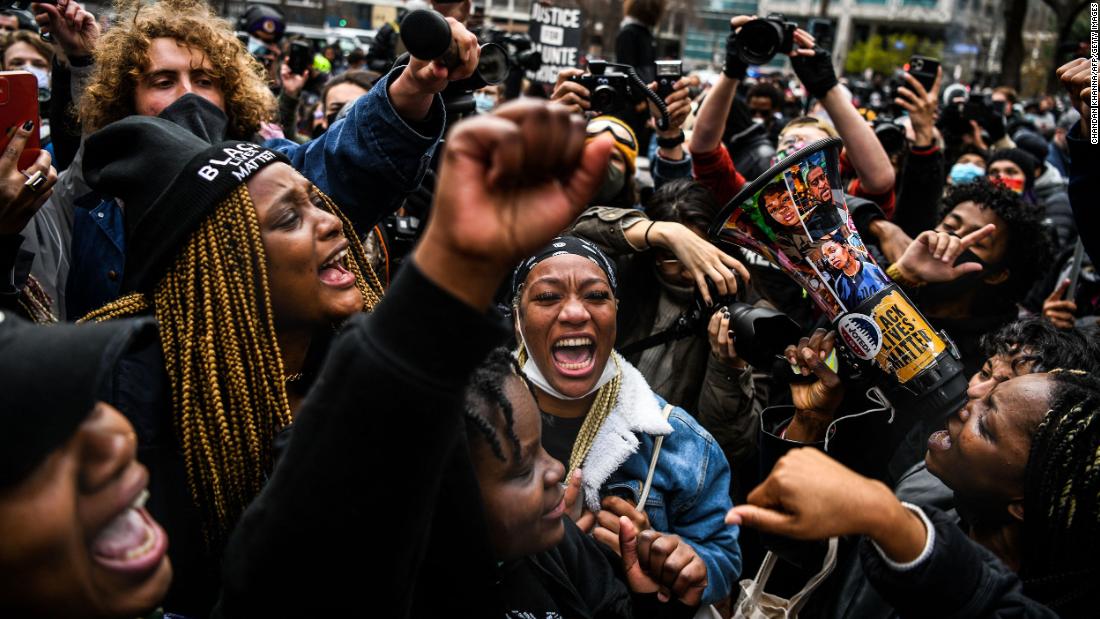
Sighs of relief, but activists say racial justice work is far from over
“It’s a relief, but the celebration is premature,” the Rev. Jesse Jackson told CNN.
“We must break the backbone of legal lynching forever. Police killing people is getting away with legal lynching,” Jackson said. “So, we still have a lot of work to do, this is a first down, not a touchdown.”

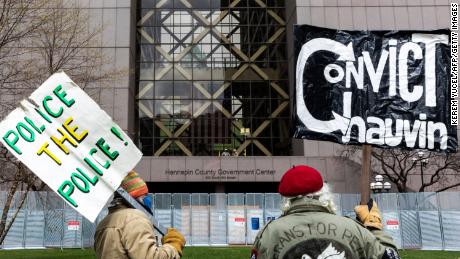
The verdict reverberated throughout the US, where many cities saw large-scale demonstrations in the wake of Floyd’s death in May 2020. Footage of Chauvin kneeling on Floyd’s neck for more than nine minutes ignited weeks of protests — as well as looting and unrest — and refueled national conversations around policing and racial bias in the US.
When the verdict was read Tuesday, a symphony of celebration sounded outside the government center where the trial was held, as well as 4 miles to the south, at the intersection where Floyd drew his last breaths.
Among crowds of hundreds, people cheered, shouted out in joy and raised hands skyward as car horns honked, while some cried in relief. Others strained to hear from their cell phones the rest of what the judge had to say as he adjourned the trial.
“This is a huge day for the world,” Floyd’s girlfriend Courteney Ross told reporters outside the courthouse Tuesday. “We walked around with eyes wide shut for a long time, so they’re starting to open today, and this is going to be the first in a future of change.”
The teen who captured the video that shocked the country said she cried when the verdict was announced.

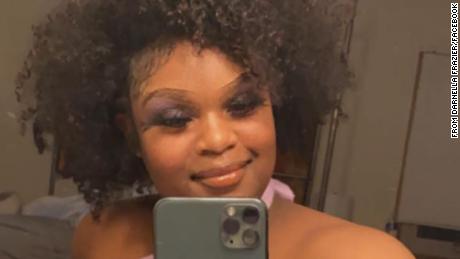
Inside the court, Philonise Floyd, George Floyd’s younger brother, clasped his hands over his head in prayer as the verdicts were read, according to pool reporters, including CNN’s Josh Campbell. During the third guilty verdict, his hands shook back and forth and he kept his eyes closed as his head nodded up and down, the report said.
After court concluded, Philonise Floyd was seen crying as he hugged all four prosecutors.
“I was just praying they would find him guilty,” he said. “As an African American, we usually never get justice.”
Minnesota Gov. Tim Walz lauded the verdict, although he reiterated that there is much more to do in enacting change for the Black community in his state.
“This is the floor, not the ceiling of where we need to get to,” Walz said. “We know that accountability in the courtroom is only the very first step.”
The verdict, and the sentencing to come
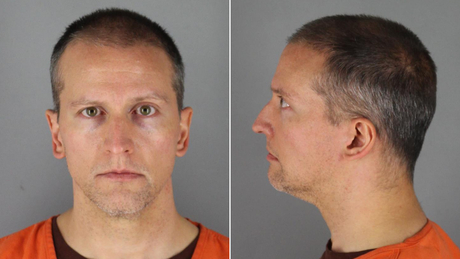
After turning his head to hear something his lawyer said, he nodded twice and walked out of the courtroom, escorted by the officer behind him.
Sentencing will take place in about eight weeks — so, about the second week of June — the judge said, with a precise date to be announced.


Chauvin had been out on bail since October. With bail revoked Tuesday, he was taken to a state correctional facility in Stillwater, about 25 miles east of downtown Minneapolis, where he will await sentencing.
Chauvin’s sentence will depend on several factors, including the state’s sentencing guidelines, and whether the judge decides to go beyond the guidelines because of certain factors.
Technically, Chauvin could face up to 40 years in prison for second-degree murder, up to 25 years for third-degree murder and up to 10 years for manslaughter.
However, Chauvin has no prior criminal record. The state’s guidelines say that for such a person, the presumptive sentence for both second-degree and third-degree murder is 12 1/2 years. The judge is given discretion to hand down a sentence between 10 years and eight months and 15 years for each.
Second-degree manslaughter carries a presumptive sentence of four years for someone with no record, according to the guidelines. The judge’s discretion ranges from three years and five months to four years and eight months.
However, prosecutors are asking for a tougher sentence than the recommendations provide.
In two filings last year, prosecutors said five aggravating factors warrant an increased sentence. Those factors include that Floyd was particularly vulnerable, that he was treated with particular cruelty, and that children were present when the crimes were committed.
If the judge applies aggravating factors, it would shift Chauvin’s sentence to a higher part of the legal range.
The sentences for all three crimes would likely be served at the same time, not consecutively. “Generally, when an offender is convicted of multiple current offenses… concurrent sentencing is presumptive,” according to the guidelines.
How the trial unfolded
Prosecutors called 38 witnesses over the course of three separate phases of the trial.
Finally, five separate medical experts explained that Floyd died from a lack of oxygen when Chauvin restricted his ability to breathe in what’s known as “positional asphyxia.”

“He was not going to let these bystanders tell him what to do. He was going to do what he wanted, how he wanted, for as long as he wanted. And there was nothing, nothing they can do about it because he had the authority. He had the power, and the other officers, the bystanders were powerless,” he said. “He was trying to win, and George Floyd paid for it with his life.”
He contrasted Chauvin’s “ego-based pride” with the proper feelings of pride in wearing a police badge and praised policing as a noble profession. He insisted the state was prosecuting Chauvin individually — not policing in general.
“This is not an anti-police prosecution; it is a pro-police prosecution,” he said. “There is nothing worse for good police than bad police.”
In response, Nelson said Chauvin acted as a “reasonable officer” would in that situation and said there was no evidence he intentionally or purposefully used force that was unlawful.
“You have to take into account that officers are human beings, capable of making mistakes in highly stressful situations,” Nelson said. “In this case, the totality of the circumstances that were known to a reasonable police officer in the precise moment the force was used demonstrates that this was an authorized use of force, as unattractive as it may be. This is reasonable doubt.”
CNN’s Aaron Cooper reported from Minneapolis, Madeline Holcombe wrote from Atlanta and Eric Levenson wrote and reported from New York. CNN’s Adrienne Broaddus, Eric Fiegel, Laura Coates, Steve Almasy, Josh Campbell, Omar Jimenez, Keith Allen, Peter Nickeas, Brad Parks and Sara Sidner contributed to this report.