

There is no question about the effectiveness of vaccines, expert says, as FDA weighs possible booster shot
“What not everybody would agree to is the second thing, which I believe, that the point of vaccination is to also reduce the level of infection,” Wen said.
That is the issue now being debated by officials and health experts, just as the average of new daily cases has shot up over the past two months.
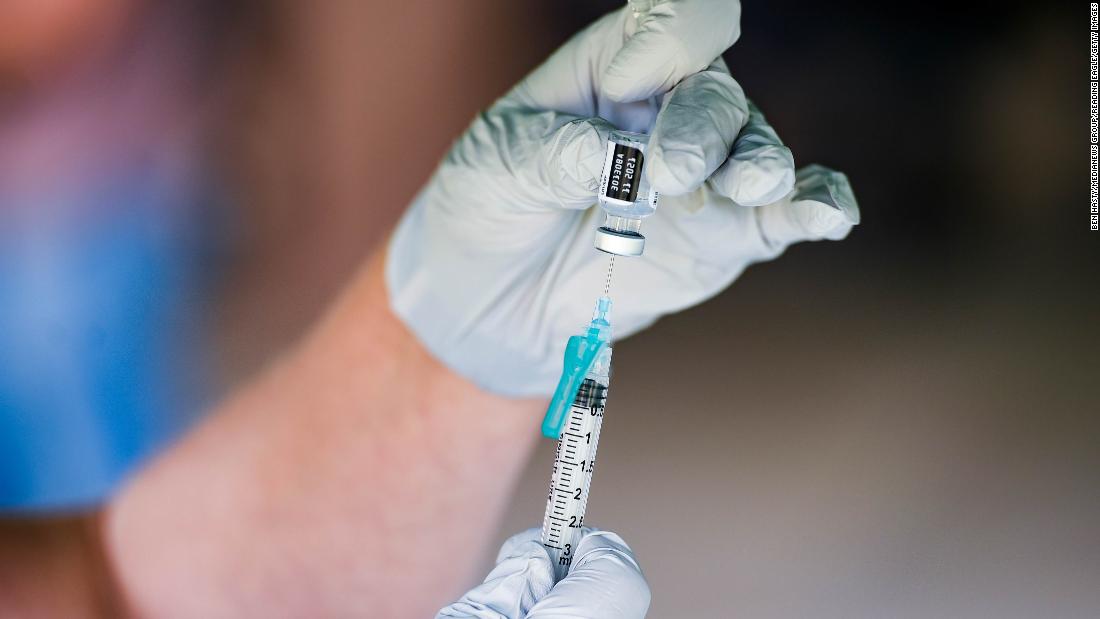
The reports are part of a batch of data that will be discussed by the FDA’s vaccine advisers as it considers a request by Pfizer to approve a third, booster dose for most people six months after they get their first two doses of vaccine.
There also is fear that a focus on boosters will distract from the mission of getting a greater proportion of the public to get their initial doses.
Only around 54% of the US population is fully vaccinated, which experts agree is the best form of protection against the virus.
Friday’s discussion will be public, he added, so people can see the data that goes into the decision.
Local health departments are planning on being ready to roll out booster doses next week if given the green light from the FDA, but many still have questions, Lori Tremmel Freeman, chief executive officer of the National Association of County and City Health Officials, told CNN on Wednesday.
“What is the interval for boosters? Is it any shorter than eight months at this point? What is the age cut-off? Will there be priority groupings?” Freeman said. “We don’t want to be unprepared. We don’t want to appear uncoordinated on boosters.”
More Idaho hospitals to ration care
The number of Covid-19 patients in Idaho hospitals has prompted the state’s health department to expand its “Crisis Standards of Care,” allowing more hospitals to ration care.
Critical standards of care prioritize some patients, over others and “someone who is otherwise healthy and would recover more rapidly may get treated or have access to a ventilator before someone who is not likely to recover,” the health department said.
Numb to tragedy
“We are somewhat complacent with a very excessive amount of death and disease,” he said during an appearance at the SALT hedge fund conference in Manhattan.
It’s a number that can be hard to process, Wen said.
“Imagine if 1 in 500 Americans had died in a war due to a foreign adversary in the last year and a half. How would we be processing that information now? What would we be doing differently?” she asked. “Wouldn’t we be doing everything we can to end the war, end the suffering and deaths?
“For us to not do everything we can with vaccines and masks in the meantime, it’s really unconscionable.”
That is more than 400,000 more than there were all of last year — before Covid-19 vaccines were available to young people over the age of 12.
In the US, cases are likely to rise now that schools have reopened in the Northeast, Gottlieb said.
“That’s going to build,” Gottlieb said, pointing to school outbreaks in other regions hit by the Delta variant. “The schools will become sources of spread in the Northeast as well.”
However, Gottlieb, who sits on the board of Pfizer, doesn’t expect the Northeast to get hit nearly as hard as the South, mostly because of prior infections and high vaccination rates.
FDA gives the green light to Eli Lilly’s monoclonal antibody treatment
The FDA expanded its emergency authorization of Eli Lilly’s combination monoclonal antibody treatment Thursday so that it now can be used to prevent people from getting severely sick with Covid-19.
Etesevimab and bamlanivimab are two lab-made antibodies that can boost the body’s immune system to fight off the novel coronavirus. Doctors already use it to treat some patients with mild cases of Covid-19 who are at risk of getting worse.
Dr. Myron Cohen, director of University of North Carolina’s Institute for Global Health and Infectious Diseases and a leader on the trial for Eli Lilly, said in a news release from the company that the FDA approval “offers a significant achievement in the fight against this pandemic.”
The FDA’s expanded authorization will allow doctors to prescribe the treatment for people who are not fully vaccinated, or who might not have had a full response to vaccines. It can only be prescribed for those at high risk for having severe Covid, such as people who have certain underlying health conditions or the elderly.
The government had paused the distribution of the dual Covid-19 treatment because it didn’t work well against some coronavirus variants, but it resumed distribution in August after the FDA determined it worked well against the Delta variant.
CNN’s Jen Christensen, Lauren Mascarenhas, Virginia Langmaid, Jacqueline Howard, Matt Egan and Cheri Mossburg contributed to this report.