

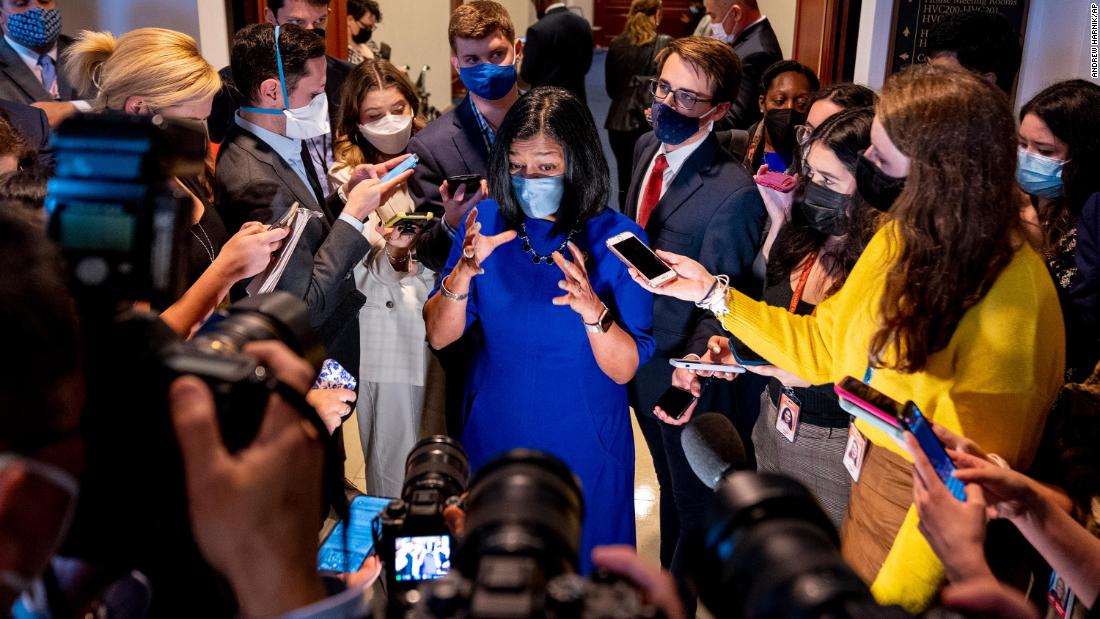
Analysis: Jayapal on why progressives chose pragmatism
After hours of tense wrangling, the 96-member progressive group again chose pragmatism in pursuit of legislative achievement.
Their choices under pressure show the unusual role the progressives are now playing as a self-identified ideological subset of the Democratic caucus. Instead of challenging their party’s priorities, progressives are advancing them; instead of battling their party’s leaders, progressives are helping them cope with intra-party dissidents.
That’s not the role ideological factions within Congress typically play.
In the 1960s, the liberal Democratic Study Group helped overthrow the hegemony of conservative Southern Democrats on civil rights. In the 1980s, Newt Gingrich’s Conservative Opportunity Society rebelled against moderate GOP leaders on tax cuts and the role of government; Gingrich proudly sank a bipartisan budget deal forged by Republican President George H.W. Bush, contributing to Bush’s subsequent defeat for reelection.
Republicans who chafed alongside their unyielding Freedom Caucus colleagues see the Progressive Caucus as a mirror image. They insist progressives and their allies hijacked the Democratic agenda from veteran leaders Biden and Pelosi.
“I’m surprised by how she is a captive of them,” observed former GOP Rep. Barbara Comstock of Virginia. Former Rep. Charlie Dent of Pennsylvania faults liberal historians for pushing Biden toward “your chance to go big.”
Pursuing outsized goals, Dent added, progressives “are similar to the Freedom Caucus in this sense: they’re not afraid to take a hostage.”
It became problematic as negotiations over the larger bill dragged on. Impatient for results late last month, Pelosi asked progressives to release their hostage and pass the infrastructure bill before Biden left Washington for international meetings.
Biden told them the Senate would pass it. They decided to take his word.
That’s what made their unflinching response to Manchin so striking.
“It was in many ways astonishing,” said Norman Ornstein, a scholar of Congress at the American Enterprise Institute. “It would have been so easy to say ‘Manchin’s trying to blow this up, we’re not going to let this bait and switch go through.’ “
They resisted that temptation again when the infrastructure bill hit the House floor on Friday night. That left a few House and Senate moderates — often presumed to be Biden’s natural allies — in the Freedom Caucus role of menacing their party’s priorities for at least a few more weeks.
“This is not about bringing our party down, bringing our president down, bringing our leadership down,” Jayapal said in the interview. “It’s about trying to pass the president’s agenda.”
But that fight and lesser ones won’t come until later in Biden’s tenure — or under the next Democrat to win the Oval Office.
“Yes, there are times when we are pushing for more than the president wants,” Jayapal concluded. “But this is not that time.”