

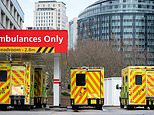
Record ambulance delays putting patients at risk, say hospital bosses
Ambulance response times are THREE TIMES higher than NHS target: Heart attack and stroke patients wait 55 minutes before being treated… as health service reveals 999 was busier than EVER in October
Mean response time to Category 2 calls was over 45 minutes in SeptemberFor comparison, target response time is just 18 minutes, NHS England saysCategory 2 calls include stroke, heart attack and other medical emergencies
<!–
<!–
<!–<!–
<!–
(function (src, d, tag){
var s = d.createElement(tag), prev = d.getElementsByTagName(tag)[0];
s.src = src;
prev.parentNode.insertBefore(s, prev);
}(“https://www.dailymail.co.uk/static/gunther/1.17.0/async_bundle–.js”, document, “script”));
<!–
DM.loadCSS(“https://www.dailymail.co.uk/static/gunther/gunther-2159/video_bundle–.css”);
<!–
Patients are ‘at risk’ from record ambulance delays, paramedics have said, as average response times in England now triple the national standard.
NHS England figures show the average ambulance response time to Category 2 calls, which includes stroke and other emergencies, was nearly 55 minutes in October, compared with the target time of 18 minutes.
The statistics also show response times for all categories are the longest since data was first collected in England in April 2018.
This includes the most serious Category 1 calls, where patients have a life threating event such as a cardiac arrest or severe allergic reaction.
These incidents should be responded to within seven minutes but patients had to wait an average of nine minutes and 20 seconds in October.
The data on ambulance delays comes as NHS leaders warn the health service is facing unsustainable pressure due to Covid and winter pressures, the backlog of care, and now concerns over staffing levels in social care due to the Government’s vaccine mandate.
There have been problems with ambulance care elsewhere in the UK as well, with the Scottish Police Federation saying officers have driven patients to hospital, and the military brought in to ease strain on the system in Wales.
Richard Webber, of the College of Paramedics and a working paramedic, told the BBC that his colleagues ‘have never before experienced anything like this at this time of the year’.
Paramedics have warned that patients are ‘at risk’ from record ambulance delays
He added: ‘Every day services are holding hundreds of 999 calls with no-one to send.
‘The ambulance service is simply not providing the levels of service they should – patients are waiting too long and that is putting them at risk.’
While England has long struggled to meet its ambulance response time targets the past few months have seen extreme delays which put patient lives at further risk.
In October the average response time for a Category 2 call was 53 minutes and 54 seconds, more than double the average time for the year since 2018.
Last month, ambulance leaders described the ‘highest level of emergency activity in history’ and raised concerns about the time lost to hospital handover delays.
Martin Flaherty, managing director of the Association of Ambulance Chief Executives (AACE), said the hours lost due to delays in waits of more than 60 minutes rose nearly 650% in six months, from 4,700 in April to 35,000 in September.
Speaking in October, he said: ‘AACE remains extremely concerned about the unprecedented levels of hospital handover delays which are occurring across the UK.
‘These have increased significantly since April, resulting in long waits for patients to be admitted to ED and a reduction in our ability to respond to patients in the community.
‘These delays are in part due to the need to maintain social distancing in EDs alongside the unprecedented pressures in the whole urgent and emergency care system at present.
‘We are especially concerned about the numbers of delays of over 60 minutes, which is where we believe most of the harm associated with these delays occurs.’
It came as a poll for the NHS Confederation found that health leaders believe the pressure on the NHS is now at unsustainable levels and patient safety and care are being put at risk by staff shortages.
NHS leaders in England warned the health service has reached ‘tipping point’, with nearly nine in 10 (88%) saying the demands on their organisation are unsustainable.
Almost the same number (87%) said a lack of staffing in the NHS as a whole is putting patient safety and care at risk.
The survey of 451 leaders included those from hospitals, ambulance services, mental health providers, community services and primary care.
NHS Confederation chief executive Matthew Taylor, claimed the health service faced a dire situation.
He told BBC Radio 4’s Today Programme: ‘We’ve still got thousands of people in hospital with Covid. Hospitalisation rates have started to fall in the last few days, that’s good, but there are still many patients in hospital.
‘Then we’ve got the normal winter pressures, and then you add the huge amount of pent-up demand that has built up during the pandemic.
‘You put those three things together and you’ve got a situation which almost every leader in the health service now says is unsustainable.’
Asked what ‘unsustainable’ would look like, Mr Taylor said it means the quality of care and patient safety is ‘compromised’, and also means it is very difficult for hospitals to make inroads into the “huge” elective care backlog.
Mr Taylor said people are turning up at emergency departments with quite advanced diseases, adding there is ‘overwhelming demand’.
There are also concerns the Government’s ban on unvaccinated social care staff, which came into force today, could make the situation worse as care homes may not have the capacity to take residents back from hospital should they require care.