

Catch up: What happened in Russia’s invasion over the weekend
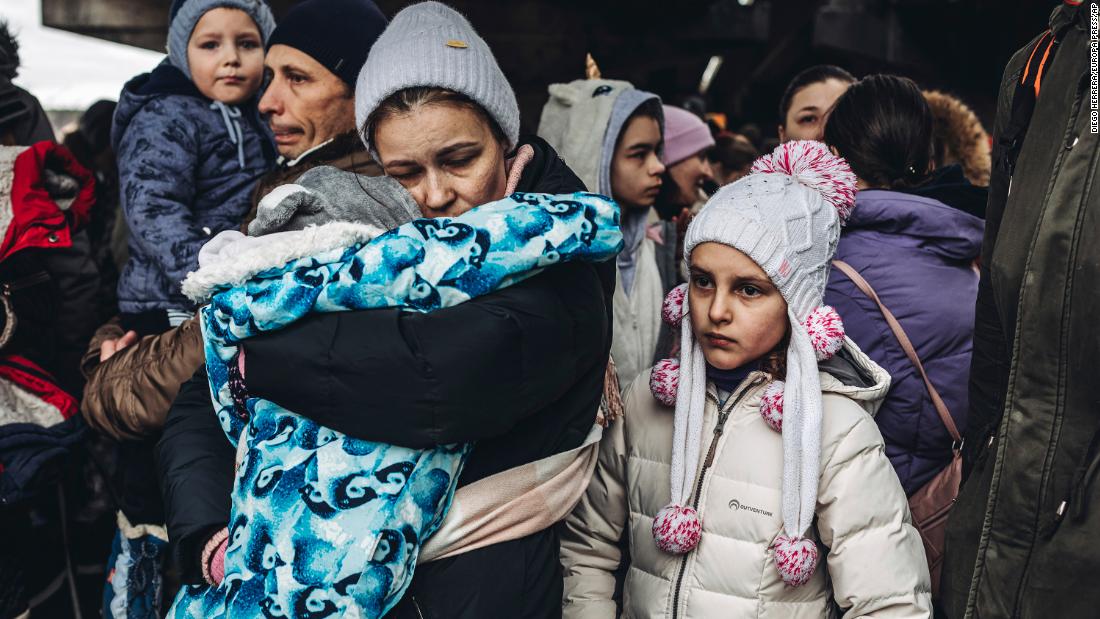
As conditions worsened in a number of key Ukrainian cities, the United Nations said more than 1.5 million refugees had fled the country so far.
Here’s what you need to know about what happened over the weekend.
Western intelligence officials say Russia is increasing the pace and strength of strikes on key population centers, including the capital Kyiv, in an effort to bombard cities into submission.
Heavy shelling has continued around Kyiv. The impact of explosions was heard over the weekend by CNN teams in the capital and in rural areas to the southwest. Amid the indiscriminate attacks, Kyiv appealed for international help on Sunday, saying thousands of people were isolated “because of direct hostilities, and in some places for 5-6 days they survive without electricity, water, food, medical help and means of subsistence. They are in direct danger,” the Kyiv Regional Military Administration wrote.
This continued over the weekend as Kharkiv’s TV tower was targeted in strikes, knocking out television and radio broadcasts, according to local authorities. Ukraine’s Emergency Service said a “bombing” that took place on Sunday evening “completely or partially demolished” multi-story residential buildings, administrative buildings, medical institutions, educational institutions and dorms. There were also large-scale fires in 21 buildings in the central part of the city, it added in a statement.
Meanwhile, hopes of setting up evacuation corridors for civilians in the southern city of Mariupol were dashed multiple times over the weekend after Ukraine accused Russia of continuing its attacks on those routes.
Also on Sunday, Ukrainian President Volodymyr Zelensky warned that Russia was preparing to bomb the Black Sea port city of Odessa in southern Ukraine, adding that the airport in Vynnytsia, in the west of the country, had been destroyed by a rocket strike.
Russia has fired a total of 600 missiles since the invasion of Ukraine began, a senior US defense official told CNN on Sunday, and has committed approximately 95% of its amassed combat power inside Ukraine. CNN has not independently confirmed these figures.
Putin dials up threats against West — as protests mount in Russia
Russian President Vladimir Putin on Saturday issued a series of threats against Ukraine and Western powers, in his first expansive remarks since the invasion began.
“The current leadership needs to understand that if they continue doing what they are doing, they put under question the future of Ukrainian statehood,” Putin said during a meeting with Russian flight crew members at an Aeroflot training center in Moscow. “And if that happens, it will be entirely on their conscience.”
Putin also said Western sanctions were the “equivalent of a declaration of war,” and warned he would consider countries imposing a no-fly zone over Ukraine as “participants in a military conflict.”
Zelensky has repeatedly called on the US and NATO to establish a no-fly zone over Ukraine, but the US and NATO said this was not an option currently being considered.
Meanwhile, anti-war rallies that have sprung up across Russia led to at least 4,640 people being detained on Sunday in connection with the protests, according to an independent human rights monitoring group tracking detentions.
The OVD-Info group said arrests had been made in 147 cities, and since the invasion began more than 13,000 people had been arrested in Russia over the demonstrations.
Harrowing insights into what Russian occupation looks like
The southern port city of Kherson was seized by Russian forces last week after days of heavy bombardment and shelling. The Ukrainian flag was still hoisted on government buildings, and the mayor of the city, Ihor Kolykhaiev, remained in his post.
Kolykhaiev said Saturday that Russian troops were everywhere and that the city of nearly 300,000 people was without power and water and in desperate need of humanitarian aid.
On Saturday, several hundred people gathered in the city’s center, with one video of the demonstrations showing people walking into Kherson’s main square despite volleys of gunfire. On Sunday, further demonstrations occurred in smaller numbers.
West moves to counter Russia
The airport’s location remains a secret to protect the shipments of weapons, including anti-armor missiles, into Ukraine. The Russian military has not targeted these shipments once they enter Ukraine, the official said, but there is some concern Russia could begin targeting the deliveries as its assault advances.
US European Command (EUCOM) is at the heart of the massive shipment operation, using its liaison network with allies and partners to coordinate “in real time” to send materials into Ukraine, a second Defense official said.
He also said Sunday that the US has seen reports of Russian abuses in Ukraine that “would constitute a war crime” and that the Biden administration is committed to supporting investigations into the country’s actions
Tamara Qiblawi reported from Lviv. Ivana Kottasová, Radina Gigova, Olga Voitovych, Tim Lister and Josh Pennington, reported from Kyiv. Oren Liebermann and Devan Cole reported from Washington. Heather Yamour contributed to the report. Gianluca Mezzofiore reported from London. Tara John and Hafsa Khalil wrote from London.