

Sajid Javid hints millions will be eligible for fourth (or FIFTH) Covid jabs
Get set for ANOTHER round of boosters this autumn: Sajid Javid hints millions will be eligible for fourth (or FIFTH) Covid jabs later this year – with spring top-up campaign finally set to begin next week
Sajid Javid suggested last night that over-75s could get a fifth dose this autumn to shore-up immunity levelsHe also suggested younger adults could get a fourth dose in six months, likely being all over-50sFrom next week the NHS is expected to offer fourth doses to all over-75s, care home residents and vulnerable
<!–
<!–
<!–<!–
<!–
(function (src, d, tag){
var s = d.createElement(tag), prev = d.getElementsByTagName(tag)[0];
s.src = src;
prev.parentNode.insertBefore(s, prev);
}(“https://www.dailymail.co.uk/static/gunther/1.17.0/async_bundle- -.js”, document, “script”));
<!–
DM.loadCSS(“https://www.dailymail.co.uk/static/gunther/gunther-2159/video_bundle- -.css”);
<!–
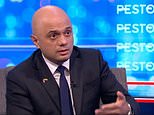
Health Secretary Sajid Javid has suggested the booster drive could be expanded again in the autumn
Britain’s Covid booster programme is gearing up for another round of inoculations this autumn, the Health Secretary has suggested.
From next week all over-75s, care home residents and the vulnerable will be called forward to get their fourth doses to shore up immunity levels.
But Sajid Javid hinted last night millions more could be eligible for fourth, or fifth, jabs in just six months ahead of the country’s third Covid winter.
He told ITV’s Peston over-75s could expect to be offered fifth doses, and that younger age groups could also be called forward.
Mr Javid did not specify which age group fourth jabs would be expanded to, but it is likely to be all over-50s — the same group that is already offered the flu vaccine every year.
When asked if the booster drive would be widened to the general population, he told ITV’s Peston programme: ‘I think at some point they will.
‘The most recent advice is that (jab chiefs) think that towards the end of this year, maybe in the autumn, there will be a need to give a lot more people a boost, an offer of a boost, but I’ll wait for that advice.’
It has now been more than six months since the rollout of third shots was launched, and NHS England is yet to send out invites for a fourth dose.
A number of experts have expressed concern that the uptick in hospitalisations could be an early sign of waning immunity from boosters.
Only a quarter of the rise in newly-occupied NHS Covid beds in the first week of March was down to patients actually ill with the virus, NHS England data suggests. Graph shows: Changes in the overall number of Covid patients and the number being primarily treated for the virus over time in England
The NHS England data show increase in overall Covid patients and those primarily for the virus varied wildly across the country. London has the lowest proportion of Covid patients that are primarily being treated for the virus, with only 27 per cent actually in hospital because of an infection
Graph shows: The number of Covid patients on ventilators in hospitals in England over time compared to the overall number of coronavirus patients over time
On Tuesday health sources suggested the roll out of boosters could begin as early as next week, adding it was ‘right’ that ministers ‘crack on with it’.
They said texts and letters could be sent out to those who are eligible, and the NHS booking system would open from Monday.
This is about a month after Britain’s vaccine chiefs — the Joint Committee on Vaccination and Immunisation (JCVI) — recommended the shots for the age group.
Mr Javid said last night: ‘When it comes to vaccinations I think we rightly take the advice of our clinicians.
‘There’s a committee, it’s called the JCVI and we listen very carefully to what they’ve got to say.
‘They look at the data very, very carefully and their latest advice as you say is that there should be a second boost — or let’s call it a fourth dose — but to focus on those over 75, those in care homes, those who are immunosuppressed.
‘Now we will start that by the end of this month, that’s what we’ve said and we’re completely on track for that. But we listen to their advice all the time, should they come forward…’
NHS England figures show 63 per cent of over-18s — or 31million out of 50million — turned up for their third dose.
But uptake varies widely by age group with more than nine in 10 over-70s having got their third jab, compared to just one in three 18 to 29-year-olds, the youngest group eligible.
JCVI sources suggested last month the booster programme could be further expanded in the autumn, potentially to cover all over-50s.
There are some 5million over-75s in England who are being called forward for their fourth doses. Should the drive be expanded to over-50s, this would add another 17million people.
Experts have repeatedly suggested annual inoculations may be needed against Covid, in a similar way to how flu jabs are rolled out every year.
Britain’s Covid cases have been rising for the last two weeks, with the country now recording about 73,000 new infections a day on average.
Hospitalisations have also been heading up over this period, and are now at a similar level to early February when the Omicron wave was subsiding.
But figures suggest the uptick is down to incidental admissions, people admitted for other illnesses such as a fall who then test positive for the virus, than the virus itself.
The uptick coincides with surging cases of a more transmissible version of Omicron scientifically named BA.2, which estimates suggest now makes up 80 per cent of cases.
Ministers in England, however, say the increases were to be ‘expected’ following the country’s ‘Freedom Day’ on February 24 — when the final Covid measures were dumped. Mr Javid has insisted there was ‘nothing in the data at this point in time that gives us any cause for concern’.
But in Scotland Nicola Sturgeon has opted to keep compulsory face masks in place until April, with officials saying they do not expect the BA.2 outbreak to peak for the next few weeks.
Another 91,000 Britons were diagnosed with the virus over the past 24 hours, Government dashboard data shows, up by a third in a week and the 14th day in a row cases have risen week-on-week
Latest hospital data shows there were 1,541 Covid admissions on March 12, marking a 29 per cent rise on the previous week and 13th time in a row they had risen
There were also another 153 virus deaths today, up a quarter in the previous week. Fatalities have been creeping up since the start of the month with around 150 on average each day now compared to 103 on March 1
Dr Christine Tait-Burkard, of the University of Edinburgh, said keeping the requirement for face coverings is in line with dealing with the surge and is a ‘relatively easily-achieved measure’.
Masks on public transport, restaurants and other indoor settings were slated to be downgraded from a legal requirement to advice on March 21.
Ms Sturgeon told MSPs that with the ‘current spike’ in cases, ministers had agreed it was ‘prudent’ for this measure to remain in place and the legal requirement will be reviewed again in two weeks’ time.
An Office for National Statistics (ONS) report published yesterday showed elderly groups who are most vulnerable to Covid saw the biggest drops in death rates after a third jab.
There were 155 fatalities per 100,000 triple-jabbed people in their seventies in January, compared to 2,248 deaths among those still only double-vaccinated — a 14-fold difference. A similar effect was seen in people in their 60s, 80s and 90s.
No10’s vaccine advisory panel originally recommended booster doses for the elderly and vulnerable in September 2021, gradually opening the rollout to everyone over the age of 40 by November.