

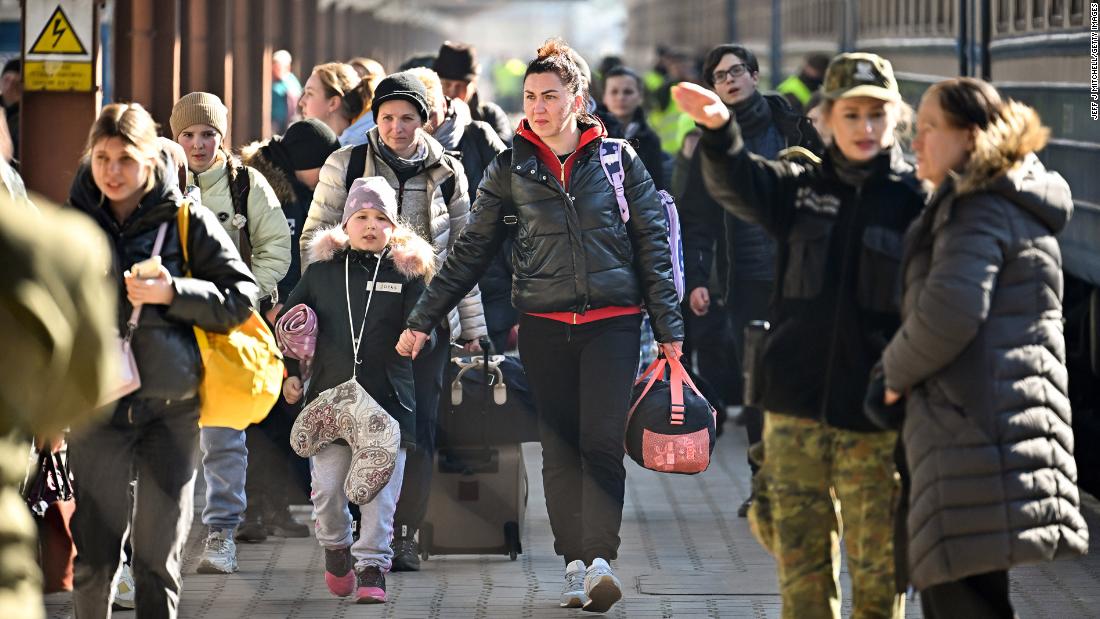
Analysis: The refugee crisis is much bigger than Ukraine
Half of all Ukrainian children have been displaced since Russia’s attack began on February 24.
“It’s mind-boggling,” UNICEF spokesperson James Elder told CNN. “Since the start of the war a month ago, out of every boy and girl in the country, 1 out of 2 now has had to flee their homes.”
President Joe Biden joined an emergency meeting of European allies with a promise that the US would accept up to 100,000 Ukrainians displaced by Russia’s attack on their country.
It’s a large commitment by the US. The last time it accepted 100,000 refugees in a single year was in the mid-1990s.
How will 100,000 Ukrainians be admitted? Stay tuned
Many questions remain about the pledge to bring 100,000 displaced Ukrainians to the US, and the White House does not plan to raise the cap of 125,000 refugees for the 2022 fiscal year.
84 million displaced people, 26.6 million refugees
While the Russian attack of Ukraine and the unexpected flood of refugees has shocked the global community, the worldwide problem of displaced people is not new.
Most of these people are displaced within their own countries. But more than 26.6 million of these are refugees who have fled their native countries, usually to nations nearby.
Most of these refugees were from just five countries: Afghanistan, Myanmar, South Sudan, Syria and Venezuela.
Syria, Venezuela and now Ukraine
Looking at the UNHCR data from prior to the Russian attack on Ukraine, two countries accounted for the most refugees: Syria (6.8 million refugees), which has been decimated by war for more than a decade, and Venezuela (4.1 million refugees), with its authoritarian government and economic distress. In both cases, the crises built over years.
One thing that ties these countries together is political unrest and authoritarianism.
“The decline of democracy, the rise of authoritarianism has led to greater numbers of refugees in the world,” Michael Abramowitz, president of Freedom House, told me over the phone this week.
Freedom House gets most of its funding from the US government and pushes democracy around the world. It issues a report each year giving countries democracy scores. The number of countries with declining scores has outnumbered those with gains for 16 years.
Not simply a choice to leave
The response to the Ukraine crisis has been as swift and massive as the refugee crisis itself. That has not always been the case for other countries.
Selectively welcomed
“We are painfully seeing that refugees are selectively welcomed, and war criminals are selectively punished. It’s not just the Western media that is biased; it’s the Western world,” Damon wrote.
“As a journalist, I often ask myself: Did I somehow fail back then? How could I have told those refugee stories to make the world care? I have carried that guilt with me for years, still even today. Because surely, there should have been a way to show the Western world — the same world now standing with Ukrainians — that the Syrians, Iraqis, Afghans and others who took this same path through Europe are just like them.”